Empty Threats

The right side of history is bunk.

In domestic politics, people (mostly liberals) tend to say, “You’re on the wrong side of history” about social issues that are breaking their way. It’s a handy phrase, loosely translated as, “You’re going to lose eventually, so why don’t you give up now?”

Philosophically, the expression is abhorrent because of its “Marxist twang” (to borrow historian Robert Conquest’s phrase). The idea that history moves in a predetermined, inexorable path amounts to a kind of Hallmark-card Hegelianism. Marx, who ripped off a lot of his shtick from the philosopher Hegel, popularized the idea that opposition to the inevitability of socialism was anti-intellectual and anti-scientific. The progression of history is scientifically knowable, quoth the Marxists, and so we need not listen to those who object to our program. Later, Lenin, Stalin, Mao, and others would use this reasoning to justify murdering millions of inconvenient people. It was a “God is on our side” argument, minus God.
In fairness, I doubt Barack Obama and John Kerry have Marx or Hegel on the brain when they prattle on about the right and wrong sides of history. They more properly belong in what some call the “Whig school” of history, coined in 1931 by historian Herbert Butterfield. The Whiggish tendency in history says that the world progresses toward the inevitable victory of liberal democracy and social enlightenment. Again, I doubt Obama and Kerry have ever cracked the spine of Butterfield’s book.

Still, this administration has used the “wrong side of history” phrase more than any I can remember. They particularly like to use it in foreign policy. In his first inaugural, Obama declared, “To those who cling to power through corruption and deceit and the silencing of dissent, know that you are on the wrong side of history, but that we will extend a hand if you are willing to unclench your fist.” Ever since, whenever things haven’t gone his way on the international scene — i.e., on days that end with a “y” — he or his spokespeople have wagged their fingers from the right side of history.

Lately, Obama and Kerry have been talking a lot about how Russian strongman Vladimir Putin is on the “wrong side of history.” Before that, Obama announced that Putin was on the wrong side of history for supporting the Assad regime in Syria. He also said that Assad himself was on the wrong side of history. And so on.

Note the difference in usage? In domestic affairs, it’s a sign of strength. But in foreign affairs, invoking history as an ally is a sign of weakness. On social issues like, say, gay marriage, it amounts to a kind of impatient bullying that you can afford when time is on your side: “Your defeat is inevitable, so let’s hurry it up.”

But in international affairs, it is an unmistakable sign of weakness. When the president tells Putin that he’s on the wrong side of history, the upshot is: “You’re winning right now and there’s nothing I can (or am willing to) do to change that fact. But you know what? In the future, people will say you were wrong.”

The phrase is utterly lacking in feck because it outsources the bulk of the punishment to an abstract future rather than the concrete here and now. But the fecklessness goes deeper than that because people like Putin and Assad either completely disagree about what the future holds or they think they can change it. And the people who try to bend the future to their benefit tend to be the sorts of people who believe they can.

Now, I don’t think in the long run things look great for the tyrants and totalitarians either, but that’s just a guess. As Yogi Berra said, “It’s tough to make predictions, especially about the future.” Maybe there is a direction to history. But if there is, it doesn’t move in anything like a straight line. It zigs and zags and U-turns all the time. And there’s no telling how long any detour will last.

In the meantime, people can’t eat the future judgment of history. They can’t live decent, free lives because history might eventually work out for their grandkids or their great-great-great grandkids. In short, being on the right side of history in the long run counts for little when in the here-and-now, the guy on the wrong side of history has his boot on your neck.

— Jonah Goldberg is the author of The Tyranny of Clichés, now on sale in paperback. You can write to him by e-mail at goldbergcolumn@gmail.com, or via Twitter @JonahNRO. © 2014 Tribune Media Services, Inc.

Paying For America’s Future – A Budget We Can Believe In

Progressive Caucus ‘Better Off Budget’ Plan: 9 Million Jobs In 3 Years

MARCH 12, 2014

ISAIAH J. POOLE
The Congressional Progressive Caucus releases a federal budget proposal today that, if it were fully enacted, is projected to create almost 9 million jobs over the next three years.

As a statement of values as well as policy, the Caucus’ proposal – called “The Better Off Budget” – is a loud and audacious rebuke to conservative austerity economics. As the previous caucus budgets have sought to do, it seeks to put forward bold policies that match the severity of the problems facing working-class Americans. It also sets up the debates we should be having about how to rebuild the economy so that it works for more than just a handful of people at the top. It spells out in blunt detail what it would take to make beleaguered Americans struggling in today’s economy “better off.”

It is a sharp contrast to the budget expected to be introduced in early April from House Budget Committee Chairman Rep. Paul Ryan (R-Wis.), which – if it stays true to what he has introduced in the past – will seek more cuts to basic safety-net programs, continue the choking off of investments in our public infrastructure, and peddle more failed trickle-down strategies of reducing tax and regulatory obligations for the wealthiest while doing less to support the economic struggles of working-class Americans.

Caucus co-chairs Raul Grijalva (D-Ariz.) and Keith Ellison (D-Minn.) led today’s budget introduction at the Capitol. From there they and other caucus members will take advantage of next week’s recess to build grassroots support. It is expected to face a vote in the House in late April or in May.

Closing The Jobs Gap

The budget brings together a number of policy imperatives that its members, with support from groups such as the Campaign for America’s Future, have pursued in the past year, with the goal of rapidly closing the gap between where the economy is today and where it would it been had the Great Recession not happened.

The Economic Policy Institute has been keeping a running tally of the jobs shortfall caused by the recession, which as of the latest employment report released by the Labor Department earlier this month stood at 7.5 million jobs. To close that gap by 2017, and to ensure that new entrants to the workforce can find work, the economy should be producing on average more than 244,000 jobs a month, well above the average of 183,000 jobs a month that the economy produced in 2013. If job growth reached that higher level, the unemployment rate, now 7.3 percent, would come down to about 5.5 percent, the Better Off Budget goal.

The budget calls for a series of big job-creation steps. They include a much larger commitment to spending on transportation and water projects than President Obama has put forward, and aid to state and local governments that would be used to replace teaching and other public sector positions that were cut since the beginning of the recession. There would be more spending to help the long-term unemployment obtain training for new jobs.

As have previous Progressive Caucus budgets, such as last year’s “Back to Work Budget,” this latest proposal will seek to fund its extra spending through closing corporate tax loopholes, taxing dividends and capital gains at the same rate as wages, and through higher taxes on persons making more than $1 million. It also includes a carbon tax, structured to minimize the burden on low-income families. But it would offer working families earning less than $190,000 a year a “Hard Work Tax Credit” of up to $1,200.

While the primary focus of the Better Off Budget is not deficit reduction, the budget would in fact reduce the federal deficit by $4 trillion dollars over the next 10 years, largely through revenues generated as a result of increased economic activity. That is precisely how deficits should be reduced – in the long term, as a result of smart spending to grow the economy quickly.

Will This Budget Get Its Due?

The typical impulse in Washington political and media circles is to treat the Progressive Caucus budget as a fanciful, out-of-left-field wish list. That is even with the assessments of mainstream economists that the policy prescriptions like those put forward by the Progressive Caucus are the most sensible responses to today’s slow-growth economy.

When the budget is formally released, progressive activists should make two demands.

The first is of the media. The Progressive Caucus budget proposals deserve to be taken at least as seriously as the proposals being put forth by Ryan and his colleagues in the Republican House. Last year, that didn’t happen. The country needs a real discussion of its choices – to continue the tortuous, slow-growth policies borne out of conservative obstruction that are worsening income inequities or the smarter, pro-growth, full-employment policies embodied by the Progressive Caucus. Mainstream media obstructs that discussion when it does not fully inform the electorate of all of the policy options on the table.

The second is of members of Congress, including the Progressive Caucus’ fellow Democrats. Democrats know that the Progressive Caucus’s policies would move the country in the right direction, but many will vote against the budget out of fear that they will be smeared with the old “tax-and-spend” label in their districts. These members should know that thousands of Democrats in their districts want their members to cast a vote in favor of the bold policies in the Caucus budget. One way to register support is to become a “citizen sponsor” of the Caucus budget. Other ways to persuade members to vote for the Better Off Budget will be announced in the coming days.

This is more than a budget proposal, and it is not some political game. This is about whether we are going to produce nearly 9 million jobs over the next three years and finally fix the damage done to the economy by conservative economic policies. Too many people have suffered too long under austerity economics, and is it past time for a change.

Secure Communications Update

If GCHQ wants to improve national security it must fix our technology

Our security is better served by protecting us against online threats than it is by giving cops and spies an easier time attacking ‘bad guys’
GHQC collected millions of Yahoo webcam images

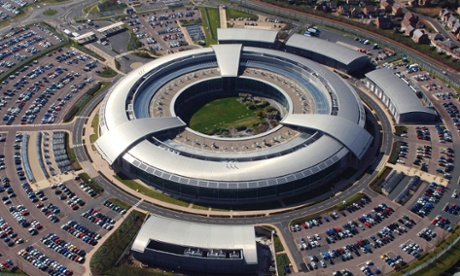
An aerial image of the British Government Communications Headquarters (GCHQ) in Cheltenham, Gloucestershire, west central England. Photograph: GCHQ/BRITISH MINISTRY OF DEFEN/EPA
In a recent column, security expert Bruce Schneier proposed breaking up the NSA – handing its offensive capabilities work to US Cyber Command and its law enforcement work to the FBI, and terminating its programme of attacking internet security. In place of this, Schneier proposed that “instead of working to deliberately weaken security for everyone, the NSA should work to improve security for everyone.” This is a profoundly good idea for reasons that may not be obvious at first blush.

People who worry about security and freedom on the internet have long struggled with the problem of communicating the urgent stakes to the wider public. We speak in jargon that’s a jumble of mixed metaphors – viruses, malware, trojans, zero days, exploits, vulnerabilities, RATs – that are the striated fossil remains of successive efforts to come to grips with the issue. When we do manage to make people alarmed about the stakes, we have very little comfort to offer them, because Internet security isn’t something individuals can solve.

I remember well the day this all hit home for me. It was nearly exactly a year ago, and I was out on tour with my novel Homeland, which tells the story of a group of young people who come into possession of a large trove of government leaks that detail a series of illegal programmes through which supposedly democratic governments spy on people by compromising their computers. I kicked the tour off at the gorgeous, daring Seattle Public Library main branch, in a hi-tech auditorium to an audience of 21st-century dwellers in one of the technology revolution’s hotspots, home of Microsoft and Starbucks (an unsung technology story – the coffee chain is basically an IT shop that uses technology to manage and deploy coffee around the world).

I explained the book’s premise, and then talked about how this stuff works in the real world. I laid out a parade of awfuls, including a demonstrated attack that hijacked implanted defibrillators from 10 metres’ distance and caused them to compromise other defibrillators that came into range, implanting an instruction to deliver lethal shocks at a certain time in the future. I talked about Cassidy Wolf, the reigning Miss Teen USA, whose computer had been taken over by a “sextortionist” who captured nude photos of her and then threatened to release them if she didn’t perform live sex shows for him. I talked about the future of self-driving cars, smart buildings, implanted hearing aids and robotic limbs, and explained that the world is made out of computers that we put our bodies into, and that we put inside our bodies.

These computers are badly secured. What’s more, governments and their intelligence agencies are actively working to undermine the security of our computers and networks. This was before the Snowden revelations, but we already knew that governments were buying “zero-day vulnerabilities” from security researchers. These are critical bugs that can be leveraged to compromise entire systems. Until recently, the normal response to the discovery of one of these “vulns” was to report them to the vendor so they could be repaired.

But spy-agencies and law-enforcement have created a bustling marketplace for “zero-days,” which are weaponised for the purpose of attacking the computers and networks of “bad guys”. The incentives have shifted, and now a newly discovered bug had a good chance of remaining unpatched and live in the field because governments wanted to be able to use it to hack their enemies.

Scientists formulate theories that they attempt to prove through experiments that are reviewed by peers, who attempt to spot flaws in the reasoning and methodology. Scientific theories are in a state of continuous, tumultuous improvement as old ideas are overturned in part or whole, and replaced with new ones.

Security is science on meth. There is a bedrock of security that is considered relatively stable – the mathematics of scrambling and descrambling messages – but everything above that bedrock has all the stability of a half-set custard. That is, the best way to use those stable, well-validated algorithms is mostly up for grabs, as the complex interplay of incompatible systems, human error, legacy systems, regulations, laziness, recklessness, naivete, adversarial cunning and perverse commercial incentives all jumble together in ways that open the American retailer Target to the loss of 100m credit card numbers, and the whole internet to GCHQ spying.

As Schneier says: “Anyone can design a security system that works so well that he can’t figure out how to break it.” That is to say, your best effort at security is, by definition, only secure against people who are at least as dumb as you are. Unless you happen to be the smartest person in the world, you need to subject your security system to the kind of scrutiny that scientists use to validate their theories, and be prepared to incrementally patch and refactor things as new errors are discovered and reported.

Hence: “Security is a process, not a product” – another useful Schneierism. This is a distinction that sets security engineering apart from other engineering disciplines. Other kinds of engineers exist in a changing world, but security’s change is of a different sort altogether. For example, structural engineering is a field under continuous improvement, and tomorrow’s structural engineers will be able to apply better techniques to their work, but no one worries that someone will invent a way of making skyscrapers collapse tomorrow through application of an easily automated, low-cost technique.

The difference is that security engineering is an adversarial discipline. A structural engineer must contend with the forces of entropy and gravity, of harsh winds and rising seas. But a security engineer must contend with enemy security engineers who labour every hour of every day to find flaws in her work and use those flaws to covertly undermine it.

I think there’s a good case security engineering not being “engineering” at all. Engineers try to erect and maintain infrastructure against threats that are indifferent to them. These threats may be powerful – floods in the Philippines, earthquakes in Haiti – but they aren’t deliberate. The world doesn’t have a will. It doesn’t care if the earth shakes or not.

But security adversaries want to break security. They lack the relentless force of physics, but exert something totally nonphysical: cunning.

Security as an exercise in public health

If security isn’t engineering, what is it?

I think there’s a good case to be made for security as an exercise in public health. It sounds weird at first, but the parallels are fascinating and deep and instructive.

Last year, when I finished that talk in Seattle, a talk about all the ways that insecure computers put us all at risk, a woman in the audience put up her hand and said, “Well, you’ve scared the hell out of me. Now what do I do? How do I make my computers secure?”

And I had to answer: “You can’t. No one of us can. I was a systems administrator 15 years ago. That means that I’m barely qualified to plug in a WiFi router today. I can’t make my devices secure and neither can you. Not when our governments are buying up information about flaws in our computers and weaponising them as part of their crime-fighting and anti-terrorism strategies. Not when it is illegal to tell people if there are flaws in their computers, where such a disclosure might compromise someone’s anti-copying strategy.

But: If I had just stood here and spent an hour telling you about water-borne parasites; if I had told you about how inadequate water-treatment would put you and everyone you love at risk of horrifying illness and terrible, painful death; if I had explained that our very civilisation was at risk because the intelligence services were pursuing a strategy of keeping information about pathogens secret so they can weaponise them, knowing that no one is working on a cure; you would not ask me ‘How can I purify the water coming out of my tap?’”

Because when it comes to public health, individual action only gets you so far. It doesn’t matter how good your water is, if your neighbour’s water gives him cholera, there’s a good chance you’ll get cholera, too. And even if you stay healthy, you’re not going to have a very good time of it when everyone else in your country is striken and has taken to their beds.

If you discovered that your government was hoarding information about water-borne parasites instead of trying to eradicate them; if you discovered that they were more interested in weaponising typhus than they were in curing it, you would demand that your government treat your water-supply with the gravitas and seriousness that it is due.

The public health analogy is suprisingly apt here. The public health threat-model is in a state of continuous flux, because our well-being is under continuous, deliberate attack from pathogens for whom we are, at best, host organisms, and at worst, dinner. Evolution drives these organisms to a continuously shifting array of tactics to slide past our defenses.

Public health isn’t just about pathogens, either – its thorniest problems are about human behaviour and social policy. HIV is a blood-borne disease, but disrupting its spread requires changes to our attitudes about sex, pharmaceutical patents, drugs policy and harm minimisation. Almost everything interesting about HIV is too big to fit on a microscope slide.

And so it is for security: crypto is awesome maths, but it’s just maths. Security requires good password choice, good password management, good laws about compelled crypto disclosure, transparency into corporate security practices, and, of course, an end to the governmental practice of spending $250M/year on anti-security sabotage through the NSA/GCHQ programmes Bullrun and Edgehill.

Everything involves the internet

But for me, the most important parallel between public health and internet security is their significance to our societal wellbeing. Everything we do today involves the internet. Everything we do tomorrow will require the internet. If you live near a nuclear power plant, fly in airplanes, ride in cars or trains, have an implanted pacemaker, keep money in the bank, or carry a phone, your safety and well-being depend on a robust, evolving, practice of network security.

This is the most alarming part of the Snowden revelations: not just that spies are spying on all of us – that they are actively sabotaging all of our technical infrastructure to ensure that they can continue to spy on us.

There is no way to weaken security in a way that makes it possible to spy on “bad guys” without making all of us vulnerable to bad guys, too. The goal of national security is totally incompatible with the tactic of weakening the nation’s information security.

“Virus” has been a term of art in the security world for decades, and with good reason. It’s a term that resonates with people, even people with only a cursory grasp of technology. As we strive to make the public and our elected representatives understand what’s at stake, let’s expand that pathogen/epidemiology metaphor. We’d never allow MI5 to suppress information on curing typhus so they could attack terrorists by infecting them with it. We need to stop allowing the NSA and GCHQ to suppress information on fixing bugs in our computers, phones, cars, houses, planes, and bodies.

If GCHQ wants to improve the national security of the United Kingdom – if the NSA want to impove the American national security – they should be fixing our technology, not breaking it. The technology of Britons and Americans is under continuous, deadly attack from criminals, from foreign spies, and from creeps. Our security is better served by armouring us against these threats than it is by undermining security so that cops and spies have an easier time attacking “bad guys.”

Luminaries

LIT UP BY THE LUMINARIES

Landscapes of the Mind: if Robert Macfarlane hadn’t been a Man Booker prize judge, he might have missed a treat

catton
From INTELLIGENT LIFE magazine, March/April 2014

We all know the American gold rushes of the mid-19th century. Images from those years leap to mind: somewhere in the Californian desert, a prospector hammers in wooden pegs to stake his claim. Deep in the Yukon at dusk, a wolf howls in the blue distance, then one by one the rest of the pack join in. Miners huddle round the low-burnt fire, touch their rifles for reassurance. Sergio Leone and Jack London are the laureates of these landscapes.

But the New Zealand gold rush? I wasn’t aware of its existence until I read Eleanor Catton’s vast and intricate novel “The Luminaries”, set in the township of Hokitika in 1866. Out of Catton’s patient prose emerges a world so completely realised that you feel part of its population. Gold has been found in the sands and rivers of the South Island, and Hokitika teems with speculators, aggregators, bankers and outfitters. Up and down the west coast the diggers toil, delving for the sly glint of ore. Eastwards of Hokitika the land rises into totara forests, rolling hills and clear-watered rivers whose beds are cobbled with “smooth, milky-grey stones that, when split, showed a glassy-green interior, harder than steel”—the sacred Maori stone known as pounamu. And over all of this loom the Southern Alps, ice-capped and incorruptible.

The novel unfolds a mystery. A haul of gold has been discovered in a hermit’s cottage: its provenance is unclear, its ownership disputed. Death stalks the land in the guise of lucre. The reader’s first task is—as Lester Freamon puts it in “The Wire”—to follow the money. That pursuit takes us forwards and backwards in time, and through the varied landscapes of the South Island. As we move from place to place, expanding our imagined geography, so the plot whirs on—gorgeous and complex as an orrery.

For a novel set in such wild country, it often takes us indoors: in bar-rooms, billiard-rooms and court-rooms, in shanty-shacks and opium dens where smokers lie supine. These interiors are evoked in exceptional detail. Catton’s narrator seems to notice everything, down to the seam that runs through the centre of the billiard-table baize, from when it “had been sawn in two on the Sydney docks to better survive the crossing”.

I first read “The Luminaries” as a judge of the Man Booker prize for fiction last year. Without that compulsion I might never have picked it up, put off by its cubical bulk and astrological armature. What a loss that would have been! I have now read it three times—2,496 pages in sum—and each reading has yielded new dividends. And its consequences enact its concerns, for Catton takes such pains not only for the joy of evocation, but also to carry out a huge thought-experiment into the nature of value.

Almost everyone in Hokitika is dedicated to the acquisition of wealth and the maximisation of profit. It is a community driven by capital, in which relationships are ruled by cost-benefit analysis. One of the few transactions to defeat this fierce logic is the unconditional love that develops between two characters: a young prospector and a “whore”. Their love eventually emerges as a gold standard: a touchstone with which to test the value of all things.

And so this phenomenal book, apparently about digging into the Earth’s innards in search of wealth, ends up delving into the heart’s interior to find true worth. All the while the landscape goes about its business: rain clatters fatly onto the roofs of Hokitika’s 100 pubs, storms pummel the sand-bars, the snowmelt of the high peaks swells the rivers, and the rivers crash down towards the sea, carrying gold which shines in their eddy-pools, as one early prospector put it, “like the stars of Orion on a dark, frosty night”.

Illustration Su Blackwell

Photograph Colin Crisford

The Frank Underwood of Venezuela

The Frank Underwood of Venezuela
Behind the daily scenes of anti-government protests, another power struggle is underway.

DANIEL LANSBERG-RODRIGUEZ MAR 6 2014, 7:36 AM ET

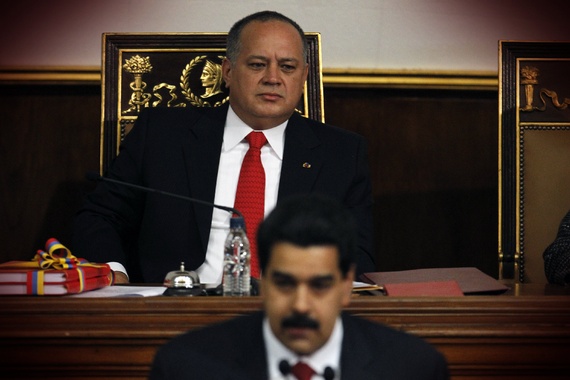
Diosdado Cabello sits behind Nicolas Maduro during a state of the nation address. (Reuters/The Atlantic)
Meet Diosdado Cabello: Venezuela’s National Assembly chief, vice president of the ruling United Socialist Party, and ruthless pragmatist par excellence. If the makers of House of Cards are looking to expand the franchise south, they should get to know Venezuela’s Frank Underwood.

lead

In recent weeks, Venezuela’s political crisis—mass protests in response to a flailing economy, rampant scarcities, soaring crime, and ideological polarization—has been portrayed in international media primarily as a struggle between a monolithic government and the embattled remnants of the nation’s traditional middle class. But this narrative is superficial; several storylines, both personal and social, are playing out below the surface. And these include a bitter clash between Hugo Chávez’s successor and almost-successor for the soul of his party and the future of the country.

For one party in this clash, President Nicolás Maduro, Venezuela’s unrest has been deeply damaging. He is under fire for his ready reliance on state violence in dealing with unarmed demonstrators, which has left 18 people dead. In public appearances, he seems increasingly exhausted and more than a little unhinged.

It’s a clash between Hugo Chávez’s successor and almost-successor for the soul of his party and the future of the country.
For the other party, Cabello, the turmoil has been galvanizing. Suddenly he’s everywhere. When the popular opposition figure Leopoldo López was declared a wanted man, it was Cabello who negotiated his surrender with his family. Later, during the arrest itself—a preposterous affair in which López gave himself up during a mass demonstration—it was again Cabello who showed up to escort him to jail (despite having no judicial or police authority), ostensibly to “assure his safety.” Soon after, when security forces squared off with Ángel Vivas, a renegade former general who barricaded himself in his home in defiance of an arrest order, it was Cabello—not Maduro—who played the most visible official role in the dramatic showdown.

What’s more, mere days after López first called for anti-government protests, state media announced that Cabello would be starring in his own weekly television show. The first episode featured a ‘surprise’ visit from Maduro and a music video by Cabello’s daughter, Daniella, in which she sang a ballad to the recently departed Chávez. The video went viral among government supporters, and Daniella has remained in the headlines by publicly “forgiving” a young regime opponent who had sent her a threatening tweet.

In other words, as Venezuela marks the first anniversary since Chávez’s death, the struggle between Cabello and Maduro is becoming more pronounced. And Cabello appears to be winning.

Diosdado Cabello began his political career as one of Chávez’s junior comrades-in-arms from the military, during a failed putsch against the government of Carlos Andrés Pérez in 1992. The plot miscarried, and Cabello was briefly jailed for his participation. After his release, he assisted Chávez during his first successful presidential bid in 1998, and was singled out early on for his toughness and efficacy.

His political trajectory since has been remarkable both for its duration (Chávez was quick to sideline potential rivals) and its variety. His posts have included stints as the minister of planning, justice, the interior, public works, and housing, along with stretches as a state governor, the head of the National Telecommunications Commission, and Chávez’s chief of staff and presidential campaign manager. Following the collapse of a bloodless coup in 2002 that briefly ousted Chávez, Cabello, then vice president, even assumed the presidency—an ephemeral tenure that lasted mere hours until Chávez himself could be located and constitutional order (or at least what passes for it in Venezuela) restored. Ten years later, with Chávez ailing, many suspected Cabello might be anointed his heir, but he was instead passed over for the country’s current president, Nicolás Maduro.

For all the incarnadine gusto of Kevin Spacey’s character, Cabello often does Frank Underwood one better.
Today, as head of Venezuela’s Socialist-dominated unicameral legislature, the 50-year-old Cabello rules over his fief with brutal efficiency. For all the incarnadine gusto of Kevin Spacey’s character, Cabello often does Frank Underwood one better. On his watch, the National Assembly has made a habit of ignoring constitutional hurdles entirely—at various times preventing opposition members from speaking in session, suspending their salaries, stripping particularly problematic legislators of parliamentary immunity, and, on one occasion, even presiding over the physical beating of unfriendly lawmakers while the assembly was meeting.

In a region of the world where charisma is king, Cabello—whose first name, Diosdado, translates to “God-given”—is something of an oddity. He amasses his influence not as a mesmerizer of crowds, but as a master manipulator of those around him. Artfully leveraging his position and alliances, he mercilessly crushes enemies, lavishly rewards friends, and even helps fill government offices with members of his own family. His wife is a member of the National Assembly, his brother is in charge of the nation’s taxation authority, and his sister is a Venezuelan legate to the United Nations.

In these ways, Cabello has accumulated clout among crucial constituencies such as wealthy businessmen and the armed forces, where 36 generals are from Cabello’s graduating class at Venezuela’s military academy. Cabello’s tendrils are even rumored to extend to shadier realms, including alleged ties to narco-trafficking syndicates and criminal organizations. A Wikileaked U.S. Embassy cable from 2009 characterized Cabello as a “major pole” of corruption within the regime, describing him as “amassing great power and control over the regime’s apparatus as well as a private fortune, often through intimidation behind the scenes.” The communiqué likewise entertained speculation that “Chavez himself might be concerned about Cabello’s growing influence but unable to diminish it.”

This strategy is not without its drawbacks. Cabello is personally despised by regime opponents, who see him as a bullying mafioso, and also deeply distrusted by many of the government’s own supporters, who view him as corrupt, opportunistic, overly ambitious, and not sufficiently dedicated to the revolutionary principles of the United Socialist Party.

And true to Frank Underwood form, Cabello is excellent at getting himself appointed to lofty posts but less skilled at the ballot box. In 2008—despite enjoying the government’s vast financial and logistical support, and the tacit assistance of Venezuela’s famously preferential electoral authorities—he lost his reelection bid for the governorship of Miranda, Venezuela’s second-most-populous state, to Henrique Capriles: a foil who would eventually rise to challenge Chávez himself for the presidency in 2012.

Cabello’s influence is shaped by the two divergent political groups within Venezuela’s ruling party: one pragmatic, the other ideological. The first, typified by Cabello, is the more classically populist Latin American movement: nationalistic, corrupt, and platitudinous. The second seeks international revolution and a wholesale transformation of Latin American society. Through oil diplomacy, this latter camp has sought to turn socialist Venezuela into a force in regional and global affairs, pumping state funds into maintaining friendly client regimes in Bolivia, Cuba, Ecuador, and Nicaragua. Its members have allegedly also worked to influence elections as far afield as Mexico while strengthening ties with countries such as Iran and Russia.

At the peak of his power, Chávez was able to harness both these factions through the sheer force of his personality. Prior to his death, however, he staked his legacy on the ideological camp. As his health failed, Cuban influence within the Venezuelan government grew, and the regime in Havana—highly dependent economically on Venezuelan largesse in the form of subsidized oil and other assistance—pushed hard for Maduro, an idealist with strong ties to the Castros, to be made successor. Chávez’s cancer diagnosis likewise came at a time when Cabello’s clout seemed to be waning. Old corruption allegations resurfaced, and some of his allies were purged. This estrangement appeared to peak in 2012 when Chávez, during a live televised broadcast, unexpectedly recommended that Cabello run for the governorship of remote Monagas state. The region may have been Cabello’s birthplace, but the proposal smacked of political exile. Cabello demurred.

Following Chávez’s death, and Maduro’s enshrinement as his heir, the Venezuelan constitution arguably left Cabello, as head of the legislature, acting president until elections could be held. Yet Maduro’s cadre managed to convince the relevant authorities to simply ignore the provision, allowing the position to pass to him and depriving Cabello of another shot at a truncated presidency.

He amasses his influence not as a mesmerizer of crowds, but as a master manipulator of those around him.
While the two men have been publicly supportive of each other since then, the relationship may be far tenser than they let on. In April 2013, after Maduro eked out a contested electoral victory over Capriles, Cabello tweeted to his nearly 1 million followers that the government should engage in “profound self reflection” about why it had performed so poorly relative to Chávez’s last election. As the latter race had taken place mere months before, against the same opponent and with the same regime advantages, the implication of Cabello’s message was clear: ‘Maduro is a liability.’

A number of leaks have offered further evidence of an enduring rivalry. In May 2013, the opposition mysteriously obtained a recording of Mario Silva, a popular, pro-government ideologue and television host, discussing internal regime matters with a high-ranking member of Cuba’s secret police. In the audio, Cabello, whom Silva described as a “very great son of a whore,” was depicted as a power-hungry, kleptomaniacal thug, and a constant but irremovable thorn in the side of Maduro.

Publicly, the government tried to discredit the recordings as CIA/Mossad counterfeits, but Silva was promptly taken off the air. Cabello emerged from the scandal relatively unscathed and soon appeared beside Maduro on state television, looking untouchable and leaving some Venezuelans to wonder if he had orchestrated the leak himself.

As Venezuela’s protests enter their fourth week, the ultimate goal of Cabello’s latest charm offensive remains unclear. Opposition leaders have expressed concerns that, in facing off against Maduro, they risk enabling a Cabello takeover. Yet even in the unlikely event that the crisis results in Maduro resigning or being pushed out, a Cabello presidency would still require a national election, barring the outright suspension of the country’s constitution. And elections have never been Cabello’s forte.

But it’s best to not give such inconveniences much thought. Unlike Frank Underwood, his Netflixolano counterpart, Cabello’s endgame may not be the presidency itself. It is, instead, power with impunity that he seeks. If Maduro falls, it is difficult to imagine a scenario in which Cabello does not play an integral role in deciding who and what succeeds him. With the deck sufficiently stacked, it may not matter much to Diosdado Cabello who the king is—so long as he remains the ace.

Putin Compared to Hitler

McCain, Rubio, and Graham Appreciate Hillary Clinton’s Putin-as-Hitler Analogy

By David Weigel

Don’t worry, he doesn’t want to kill all the Jews, he just wants to take over Europe.

Yesterday Hillary Clinton spoke at a private event to benefit the Boys & Girls Clubs of Long Beach—so, naturally, she talked about Hitler. The Long Beach Press-Telegram got audio of Clinton’s comments about the strategy and precedent of the current Russian incursion into Crimea. This part understandably created some agita.

Now if this sounds familiar, it’s what Hitler did back in the ’30s. All the Germans that were … the ethnic Germans, the Germans by ancestry who were in places like Czechoslovakia and Romania and other places, Hitler kept saying they’re not being treated right, I must go and protect my people, and that’s what’s gotten everybody so nervous.
This is not the official position of the Obama administration. It’s also the sort of analogy that would light up Media Matters or your favorite conservative derp site if uttered by a Republican. Conveniently enough, after today’s DOJ vote, some of the Congress’s leading hawks were asked by reporters whether they agreed with Clinton.

“Good!” said Arizona Sen. John McCain, reacting to a paraphrase of Clinton’s analogy. “I think I did that in the last couple days. The point is that if Putin is allowed to go into a sovereign nation on behalf of Russian-speaking people, this is the same thing that Hitler did prior to World War II. Went into the Sudetenland on behalf of German-speaking people. So I am pleased that Hillary Clinton is commenting on it.”

What about you, Florida Sen. Marco Rubio?

“There certainly are similarities,” said the senator, who’d been winning plaudits on the right for his reactions to the Crimea and Venezuelan crises. “I mean, I think Nazi Germany stands on its own as a unique and barbaric government. There’s certainly no peer in terms of its brutality. I think the point she was making, was that in terms of the claims they’ve made, that they need to move into a neighboring country to protect an ethnic group tied to them are similar to the arguments Hitler made in the 1930s.”

And what about South Carolina Sen. Lindsey Graham? He had the most deliberate answer of the three.

“I don’t think that Putin wants to kill all the Jews,” Graham said. “I don’t think he wants to take over Europe. I think he does want to expand beyond his borders, and the justification he’s using is just what Hitler used. I’m not saying he’s Hitler—I’m saying he’s an autocratic dictator who’s suppressed freedom in his own country, and his goal is to snuff out efforts by people who live around him, under his sphere of influence, to have their freedom. She’s right in this regard: The excuse given by Hitler, when going into the Sudetenland, was that he had to protect the German people. But I don’t think either of us are saying Putin is Hitler.”

And how did he take the comment coming from Clinton? “She understands that if she wants to run for president, she needs to drop this failed foreign policy like a hot potato. Well, good luck—she had her chance to influence it. Why is the Congress acting, why are they tripping over themselves to do something? Well, because we don’t think the president will.”

McCain said much the same thing. “The whole administration deserves the blame, everybody, for the weakness and total misperception of the nature of Vladimir Putin. Pushing the reset button is certainly a demonstration of that.”

David Weigel is a Slate political reporter. You can reach him at daveweigel@gmail.com, or tweet at him @daveweigel.

I really Hope the United States Gets Rid of Pennies and Nickels

White House Offers Thoughts for Your Penny
ARTICLE

By JEFFREY SPARSHOTT
CONNECT
The latest White House budget offers some hope and a clear comment on change.

Bloomberg News
The White House budget out Tuesday calls for a “comprehensive review” of U.S. currency production, including alternatives for the money-losing penny and nickel.

It costs 1.8 cents to make a penny and 9.4 cents to make a nickel, costing the federal government about $104.5 million last year, according to the U.S. Mint.

The Mint already is studying a change to the mix of metals it uses to make quarters, dimes and nickels, a study Congress mandated in 2010 to examine ways to save money. Materials could be altered for the first time in half a century or more, potentially changing the color and diminishing the weight of coins.

The budget goes bigger, directing the U.S. Treasury to “assess the future of currency,” noting that production and circulation of coins and paper money have changed little in recent decades despite the growth in use of credit cards, online payments and other electronic transactions.

For now, Treasury is only looking at possibilities.

“These studies will analyze alternative metals, the United States Mint facilities, and consumer behavior and pref­erences, and will result in the development of alternative options for the penny and the nickel,” the budget says.

So far, Mint research indicates that the nickel can be produced for about, well, five cents. But no matter what it does, the penny will likely cost more to make than its face value.

Could that mean the end of the penny? The budget doesn’t say.

Other countries have decided to do away with it, including Britain, Australia and Israel. Most recently, Canada stopped distribution of the coin in 2013.

The latest documents sidestepped the heated topic of replacing dollar bills with dollar coins.

Putin’s Rationale for Invading the Ukraine

Putin defends Russian action in Ukraine to Merkel

(RIA-Novosti Presidential Press Service, Alexei Nikolsky/ Associated Press ) – Russian President Vladimir Putin listens during his working meetings at the Novo-Ogaryovo residence outside Moscow, Russia, Friday, Feb. 28, 2014. Moscow has been sending mixed signals about Ukraine but pledged to respect its territorial integrity. Russian President Vladimir Putin has long dreamed of pulling Ukraine, a country of 46 million people considered the cradle of Russian civilization, closer into Moscow’s orbit.(Facundo Arrizabalaga, Pool/ Associated Press ) – German Chancellor Angela Merkel listens during a joint press conference with Britain’s Prime Minister David Cameron inside 10 Downing Street in London, Thursday Feb. 27, 2014. German Chancellor Angela Merkel wooed a welcoming but skeptical audience of British lawmakers Thursday with a call for a strong, unified Europe with Britain at its heart. Merkel addressed Britain’s Parliament during a visit full of ceremonial honor and political purpose. Prime Minister David Cameron sees Merkel as a potential ally in reshaping the European Union, and laid on lunch at the prime minister’s Downing St. residence and tea with Queen Elizabeth II on top of the speech to lawmakers.

By Associated Press, Published: March 2
MOSCOW — President Vladimir Putin has defended Russia’s action against “ultranationalist forces” in Ukraine during a phone conversation with German Chancellor Angela Merkel.

A Kremlin statement posted online said Putin spoke with Merkel by phone Sunday, and that Putin “directed her attention to the unrelenting threat of violence” to “Russian citizens and the whole Russian-speaking population.” The statement said Putin had stressed that measures taken by Russia so far were “fully adequate.”

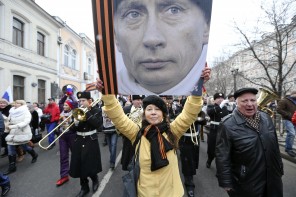
A woman holds a board displaying a portrait of Russia’s President Vladimir Putin during a procession in central Moscow, March 2, 2014. People gathered on Sunday to support the people of Crimea and Ukraine including Russian speakers, and to protest against the policies conducted by Ukraine’s new authorities recently elected in Kiev, according to organizers. REUTERS/Sergei Karpukhin (RUSSIA – Tags: POLITICS CIVIL UNREST)
Photos of the day
2014-03-02T140813Z_01_MOS13_RTRIDSP_3_RUSSIA1393789442

Since parliament gave him a green light to use military force in Ukraine late Saturday, Putin has defied calls from the West to pull back his troops, insisting Moscow has a right to protect its interests and those of Russian speakers in the strategic Crimea region and elsewhere in Ukraine.

Annals of Space Exploration

THE FOOTPRINT OF HUMANITY ON ANOTHER WORLD

Slate
BAD ASTRONOMY
THE ENTIRE UNIVERSE IN BLOG FORMFEB. 28 2014 7:45 AM

By Phil Plait
It’s actually rather amazing what you can see from orbit. Once you’re off the ground, above it, your perspective changes, and you can put things in context. Signs of civilization can shrink down to almost nothing compared with the glory of nature, making them difficult to spot.

For example, peruse this image taken by a satellite:

Opportunity
View from a height: Can you spot any signs of human activity in this satellite shot?
Photo by NASA/JPL/University of Arizona

hirise_opportunity_590.jpg.CROP.original-original

Can you even see any signs of human activity there on the surface?

Oh, wait a second. My apologies. I forgot to mention: That’s not the surface of Earth … it’s the surface of Mars. And the signs of humanity you see there are really just a single sign.

Can you spot that blip right in the center? That’s the Mars rover Opportunity!

Opportunity
I figured I’d take this opportunity to zoom in.
Photo by NASA/JPL/University of Arizona

opportunity_jellydonut.jpg.CROP.original-original

It’s only about 2.3 x 1.6 meters (7.5 x 5.2 feet) in size, so it’s just a few pixels across as seen by the HiRISE camera on the Mars Reconnaissance Orbiter. If the scientists and engineers programming the probe didn’t know exactly where Opportunity was, it would be impossible to find! But we know exactly where all our working hardware is on Mars, and we know exactly where the orbiting cameras point, making it far simpler to get pictures of the land-bound rovers.

Opportunity is seen here at what’s called Solander Point, where it found that odd rock nicknamed the “jelly doughnut.” The rock suddenly appeared next to the rover, when earlier images taken by Opportunity showed bare ground. That was quite a mystery, but it’s now pretty clear that the rock was a piece of a larger one broken off by one of the rover’s wheels. Images like this one from HiRISE are pretty useful when things like this happen; it shows no fresh craters nearby, making it unlikely the rock was ejected by a small impact.

Jelly doughnut
Now you don’t see it, now you do: before and after shots of the weird “jelly doughnut” rock. A “sol” is a Martian day, in this case measured after Opportunity landing on Mars.
Photo by NASA/JPL-Caltech/Cornell Univ./Arizona State Univ.

But for those of us back home who don’t study Mars for a living (and, I’d wager, even for those who do), images like this are still a thrill. As my friend Emily Lakdawalla puts it, “Seeing a spacecraft on the surface of a planet from another spacecraft never gets old.”

She’s right. It’s a great reminder that we humans are amazing when we want to be. We can, in a short time, go from creating myths about lights in the sky to landing on them and discovering their truths for ourselves.

Perils of Easy Technology

THE PROBLEM WITH EASY TECHNOLOGY

POSTED BY TIM WU

TNY_easytech-580FEBRUARY 25, 2014

In the history of marketing, there’s a classic tale that centers on the humble cake mix. During the nineteen-fifties, there were differences of opinion over how “instant” powdered cake mixes should be, and, in particular, over whether adding an egg ought to be part of the process. The first cake mixes, invented in the nineteen-thirties, merely required water, and some people argued that this approach, the easiest, was best. But others thought bakers would want to do more. Urged on by marketing psychologists, Betty Crocker herself began to instruct housewives to “add water, and two of your own fresh eggs.”

The cake-mix debate may be dated, but its central question remains: Just how demanding do we want our technologies to be? It is a question faced by the designers of nearly every tool, from tablet computers to kitchen appliances. A dominant if often unexamined logic favors making everything as easy as possible. Innovators like Alan Kay and Steve Jobs are celebrated for making previously daunting technologies usable by anyone. It may be hard to argue with easy, yet, as the add-an-egg saga suggests, there’s something deeper going on here.

The choice between demanding and easy technologies may be crucial to what we have called technological evolution. We are, as I argued in my most recent piece in this series, self-evolving. We make ourselves into what we, as a species, will become, mainly through our choices as consumers. If you accept these premises, our choice of technological tools becomes all-important; by the logic of biological atrophy, our unused skills and capacities tend to melt away, like the tail of an ape. It may sound overly dramatic, but the use of demanding technologies may actually be important to the future of the human race.

Just what is a demanding technology? Three elements are defining: it is technology that takes time to master, whose usage is highly occupying, and whose operation includes some real risk of failure. By this measure, a piano is a demanding technology, as is a frying pan, a programming language, or a paintbrush. So-called convenience technologies, in contrast—like instant mashed potatoes or automatic transmissions—usually require little concentrated effort and yield predictable results.

There is much to be said for the convenience technologies that have remade human society over the past century. They often open up life’s pleasures to a wider range of people (downhill skiing, for example, can be exhausting without lifts). They also distribute technological power more widely: consider that, nowadays, you don’t need special skills to take pretty good photos, or to capture a video of police brutality. Nor should we neglect that promise first made to all Americans in the nineteen-thirties: freedom from a life of drudgery to focus on what we really care about. Life is hard enough; do we need to be churning our own butter? Convenience technologies promised more space in our lives for other things, like thought, reflection, and leisure.

That, at least, is the idea. But, even on its own terms, convenience technology has failed us. Take that promise of liberation from overwork. In 1964, Life magazine, in an article about “Too Much Leisure,” asserted that “there will certainly be a sharp decline in the average work week” and that “some prophets of what automation is doing to our economy think we are on the verge of a 30-hour week; others as low as 25 or 20.” Obviously, we blew it. Our technologies may have made us prosthetic gods, yet they have somehow failed to deliver on the central promise of free time. The problem is that, as every individual task becomes easier, we demand much more of both ourselves and others. Instead of fewer difficult tasks (writing several long letters) we are left with a larger volume of small tasks (writing hundreds of e-mails). We have become plagued by a tyranny of tiny tasks, individually simple but collectively oppressive. And, when every task in life is easy, there remains just one profession left: multitasking.

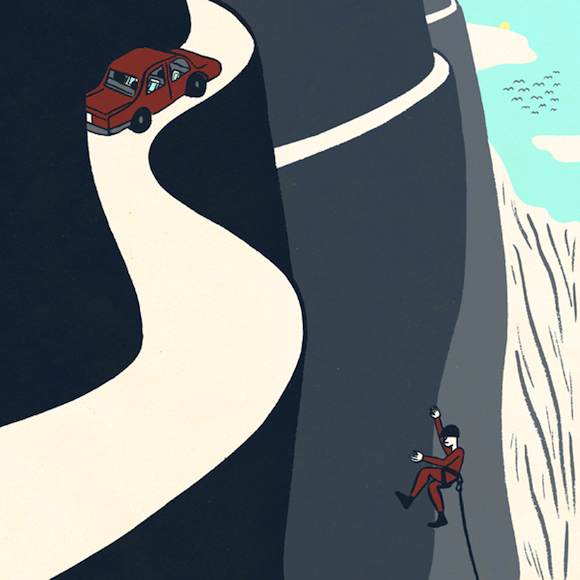
The risks of biological atrophy are even more important. Convenience technologies supposedly free us to focus on what matters, but sometimes the part that matters is what gets eliminated. Everyone knows that it is easier to drive to the top of a mountain than to hike; the views may be the same, but the feeling never is. By the same logic, we may evolve into creatures that can do more but find that what we do has somehow been robbed of the satisfaction we hoped it might contain.

The project of self-evolution demands an understanding of humanity’s relationship with tools, which is mysterious and defining. Some scientists, like the archaeologist Timothy Taylor, believe that our biological evolution was shaped by the tools our ancestors chose eons ago. Anecdotally, when people describe what matters to them, second only to human relationships is usually the mastery of some demanding tool. Playing the guitar, fishing, golfing, rock-climbing, sculpting, and painting all demand mastery of stubborn tools that often fail to do what we want. Perhaps the key to these and other demanding technologies is that they constantly require new learning. The brain is stimulated and forced to change. Conversely, when things are too easy, as a species we may become like unchallenged schoolchildren, sullen and perpetually dissatisfied.

I don’t mean to insist that everything need be done the hard way, or that we somehow need to suffer like our ancestors to achieve redemption. It isn’t somehow wrong to use a microwave rather than a wood fire to reheat leftovers. But we must take seriously our biological need to be challenged, or face the danger of evolving into creatures whose lives are more productive but also less satisfying.

There have always been groups, often outcasts, who have insisted on adhering to harder ways of doing some things. Compared to Camrys, motorcycles are unreliable, painful, and dangerous, yet some people cannot leave them alone. It may seem crazy to use command-line or plain-text editing software in an age of advanced user interfaces, but some people still do. In our times, D.I.Y. enthusiasts, hackers, and members of the maker movement are some of the people who intuitively understand the importance of demanding tools, without rejecting the idea that technology can improve the human condition. Derided for lacking a “political strategy,” they nonetheless realize that there are far more important agendas than the merely political. Whether they know it or not, they are trying to work out the future of what it means to be human, and, along the way, trying to find out how to make that existence worthwhile.

Tim Wu is a professor at Columbia Law School and the author of “The Master Switch.” This is Part III in a series on technological evolution. Part I was “If A Time Traveller Saw A Smartphone.” Part II was “As Technology Gets Better, Will Society Get Worse?”

Illustration by Hannah K. Lee.