More on 3D printing

Technology Quarterly: Q4 2012

Monitor

The PC all over again?

Difference engine: Just as computers make it easy to copy music, 3D printers will soon allow easy copying of certain kinds of objects. Proponents of the technology should be prepared for toy makers and other manufacturers to fight back

Dec 1st 2012 | from the print edition


TINKERERS with machines that turn binary digits into physical objects are pioneering a whole new way of making things—one that could rewrite the rules of manufacturing in much the same way that the PC laid waste to traditional computing. The machines in question, 3D printers, have existed in industry for years. But at a cost of between $100,000 and $1m, few individuals could afford one. Like everything digital, however, their price has fallen. Industrial 3D printers can now be had for $15,000, and home versions for little more than $1,000—or half that in kit form.

A development to be cheered, surely? Perhaps not by everyone. Michael Weinberg of Public Knowledge, an advocacy group in Washington, DC, fears that the fledgling technology could have its wings clipped by traditional manufacturers who see it as a threat to their livelihoods. Because a 3D printer can make perfect replicas of many kinds of object, manufacturers may seek to brand it a “piracy machine” and demand additional measures to protect their traditional way of doing business. Mr Weinberg worries that they may behave rather like the record industry did when its own business model—based on selling pricey CD albums that few music fans wanted, instead of cheap single tracks they craved—came under attack from Napster and other file-swapping networks.

Established brands have had to contend with rip-offs since the dawn of the industrial age. Whole neighbourhoods exist in Hong Kong, Bangkok and even Tokyo that turn out imitation designer handbags, shoes and watches. But although imitators have invariably used inferior materials and low-cost labour, they still needed costly manufacturing equipment. To some extent, that has limited the spread of fake goods. But cheap 3D printers and laser scanners may cause them to proliferate.

Printer problems

3D printers are akin to inkjet printers, depositing successive layers of material from nozzles until a three-dimensional object is built up. They can make things out of a thermoplastic such as acrylonitrile butadiene styrene (ABS), polylactic acid or polycarbonate, or metallic powders, clays and even living cells. This is far more efficient than starting with a lump of material and machining away the unwanted parts. And unlike with injection moulding, there is no need to set up an assembly line.

As far as intellectual property is concerned, the 3D printer itself is not the problem. But before it can start making anything, it needs a digital blueprint of the item in question, in the form of a CAD (computer-aided design) file. The blueprint can be created from scratch on a computer or downloaded from online repositories, such as Thingiverse or Fab@Home, and then modified as needed. Blueprints can also be generated from existing objects using a scanner that records three-dimensional measurements from various angles and turns the resulting data into a CAD file.

This is where concerns about infringement start. Unless the object is in the public domain, copyright law could well apply. This has caught out a number of users of 3D printers, who have blithely made reproductions of popular merchandise. It is right to penalize the wilful infringement of others’ copyright, but as with music, the ability to copy and replicate other people’s works can be a form of expression and a source of innovation. The question is where to draw the line.


The danger is that America’s Digital Millennium Copyright Act (DMCA) will be used to stifle free expression, jeopardise fair use and impede competition—by, for example, blocking the distribution of blueprints for aftermarket replacement parts such as brake pads or toner cartridges. Draconian enforcement would reduce consumer choice and hamper the huge potential of 3D printing to spur innovation.

As with any disruptive technology—from the printing press to the photocopier and the personal computer—3D printing is bound to upset existing ways of doing things. And as 3D printing proliferates, incumbent manufacturers are likely to demand protection from low-cost upstarts entering their business. They may even lobby to have copyright protection expanded to cover functional objects that contain elements of design. “This would create a type of quasi-patent system, without the requirement for novelty or the strictly limited period of protection,” worries Mr Weinberg.

The lesson the record industry learned from its copyright battles with file-swappers was that going after individual infringers was prohibitively expensive and caused bad publicity. So instead the record companies lobbied to get copyright liability extended to cover not only individuals who infringe, but also those who facilitate infringement—namely, the internet service providers (ISPs) and file-swapping services. Today, websites and ISPs have to block or remove infringing material whenever they receive a DMCA takedown notice from a copyright holder. The figures suggest that this happens more often than is justified. Google reckons that more than a third of the DMCA notices it has received over the years have turned out to be bogus copyright claims. More than half were from companies trying to restrict the activities of rival firms rather than lawbreakers.

Established manufacturers could likewise seek to get the doctrine of “contributory infringement” included in some expanded “object copyright” law as a way of crippling the personal-manufacturing movement before it eats their lunch. Being able to sue websites that host 3D design files as “havens of piracy” would save them the expense of trying to prosecute thousands of individuals with 3D printers churning out copies at home.

All this suggests that today’s fledgling 3D-printing community—tucked away in garages, basements, small workshops and university labs—needs to keep an eye on such policy debates as they emerge. “There will be a time when legacy industries demand some sort of DMCA for 3D printing,” says Mr Weinberg. But if the tinkerers wait until that day, it will be too late.

A Great General Passes

THE NEW YORKER ONLINE ONLY

DECEMBER 28, 2012
SCHWARZKOPF, POPPY BUSH, AND A FORGOTTEN PRESIDENCY
POSTED BY JOHN CASSIDY

Time is relentless. Just as an aide to the ailing former President George H. W. Bush was warning his would-be obituarists to hold off, at least for now, news came that one of old Poppy’s comrades in arms, Stormin’ Norman Schwarzkopf, the irascible general who led Operation Desert Storm, the 1991 military operation that evicted Saddam Hussein’s army from Kuwait, has died in Tampa.

The tenor of the two announcements reflected the men. From Bush the elder, as he has come to be known in his later years, a Waspish raspberry directed at the Reaper. “Is he sick? Yes,” his chief of staff, Jen Becker, wrote in a note to his family and friends. “Does he plan on going anywhere soon? No. He would ask me to tell you to please put the harps back in the closet.” From the family of Schwarzkopf, a private man, ten years Bush’s junior, confirmation that he had succumbed to complications from pneumonia. “We’re still in a state of shock,” his sister Ruth Barenbaum told the AP. “This was a surprise to us all.”

And to those of us who covered the first Bush Presidency. How quickly memories fade. Twenty years ago today, Bush, who is now eighty-eight, was serving out his final days as President, and Schwarzkopf, despite having retired from the military, was a lionized figure with a recently published and best-selling autobiography, “It Doesn’t Take a Hero,” to his name. Just as George W. Bush would come to eclipse his father in the public memory, Operation Iraqi Freedom, the ill-fated expedition to depose Saddam, would largely erase memories of the much shorter and more successful blitzkrieg that turned Schwarzkopf into a somewhat reluctant celebrity.

That is a pity. If Bush wasn’t a great President, he was a creditable one. Were there any moderate Republicans left on Capitol Hill, his tenure could serve as model for them to aspire to. During his four years in office, from 1988 to 1992, he defied the Cold Warriors, adroitly handling the collapse of the Soviet Union and the emergence of a united Germany; he defied the G.O.P. economic fundamentalists, raising taxes in 1990 to reduce the budget deficit; and he defied the Neocons, refusing, in March, 1991, to order Schwarzkopf and his troops to march from Kuwait City to Baghdad. The conservatives never forgave him for his heresies, but subsequent history proved him right.

Schwarzkopf, for his part, was a fearsome general. Hands-on, impassioned, and downright scary in combat, his soldiers called him The Bear, a nickname he much preferred to Stormin’ Norman. But he was also a well-read and thoughtful man, who, upon his retirement, sensibly resisted calls to enter politics and spent much of his time raising money for good causes. While he mixed in some of the same Tampa circles that General David Petraeus would later frequent, no scandal was ever attached to his name.

By family background, the President and the General were very different. One of them grew up in Greenwich, Connecticut, a state which his father, Prescott, a successful Wall Street banker, later represented in the U.S. Senate. The other was born in Newark. His father was a solider who also served as a senior officer in the New Jersey State Police. In other ways, though, Bush and Schwarzkopf had much in common. Two pro-business Republicans—after his retirement, Schwarzkopf served on the board of the gunmaker Remington—they were conservatives in the old sense of the word, realists skeptical of grand theories, their world views shaped by military combat: Bush in World War Two, when, as one of the youngest aviators in the Navy, he flew dozens of combat missions over Japanese territory; Schwarzkopf in Vietnam, where he served two tours of duty.

Operation Desert Shield brought them together. Even in retrospect, it shouldn’t be glamorized or sanitized. A Texas oilman for almost twenty years after the war, Bush, like Saddam, had his eyes firmly on the Kuwait oil fields and their strategic importance. Once they had been liberated, he was content to allow Schwarzkopf’s bombs to slaughter the retreating Iraqi troops, and, a bit later, to allow Saddam to do a similar job on the restive Shia of southern Iraq. Still, the military operation worked as planned, and once it had accomplished its goal—ejecting the Iraqis—Bush and Colin Powell called it off. While some armchair generals fulminated at the White House’s decision to leave Saddam in power, Schwarzkopf never did. Like his bosses, he recognized the limits of military power. An invasion of Iraq wouldn’t have had any international legitimacy, he told an interviewer after the war, adding: “And, oh by the way, I think we’d still be there, we’d be like a dinosaur in a tar pit…we’d still be the occupying power and we’d be paying one hundred percent of all the costs to administer all of Iraq.”

That was another judgement that experience was to uphold, in tragic fashion. After George W. decided that U.S. forces should go to Baghdad, after all, the former general publicly questioned whether he had an exit strategy. As was only to be expected, Bush the elder largely kept his own counsel on the Iraq war, as he did on his son’s reckless tax policies. What he really thought of them—let us not forget that this is the man who popularized the term “voodoo economics”—and what he now thinks of his party’s grim refusal to move beyond them, one can only speculate on. He has never been one to put abstract principle before the national interest. Having pledged not to raise taxes during the 1988 campaign, he agreed two years later, as part of a bipartisan budget agreement, to increase the top rate, and he also raised the levies on fuel and alcohol. Despite howls of protest from Newt Gingrich and others, the world did not end.

Hopefully, the forty-first President will recover the physical capacity and find the inclination to tell us what he thinks. But whatever happens, the lessons of his tenure in the White House, including some that were taught by Stormin’ Norman, bear remembering.

Photograph by Dirck Halstead//Time Life Pictures/Getty.

Read more: http://www.newyorker.com/online/blogs/johncassidy/2012/12/norman-schwarzkopf-poppy-bush-and-a-forgotten-war.html#ixzz2GONeqFL4

Watch Out for Ethanol

Will the New Ethanol Blend Tank My Ride?
The EPA has approved a new gas mix with more ethanol, but it might damage your car.
—By Kate Sheppard | Mon Dec. 24, 2012 3:11 AM PST
164

Photo by Deen Freelon
After years of debate—and I’m not exaggerating on that—my husband and I finally bought a car. We settled on a Prius C, a pint-sized younger sibling of the iconic originals that gets 53 miles per gallon.

I drove the car for weeks before I finally had to stop at a gas station. When I pulled open the door to my tank, I found a stark warning sign on the cap telling me I was NOT to put any gasoline blend higher than E10 in my tank.

E10 means gasoline with a 10 percent mix of ethanol, generally derived from corn, and it used to be the highest blend of ethanol allowed in the United States. Ten states require all gas to include 10 percent ethanol. About 80 percent of the gasoline consumed in the US is blended with ethanol, according to the industry’s trade group, the Renewable Fuels Association. Most of us—myself included—don’t pay a lot attention to what gas we’re pumping into our cars, outside of “diesel” or “unleaded,” and might not have realized that we are already pumping corn into our tanks.

But we’ll have to start paying attention soon, as the Environmental Protection Agency has approved a new policy that will allow states to raise the blend to up to 15 percent ethanol (also known as E15). The EPA says the fuel is approved for use for cars and light trucks from the model year 2001 and later.

Individual states will have to determine whether they want to raise their blend, but the EPA’s decision will allow them to do so if they choose. Midwestern, corn-producing states are expected to be the first to increase their blends. Right now, there are only 10 stations offering E15 as an option—all of them in Kansas, Iowa, and Nebraska.

I hadn’t really thought about E15 much before seeing the gas cap on my car. And as I went to pump gas in my car, I realized I had no idea what the current rule was in that state (which happened to be Maryland)—there were no signs on the pump. So what am I supposed to do when states start rolling out E15, with my car clearly telling me not to fill ‘er up with that stuff? What will it actually do to my car?

I’m not the only one who is concerned. A few weeks ago, AAA issued a statement saying that the EPA’s new policy creates the “strong likelihood of consumer confusion and the potential for voided warranties and vehicle damage.” The worry is that people will put E15 in their cars without realizing it. AAA surveyed vehicle manufacturers, and found that only about 12 million of the 240 million vehicles on the roads today are built to use E15 gasoline.

Automakers are also warning against using E15. BMW, Chrysler, Nissan, Toyota, and Volkswagen have all said that their warranties do not cover problems caused by using E15, and another eight companies have said using it may void warranty coverage, if they determine that’s what caused the problem.

EPA
The EPA will require that gas pumps with E15 bear a warning sign noting the blend and that it is not recommended for cars older than the 2001 model year. But what happens if I accidentally use it?

Brian Lyons, Toyota’s safety and quality communications manager, told me that the problem is that “nobody really knows what negative effects [E15 is] going to have on the vehicle.” While the company is now working on cars that can run on the new blend, the existing models weren’t built for that.

It’s not that filling up with E15 one time will screw up my engine, Lyons said. Rather, the concern is that repeated, long-term exposure could cause the higher-alcohol-content fuel to degrade engine parts like valves and cylinder heads—which could potentially cost thousands of dollars to replace. Short-term, I may notice that my car isn’t performing as well. My “check engine” light might come on. And it could keep coming on, repeatedly, which is probably more annoying than dangerous.

“We think that there needs to be a lot more study conducted to make sure there are no longer term effects on the vehicle,” Lyons said. “So far everything we’ve seen says there will be.”

Okay, so Toyota doesn’t like the new rule. Gas station owners don’t like it very much either, because they’d likely have to upgrade their equipment to use it. Nor are environmental groups big fans of the EPA’s decision. For one, they note that using corn ethanol creates many of its own environmental problems. The Environmental Working Group also argues that increasing the use of ethanol can drive up food prices, and isn’t the best means of reducing our reliance on foreign fuels.

The only group that really seems to like the new rule is the ethanol lobby.

“We’ve force fed a fuel into every American’s car that benefits a few thousand corn farmers and ethanol refiners at the expense of virtually every other American,” EWG’s vice president of governmental affairs, Scott Faber, told Mother Jones.

Everyone’s best advice for car owners? Pay attention at the pump.

164

Lost Masterpiece and Six Good Books

A LOST MASTERPIECE

Six Good Books: Maggie Fergusson rediscovers an early novel by the Nobel-laureate Patrick White, and picks the best of 2012…

From INTELLIGENT LIFE magazine, January/February 2013

NOVEL

Happy Valley by Patrick White (Cape, hardback, out now). When this first novel appeared in 1939, reviewers including Graham Greene came together in a chorus of praise. Then Patrick White suppressed it. Reissued now to mark his centenary, it turns out to be a masterpiece. Happy Valley is a small Australian town, a microcosm through which White explores the passions simmering below the surface of apparently unexceptional lives. The only Australian writer to win a Nobel prize, he is brilliant on the gulf between thought and speech, and the sleights of mind we develop to cope with anguish. The spinster piano teacher withdraws from the “formless and volatile” present into an idealised past; the bullied child inhabits an imaginary future; the asthmatic schoolmaster harbours anger, finally released in the murder of his wife. White’s prose slides between dialogue and interior monologue, subtle but never obscure. “Will they read me when I’m dead?” he used to ask. They should.

SHORT STORIES

Dear Life by Alice Munro (Chatto, hardback, out now). Hiding her craftsmanship under an easy, conversational style, Alice Munro uses the first ten stories in this collection to revisit small-town Ontario, and to reveal just how surreal real life can be. Every word pulls its weight (a wallflower at a party feels that everyone else is “equipped” with friends) as Munro homes in on the things that throw lives off kilter: the nuance of character that, slowly but surely, derails a marriage; the despair that drives a nine-year-old to suicide. She saves the best till last, closing with a quartet of stories that are, she says, the closest she will ever come to memoir. “The Eye”, in which Munro’s capricious mother makes her visit the corpse of a nanny to whom she has become traitorously attached, is a gem.

PSYCHOLOGY

Hallucinations by Oliver Sacks (Picador, hardback, out now). Hallucination need not imply insanity: this is what Oliver Sacks sets out to demonstrate in an “anthology” of his patients’ experiences. Some are gently amusing—an elderly lady who regularly “sees” figures in Eastern dress is delighted when diagnosed with “Charles Bonnet Syndrome”; most are alarming and poignant. One patient with “sundowning syndrome” is daily besieged by grotesque intruders as the light fails. But this is more than arm’s-length reportage. Writing with compassion, and weaving his tales together with literary reference and scientific research, Sacks places at the heart of the book a riveting confessional chapter about the drug-induced hallucinations he himself experienced as a young neurologist – his conversations with a spider, and the summer’s day he spent watching the battle of Agincourt played out on his dressing gown.

MEMOIR

Trafficked by Sophie Hayes (Harper-Collins, paperback, out now). Misery memoir, or “mis mem”, strikes me as a genre that too often panders to prurience. But by chance I met Sophie Hayes, was impressed, and felt compelled to read her story in full. British, well-educated and middle-class, she was not an obvious target for sex traffickers. But when her “boyfriend” took her to Italy, locked her up, stole her passport, and brainwashed her into believing that she’d be dead if she didn’t obey him, she was forced into prostitution, serving around 30 clients a night, seeing humanity at its most depraved—and, occasionally, at its kindest. Working with the United Nations and the Metropolitan Police, she now devotes herself to preventing other women from meeting a similar fate. Her cautionary tale ends in a triumph of tenacity over terror.

THE TWO BEST BOOKS OF THE YEAR

NON-FICTION

Behind the Beautiful Forevers by Katherine Boo (Portobello, paperback, out now). A blonde American journalist with “lousy health” and no languages sets out to capture Mumbai poverty: it sounds like a recipe for voyeuristic pap, but it has yielded a small classic. Annawadi, the slum in which Katherine Boo based herself for nearly four years, is overlooked by luxury hotels spewing rubbish through which the slum-dwellers comb to scrape a living. But the reader gets no closer to the rich than their waste. We are confined, instead, to Annawadi, forced to look hard at the rivalries, corruption and goodness governing the lives of its inhabitants. Some economists argue that chaotic uncertainty breeds ingenuity, and therefore social mobility. Combining a cool intelligence with a cinematic eye for detail, Boo explodes this myth. “We try so many things,” says one Annawadian, “but the world doesn’t move in our favour.”

FICTION

Bring Up the Bodies by Hilary Mantel (Fourth Estate, hardback, out now). On Hilary Mantel’s computer desktop is a photograph of the view from her window. It prompts her, every so often, to re-enter the present, because for several years she’s been living in the Tudor past, and in the mind of Thomas Cromwell. In this Booker-winning sequel to the Booker-winner “Wolf Hall”, the time frame is tight—from the autumn of 1535 to the spring of 1536—and momentum builds inexorably until, in the final chapters, the drama gallops towards the execution of Anne Boleyn. This is fiction to make you miss your stop on the train home: extraordinary, given that we know how the story must end. Mantel keeps us constantly aware of the provisional, “Sliding Doors” nature of history. Tweak a thought here or a word there, and it might all have turned out differently.

Maggie Fergusson is the literary editor of Intelligent Life, director of the Royal Society of Literature and the award-winning biographer of George Mackay Brown

ARTS  MAGGIE FERGUSSON  CULTURE  JANUARY/FEBRUARY 2013  SIX GOOD BOOKS
ARTICLE TOOLS

Colorado Christmas

From Christmases Around the World

s_c01_56466043

We had several inches of snow at our place and another White Christmas.

Everyone Knows this is Going On Except the Government?

Rigging of the Oil and Gasoline Markets – What Will Obama do?

By Dian L. Chu | Sun, 23 December 2012 00:00 | 2

Benefit From the Latest Energy Trends and Investment Opportunities before the mainstream media and investing public are aware they even exist. The Free Oilprice.com Energy Intelligence Report gives you this and much more. Click here to find out more.

UBS paid $1.5 Billion for manipulating Libor, and Barclay`s already paid the piper for manipulating the Libor rate. Well, it is about time the CFTC get its act together, and start going after the culprits who rig the oil and gasoline markets costing consumers and businesses a mafia tax by paying prices much higher than the markets should be priced based upon supply and demand fundamentals in the consumption marketplace.

Gasoline Market

Today we had another build in Gasoline supplies, up 2.2 million barrels in the week for a fourth straight weekly build. We have had builds of 3.9 million barrels, 7.9 million barrels, 5.0 million barrels, and 2.2 million barrels totaling 19 million barrels build in gasoline inventories in a month.

Well, you say there must be strong demand numbers for gasoline. Nope, gasoline demand in the wholesale market is soft down 2.9 year-on-year, meaning gasoline sales this month are weak as well!

US crude oil stocks 2

Now, what is happening to price? On November 28th 2012 RBOB Gasoline prices were 2.66 a gallon, and today after 19 million barrels of build, (i.e. we no longer have short supplies on hand, about average for this time of year, in fact), RBOB gasoline prices are 2.74 a gallon.

Ergo, we have 19 million barrels of build, weak demand year-on-year.  However, this month, consumers are set to pay a whopping 8 cents a gallon more for the base commodity, which eventually will work its way to the pump over the next few weeks!

US gasoline stocks

Consumers may think prices are going down.  Yeah, but they should be continually going down, and down a lot more if the gasoline market wasn`t rigged. If anything gasoline prices should have come down at least another 25 cents based upon the build in inventories.  Instead consumers will be paying 8 cents higher with these 19 million build in gasoline inventories –the fair market pricing system at work!

In other words, there was so much supply on the market that wholesalers had to store it because there wasn`t enough demand to sell it to consumers.  Yet prices still go up for the base commodity. So instead of prices continuing to come down further, consumers will have to pay more for gasoline in the coming months, and they shouldn`t if the market wasn`t rigged by this “mafia tax”!

US gasoline demand

Libor Rates

So where is the CFTC, the Commodity Trading Futures Commission, who should monitor these price shenanigans? The same place all the regulatory authorities were when consumers were being robbed by paying higher Libor rates than the market should have dictated for all types of lending from credit cards to other types of loans.

UBS got caught and agreed to pay 1.5 billion in fines.  Will consumers ever get any of this money? Heck no!  These fines go straight to government coffers, the same government and regulatory bodies who looked the other way while consumers were being charged this mafia tax by big banks for years.

Remember, Timothy Geithner knew about phony Libor rates for years before anybody did anything about it. And they say Geithner is in line to be the next Fed chief.  Guess he makes for a good business as usual candidate since Ben Bernanke knew about inappropriate Libor rates for years as well.

These officials don`t care about consumers.  They just saw an opportunity to make some money by going after these firms on Libor, long after consumers have paid far more than 1.5 billion in higher interest payments. Moreover, Consumers don`t get any of the money back, the actual victims in the scam!

The regulatory and governmental bodies responsible for monitoring these unscrupulous practices are where they always are, sitting on the sidelines for years of damage to consumers pocketbooks, and then when they finally do something about it, it is years down the line, and these firms only pay a slap on the wrist “shakedown fine”, and governments keep all the proceeds while consumers get screwed again.

How about giving the money from fines back to the real victims of these scams like the consumers in the form of tax rebates? The government made a whole lot of money off of AIG, how about giving this money back to taxpayers in the form of tax rebates? It will never happen because governments and these regulatory bodies are just as corrupt as the firms doing what I call these “mafia taxes” in the gasoline and oil markets.

They only care about how they can make some money off these firms by conducting these pseudo shake down cases just so they can get some money for their own little fiefdoms!

It would sure be nice if Obama could actually care about consumers and get somebody in the CFTC to represent consumer’s interests for a change, instead of these cozy relationships that currently exist in the CFTC for the last 10 years as the gasoline and oil markets have been rigged for decades!

By. Dian Chu

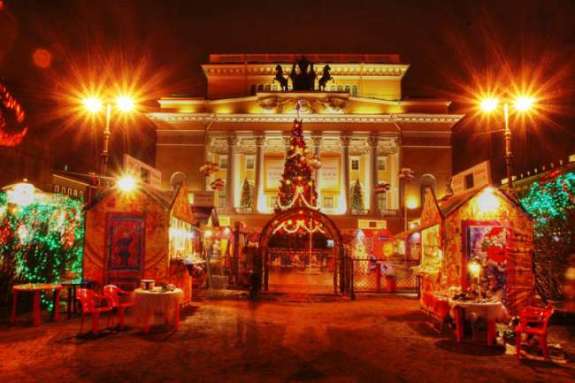
Christmas Market in St. Petersburg, Russia

This holiday market in St. Petersburg opened in November 2011 and remains open until the New Year.information_items_774

Sounds a Bit Like Russia

Waiting to See if a ‘Yes Man’ Picked to Succeed Chávez Might Say Something Else
By WILLIAM NEUMAN
Published: December 22, 2012

CARACAS, Venezuela — Nicolás Maduro, the handpicked successor of Venezuela’s ailing president, Hugo Chávez, stood on a stage this month and gave a barn burner of a speech in classic Chávez style. He shouted until his voice gave out, swore an oath of loyalty to the revolution and blasted its opponents. But when the crowd started to chant his name, he quickly cut them off, shouting into the microphone: “Chávez! Chávez! Chávez!”
Enlarge This Image

One thing Mr. Maduro has certainly learned in his years at Mr. Chávez’s side: do not outshine the boss.

That remains true even with Mr. Chávez, 58, in delicate health in Cuba after surgery for cancer, and even after Mr. Chávez told the nation that if illness prevents him from governing, Mr. Maduro, 50, currently the vice president, should lead in his place.

“He’s known as a yes man, and he’s somebody that has never shown an independent streak,” said David Smilde, a senior fellow of the Washington Office on Latin America, a research organization. “That’s what has been key for him, always put the light on Chávez.”

But for all Mr. Maduro’s faithfulness, some see signs that he may be a different sort of leader, someone more moderate and willing to negotiate than the combative Mr. Chávez. Not only could that open up the possibility of dialogue with the political opposition inside the country, but it could also mean a softening of Venezuela’s strident foreign policy and its antagonistic relationship with the United States.

“He is a moderate man, a pragmatic man,” said María Emma Mejía, a former Colombian foreign minister who worked closely with Mr. Maduro when she was secretary-general of Unasur, an organization of South American nations. She credited him with helping to improve Venezuela’s relations with Colombia after years of tension. “He is not dogmatic in a way that rejects other people’s positions,” she added.

Still, others say that he has adhered to Mr. Chávez’s policies so closely for so long that it is hard to know what his own choices would be — if he even has the latitude to make them.

A former bus driver and transit union leader, Mr. Maduro has been a supporter of Mr. Chávez at least since the aftermath of Mr. Chávez’s failed 1992 coup. He became a legislator when Mr. Chávez became president in 1999, then helped write a new Constitution, and by 2005 he had become the head of the National Assembly. He was made foreign minister in 2006 and continues in that post today.

He often travels with Mr. Chávez, and in the last year and a half, as Mr. Chávez has spent weeks in Cuba receiving treatment for cancer, Mr. Maduro was often there with him. After Mr. Chávez was elected to a new six-year term in October, he made Mr. Maduro his vice president.

That is a record of unusual constancy in a government with a merry-go-round of ministers who come and go at Mr. Chávez’s whim, often shunted aside for displeasing their boss or for showing a taste for the spotlight.

“He was able to be in the government, never threaten Chávez, never be marginalized, and it will be interesting to see what happens when he actually has to have an independent voice,” Mr. Smilde said.

A former South American diplomat who met often with Mr. Maduro in recent years said that more than most foreign ministers, Mr. Maduro seemed held back by his president’s micromanagement.

“I always saw him as being glued to Chávez,” the ex-diplomat said, speaking on the condition of anonymity because of the sensitive nature of the topic. “I always saw him as a messenger, and I never had a signal that would make me think he was a leader. But I think he’s learned a lot from Chávez, being so close.”

Now Mr. Maduro needs to win over the party faithful, who have a deep emotional connection with Mr. Chávez and often blame his lieutenants for the inefficiency and corruption that bedevil the government.

And while Mr. Chávez can give him his political blessing, he cannot give him his charisma. Mr. Maduro has been very much in the public eye since Mr. Chávez left for surgery in Cuba, often speaking before large crowds of loyalists. Early on, with emotions high over the president’s condition, his audience responded. But last week, as Mr. Maduro spoke at oath-taking ceremonies for newly elected governors, his speeches were often greeted with polite applause rather than full-throated devotion.

“I don’t see Maduro as a presidential candidate,” said Carlos Bolívar, 40, a street vendor in Caracas who supports Mr. Chávez. “He doesn’t have the skill. He’s too sealed up.”

But, he added, “If that’s what the president says, we have to accept it.”

Mr. Maduro grew up in Caracas in what a friend said was a family of modest means. His father was involved in left-wing politics and the labor movement. As a youth, Mr. Maduro became active in left-wing politics, too.

After high school he went to Cuba for political training, then returned and eventually went to work as a bus driver.

Fairly or not, that job has often defined him. Mr. Maduro’s critics sometimes dismiss him as unqualified to hold higher office. Mr. Chávez mocked that perception in October when he announced Mr. Maduro’s appointment as vice president, saying, “Look where Nicolás has gotten to, the bus driver,” he said. “How they have made fun of him.”

But the friend said that Mr. Maduro did not stay a bus driver for long (the job does not even appear on his résumé, which is posted on the Foreign Ministry’s Web site) and that he soon went to work at the union that represented transit workers.

After the failed coup that landed Mr. Chávez in prison in 1992, Mr. Maduro worked in Mr. Chávez’s movement. At that time he also got involved with the woman who would become his longtime partner, Cilia Flores, a young lawyer who was working to free Mr. Chávez from prison.

Ms. Flores is now the attorney general, making the pair one of the premier power couples of Mr. Chávez’s movement.

Friends and other diplomats describe Mr. Maduro as amiable, a man who laughs loudly, who likes to eat submarine sandwiches and overfilled arepas, who enjoys cigars and baseball.

But he also has a mystical side. He has been a follower of the late Indian guru Sathya Sai Baba. Mr. Maduro and Ms. Flores visited the guru in India in 2005. A photograph on a Sai Baba Web site records the visit, showing Mr. Maduro crouched at the feet of the orange-clad guru. A friend confirmed the visit, which was also reported at the time in El Nacional, a local newspaper, and said that Mr. Maduro had kept a picture of the guru in his office.

As foreign minister, Mr. Maduro has faithfully pursued Mr. Chávez’s goal of moving Venezuela outside the orbit of the United States, forging strong relationships with China and Russia and defying attempts by the United States to isolate countries like Iran and Syria. He has also helped build alliances with other Latin American countries aimed at reducing the influence of the United States in the region. He is seen as being close to Cuban government officials.

But it is not clear what path Mr. Maduro would follow on his own. As a diplomat and former union leader, he is seen as appreciating the value of negotiation.

Yet many veteran Venezuelan diplomats also blame him for weakening the country’s diplomatic corps, arguing that before he took over the Foreign Ministry, prospective career employees took the equivalent of a Civil Service test and went through extensive training. Critics say that Mr. Maduro discarded that system and that new employees were judged instead by their loyalty to Mr. Chávez.

“The diplomatic profession was politicized in the extreme,” said Eloy Torres, a former diplomat who now teaches at Santa María University in Caracas. “Today there are no more professionals; there are propagandists of the revolutionary process.”

Within Mr. Chávez’s movement, Mr. Maduro stands at the head of a faction of lifetime leftists committed to the goal of transforming Venezuela into a socialist society.

His main rival for power appears to be Diosdado Cabello, the head of the National Assembly. Mr. Cabello, a former officer who served in the army with Mr. Chávez, is considered the leader of a more conservative wing within the government, with strong roots in the military.

Since Mr. Chávez left for his most recent surgery in Cuba, Mr. Maduro and Mr. Cabello have frequently appeared together, following the president’s dictum that unity must be maintained.

But there are other factions and competing interests in Mr. Chávez’s movement, and if he dies, many question whether Mr. Maduro will be able to hold it together.

A version of this article appeared in print on December 23, 2012, on page A6 of the New York edition with the headline: Waiting to See if a ‘Yes Man’ Picked to Succeed

Fox in Snow

We were driving to town yesterday morning and passed this beautiful red fox.  She seemed to be limping a bit.  We hope she is able to avoid trouble until she heals.

christmas Fox

Saving a Frank Lloyd Wright Masterpiece

Sale of Wright House Assures Its Preservation

Ross D. Franklin/Associated Press
This home in Phoenix that was designed by Frank Lloyd Wright had been threatened by demolition but has now been purchased.
By FERNANDA SANTOS and MICHAEL KIMMELMAN
Published: December 20, 2012
FACEBOOK
TWITTER
GOOGLE+
SAVE
E-MAIL
SHARE
PRINT
REPRINTS

PHOENIX — A house designed by Frank Lloyd Wright here for his son was sold on Thursday, guaranteeing its preservation after it had been threatened for months with demolition by its owners, who had planned to replace it with new homes.
Related

Buyers of a Wright Home in Phoenix Reconsider a Deal ‘Too Good to Be True’ (October 26, 2012)
Critic’s Notebook: Wright Masterwork Is Seen in a New Light: A Fight for Its Life (October 3, 2012)

Connect With Us on Twitter
Follow @NYTNational for breaking news and headlines.
Twitter List: Reporters and Editors
The deal closed after at least one offer to buy the property had fallen through. Its former owners, Steve Sells and John Hoffman, principals at 8081 Meridian, a local development company, bought the property for $1.8 million in June and several times raised the price as the controversy over the potential demolition intensified.

The buyer’s identity has not been revealed; he requested anonymity as part of the transaction. He paid $2.387 million for the house, which Wright built in 1952 for his son and daughter-in-law, David and Gladys, according to Robert Joffe of Russ Lyon Sotheby’s International Realty, who represented the sellers in the transaction.

Its latest asking price was $2.51 million. The owners said they had raised the price to offset the mounting costs of fighting attempts to have the house declared a landmark, which, in Arizona, would delay any demolition for three years.

A victory for preservationists around the country, the sale came about through the intercession of the Frank Lloyd Wright Building Conservancy, a group that works to preserve the architect’s legacy. The sale unfolded in virtual secret; few people beyond the sellers, their agent, the buyer and officials at the conservancy were aware of its details.

The fight to save the house had galvanized preservationists and stirred spirited debates among City Council members over the value of preserving historically relevant structures versus the need to safeguard homeowners’ property rights.

The conservancy and other organizations petitioned the city in June to consider giving the house landmark status, after they learned of the former owners’ plans to split the lot to build the new homes. Three local government bodies approved the landmark designation, but the Council, which has the final say, postponed its vote twice, in part to give the parties more time to strike some type of compromise. There was also uncertainty over how some of its members would vote, given the homeowners’ lack of consent for the landmark process.

“If ever there was a case to balance private property rights versus the public good, to save something historically important to the cultural legacy of the city, this was it,” Larry Woodin, the president of the conservancy, said in an interview.

The latest agreement materialized over the span of two weeks, part of an effort by the conservancy to find a buyer or group of buyers for the property — and after the sellers had rejected prior offers.

Mayor Greg Stanton, who was among the most vocal proponents of landmark designation for the home, called the sale “an early Christmas present for the people of Phoenix and for the world.”

“This is a great piece of architecture, and we’re so proud and honored that it will be preserved for generations to come,” he added.

The house sits in the Arcadia neighborhood, in a lot overlooking Phoenix’s picturesque Camelback Mountains, which can be seen from most of its rooms. Its coiled design is similar to the one Wright used for the Guggenheim Museum in New York. Though little known before this, it is regarded among experts as one of the most significant of Wright’s later works.

Four years ago, Wright’s granddaughters sold the house for $2.8 million to a buyer they thought would keep it and preserve it. In June, though, the house was sold again to 8081 Meridian. An appraisal ordered by the city estimated the home needed about $300,000 worth of restoration work.

A petition started by the conservancy gathered more than 28,000 signatures from supporters around the world, calling for the house to be saved.

In an interview on Thursday, Mr. Joffe said it was “the most fulfilling deal of my 28 years in real estate” because of the significance of the house.

An Arizona-based nonprofit organization being established with help from the conservancy will maintain and operate the house and oversee its restoration. The new owner will also ask the City Council to grant landmark status, said the conservancy’s executive director, Janet Halstead.

The goal is to make the house available for educational purposes on a limited basis — ushering in what Mr. Woodin described as “a new chapter in the life of this important and unique Frank Lloyd Wright building.”

About one in five buildings designed by Wright have been lost to natural disasters, neglect or the pressures of development. Since its incorporation in 1989, the conservancy has helped rescue a number of them.

Included are the Burton J. Westcott House in Springfield, Ohio, which Wright designed in 1906; the Goestsch-Winckler House, built in 1940 as part of an uncompleted cooperative community in Okemos, Mich.; and the Ennis House in Los Angeles, which Wright designed in 1923 and which was extensively damaged during the 1994 Northridge earthquake.