China Needs to Police its Neighborhood

Graphic detail

Charts, maps and infographicsDaily chart

Missile diplomacy

Dec 12th 2012, 16:45 by Economist.com

North Korea’s rockets


ON DECEMBER 12th Kim Jong Un, leader of North Korea’s tin-pot regime, caught his own people and the rest of the world off-guard by launching an Unha-3 rocket into space and possibly putting a rudimentary satellite into orbit. The timing, just before the first anniversary of the death of his rocket-loving father, Kim Jong Il, appeared to be aimed primarily at solidifying the young Mr Kim’s leadership, as well as bolstering his popularity among his oppressed subjects. Beforehand, news of the proposed launch was censored in North Korea, possibly because of the embarrassment that ensued in April, when a previous Unha-3 rocket flopped in front of the world’s media. Today’s success was broadcast with great fanfare. Experts said the same technology it takes to put a 100kg satellite into orbit could be the first step towards firing an intercontinental ballistic missile with an equivalent payload at America, provided that North Korea could also master re-entry and accuracy.


See full article.

The Congress and our President are Paid to Lead, No Pay for them Until They Begin Leading

I am totally unimpressed with the behavior of our so-called political leaders.  They are doing nothing other than posturing to their wackiest constituents.  This fiscal cliff nonsense is ruining our economy and retarding job creation.  These blowhards are being paid to lead but they seem to forget what leadership is about.  Shame on the Republican House and Senate.  Shame on the White House and White House staff.  The biggest share of blame goes to our President, Pelosi and Reed and John Boehner and Mitch McConnell.

Write to your elected representatives demanding that they stop getting paid until they resolve this Fiscal Cliff Nonsense 

Remembering General Petraeus

GENERAL PRINCIPLES

How good was David Petraeus?

BY DECEMBER 17, 2012

Nowadays, most general officers, at least most American ones, do not see combat. They don’t fire their weapons, and they don’t get killed; for the most part, they don’t even smoke. In wars without front lines, American generals tend to stay inside fortified bases, where they plan missions and brief political leaders via secure video teleconferences. Their credentials are measured as much by their graduate degrees as by the medals on their dress uniforms. They are, for the most part, deeply conventional men, who rose to the top of the military hierarchy by following orders and suppressing subversive thoughts.

In recent years, the most esteemed officer in America—the very model of the modern general—was David Petraeus, whose public image combined the theorizing of the new school with a patina of old-fashioned toughness and rectitude. Before a sex scandal forced him to step down as the director of the C.I.A., a few weeks ago, he was widely regarded by politicians and journalists as a brilliant thinker and leader, the man who saved America in Iraq and might work a similar miracle in Afghanistan. Roger Ailes suggested, perhaps less than half in jest, that Petraeus run for President. Now many of the same people are calling into question not just his ethics but his basic ideas and achievements. History often forgives military leaders for small scandals, if they are successful enough. Eisenhower’s long-alleged affair with Kay Summersby has not much tarnished his reputation as an officer; even Hood, whose late campaigns were disastrous, is remembered as a paragon of bravery, if not of good planning. Will Petraeus be thought of, in time, as a hero guilty of no more than a distracting foible? Or as the general most responsible for two disastrous wars?

In Iraq and Afghanistan, most of the criticism has centered on the political leaders—Bush, Cheney, and Rumsfeld—who ordered the invasions and grossly mismanaged the occupations that followed. Less criticism has focussed on the soldiers and the generals who led them. This is understandable: the military didn’t start these wars, and the relatively small number of Americans who fought in them—after a decade, less than one per cent of the population—bore the burden for the rest of the country. In all those “Support Our Troops” bumper stickers and campaign applause lines, it has not been difficult to discern a sense of collective guilt.

How the Army got to such a point is the subject of Thomas Ricks’s “The Generals,’’ a series of vivid biographical sketches of American commanders from the Second World War to Afghanistan. In Ricks’s view, their quality, with a few exceptions, has steadily declined. His poster boy for the terrible early period of the Iraq war is Lieutenant General Ricardo Sanchez, whom he accurately portrays as a decent man but an incompetent commander. Sanchez’s worst decision was signing off on harsh interrogations of Iraqi detainees—which, when the photographs leaked from Abu Ghraib, resulted in one of the war’s signal disasters. But his real sin was neglect. Stupefied as the insurgency spread around him, and paralyzed by Washington’s insistence that everything was under control (for months, Rumsfeld forbade American officers to use the word “insurgency”), Sanchez effectively delegated the strategy for the war to the lower-ranking generals beneath him.

In the summer and fall of 2003, many of those generals turned their men loose on Iraq’s population, employing harsh measures to round up insurgents and compel civilians to hand them over. The central tactic was to sweep villages in the country’s Sunni heartland—the center of the insurgency—and haul in the military-age men. These young men, who were mostly of no intelligence value, were often taken to Abu Ghraib, where their anger ripened. I witnessed several such roundups, and could only conclude that whichever of these men did not support the uprising when the raids began would almost certainly support it by the time the raids were over. Faced with a small but significant insurgency, American commanders employed a strategy that ensured that it would metastasize.

During the crucial first year of occupation, the one general who cut a conspicuously different path was Petraeus. After leading the Army’s 101st Airborne Division in the invasion, he settled his troops in the northern city of Mosul, and began to implement the counter-insurgency strategy that has become his signature. What distinguishes this method from other types of war-fighting is its focus: instead of concentrating on the enemy you want to kill, concentrate on the civilians you want to protect. At the time, this idea was considered exotic in the Army. But, two hundred and fifty miles removed from Baghdad, Petraeus could ignore his commanders’ edicts. He put former Baathists on the payroll and spent millions on things like irrigation projects and new police. “Money is ammunition,’’ he liked to say. Killing bad guys was relegated to a lower priority. Soldiers on patrol were not even permitted to fly American flags. Through much of 2003, while Iraq imploded, Mosul stayed relatively calm.

In coming years, Petraeus’s Mosul experience became the American strategy for all of Iraq. The way it did so is the subject of Fred Kaplan’s forthcoming book “The Insurgents.” (The title is ironic: the insurgents in Kaplan’s compelling story are a dissident group within the Army.) In Kaplan’s telling, a small group of men, with Petraeus the most prominent, found one another and mounted an end run around the military bureaucracy, thereby saving Iraq, and probably the entire Middle East, from a war even more cataclysmic than the one we already had.

A book about bureaucratic change would make for dry reading if it didn’t have a colorful main character, and Petraeus, wherever he goes, appears ready-made: he’s smiling, educated, super-fit, and very smart—and he likes to talk to reporters. In news stories, he emerged as unfailingly driven and precise. “All In,” the recent biography by Paula Broadwell, portrays him as “intense,” “smart,” “all energy”—a superhero in fatigues. As we now know, owing to the revelations about Petraeus’s extramarital affair with Broadwell, he is also a human being. But neither Broadwell’s book, which extolls Petraeus on practically every page, nor the recent attacks on his character offer much help in assessing what sort of general he actually was.

The truth is Petraeus really was exceptional. In many ways, the biggest problem that the American military faced in Iraq was itself. When Petraeus and other officers tried to change the approach in Iraq, they hit a wall of entrenched resistance. After the war in Vietnam, American generals banished the idea of counter-insurgency, perhaps figuring that if they didn’t plan for such a war they wouldn’t have to fight one. Military academies were dominated by such notions as the “Powell doctrine,” which held that future wars should be fought with maximum force and brought to an end as quickly as possible. In Ricks’s telling, the American military, by the time of the attacks of September 11, 2001, was a sclerotic institution that rewarded mediocrity and punished innovative thinking. In recent years, eighty-four per cent of the Army’s majors have been promoted to lieutenant colonel—hardly a fine filter. Becoming a general was like gaining admission to an all-men’s golf club, where back-slapping conformity is prized above all else. When the invasion of Afghanistan and Iraq began, the top U.S. field commander was General Tommy Franks, a shortsighted tactician who didn’t bother to plan for the occupation of either country. Franks had the good sense to step down in the summer of 2003, just as Iraq began to come apart.

Ricks argues, convincingly, that what changed in the military was the practice of firing commanders who failed to deliver results. His starting point is General George Marshall, the Army chief of staff during the Second World War, who culled underperforming generals and promoted the better ones, constructing a ruthlessly efficient fighting force. The practice withered during the Vietnam War, replaced with micromanagement by civilian leaders. (Recall photographs of Lyndon Johnson choosing bombing targets.) With even the most mediocre generals moving upward, the Army ossified at the top. Sanchez was not the exception; he was the rule. “Like the worst generals of the Vietnam era, he tended to descend into the weeds, where he was comfortable, ignoring the larger situation—which, after all, was his job,’’ Ricks writes. Yet Sanchez paid no price for his failures, Ricks notes: “The vocabulary of accountability had been lost.”

In Iraq, the generals, and increasingly their troops, trapped themselves inside their bases, cut off from the country they were trying to occupy. When their strategy didn’t work, they tended to redouble their efforts—capture more insurgents, turn over more neighborhoods to the Iraqi Army—and justify their actions in the impenetrable jargon that modern officers use with one another. Iraqi insurgents became “A.I.F.” (anti-Iraqi forces), Al Qaeda in Iraq was “A.Q.I.,” and a car bomb was an “S.V.B.I.E.D.” (suicide vehicle-borne improvised explosive device). Petraeus revelled in the jargon—among junior officers, his PowerPoint presentations were spoken of in reverent tones—but, at least in his case, the fancy terms were suggestive of his knowledge, and not the end of it. My own snap test for measuring an American general’s perceptiveness was how he pronounced Iraqi names. In 2006, I heard General J. D. Thurman, the commander presiding over Baghdad, pronounce the name of the Iraqi Prime Minister three different ways in a single interview, all of them incorrect. General Thurman apparently wasn’t talking to Iraqis—or, if he was, he wasn’t listening.

Petraeus was smarter and quicker than most of his colleagues. He wasn’t a rebel, at least on the surface. He loved the Army and relished its history, and the trappings and the medals, and, in talking to reporters, he was careful never to go too far. He didn’t have much combat experience, but that seemed to make it easier for him to see beyond the daily slog of killing insurgents. He had a Ph.D. from Princeton—dissertation title, “The American Military and the Lessons of Vietnam.” (This did not necessarily help his career, Kaplan writes: “He was aware of his reputation in certain circles as a schemer, a self-promoter, and, worst of all, an intellectual.”) He was preternaturally, pathologically competitive. Once, inside a building in Baghdad, Petraeus, then in his early fifties, challenged me to race him up the stairs. (He won.) Another time, he dared me to join him on a morning run in the Green Zone, accompanied by an armed guard. When the run was over, Petraeus initiated a pull-up contest, and did seventeen, an astounding number. “You can write that off on your income tax as education,’’ he said.

His emphasis on physical fitness sometimes seemed like a postmodern version of Hood’s courage: if our generals were not going to face physical danger, they could at least do more pushups than the men who would. Reporters loved it, and so did Petraeus’s fellow-soldiers. Being physically strong still matters in the U.S. Army. General Ray Odierno, as a division commander in Iraq in 2003 and 2004, did as much as any senior officer to push the country toward disaster, but he looked the part: six feet five inches tall, with a bruiser’s physique and a shaved head. He is now the Army chief of staff.

In the summer of 2004, Sanchez was replaced by General George Casey, whose main objective was to train an Iraqi Army and police force to take over so that the Americans could get out. Casey was more effective and sharper than Sanchez—“George Bush has given me a pile of shit,’’ Kaplan quotes him as saying—but his job was to put the best face on an American retreat. As anyone who took a moment to drive the streets could see, the Iraqi Army was incapable of bringing order to the country. Shiite death squads roamed Baghdad. Every morning, scores of Iraqi bodies would turn up, frozen in their last terrible moments: heads bagged, hands cuffed, shot between the eyes.

So where did the death squads come from? Many of them were members of the Iraqi Army and the police, which had been trained largely by the Americans. And what American oversaw this training, in the crucial pre-civil-war years of 2004 and 2005? David Petraeus, as the head of Multinational Security Transition Command, during his second tour in Iraq. In that time, the Americans ran a crash program, drawing in tens of thousands of recruits—mostly young Shiites. Some American officials raised concerns, suggesting that the recruits be vetted, but they were rebuffed. On Petraeus’s watch, the Americans armed the Iraqis for civil war. Neither Kaplan nor Ricks (and certainly not Broadwell) explores this aspect of Petraeus’s time in Iraq; it’s the one part of Petraeus’s career that he doesn’t talk much about.

By late 2006, the Sunni insurgency had been largely taken over by extremist groups like Al Qaeda in Mesopotamia, who were attacking Shiites, the country’s largest sect. The Shiites turned to their own militia, the Mahdi Army—and to the death squads—to protect them, igniting the civil war. The situation seemed hopeless—and this sense of hopelessness gave an opening to the American insurgents. Kaplan tells the story well. From the beginning of the Iraq war, a number of officers and policy intellectuals, including Petraeus, believed that the war had to be fought a different way. In the few places where the principles of counter-insurgency had been put into practice—as they had in Tal Afar, in 2005, by a gutsy colonel named H. R. McMaster—the anarchy receded. The idea was this: The parties to the civil war—the Sunni minority and the Shiite majority—would never reach an accommodation as long as they were still butchering each other. The only chance lay in forcing a pause that would allow the bargaining to begin. Only a massive deployment of troops could provide that kind of pause.

Counter-insurgency was politically risky, because it involved sending more American soldiers to Iraq. The Bush Administration was lobbied from many places: from inside the military, by Petraeus and other like-minded officers, but also, remarkably, from outside—notably, by retired General Jack Keane and Fred Kagan, at the American Enterprise Institute. Kaplan portrays Petraeus as quietly political, working a back channel through Meghan O’Sullivan, Bush’s deputy national-security adviser, whom he’d known in Iraq. Keane went straight to Cheney, cutting out the military. In the end, it happened very fast. When Bush called Casey, he had no idea that his command was coming to an end.

In early 2007, with Iraq collapsing and public support in steep decline, Bush ordered the surge of American combat forces—an extra twenty-five thousand soldiers and marines—to fan out across Baghdad. Petraeus took command, and reversed Casey’s strategy of taking Americans off the streets. Petraeus did not predict immediate success—“The rucksack of responsibility is very heavy,’’ he told the troops—but the counter-offensive had begun. Putting theory into practice, he dispersed the troops in Iraqi neighborhoods, in small outposts called Joint Security Stations. This approach, never before attempted on a large scale, was meant to reassure Iraqis that the Americans would protect them around the clock. At the same time, American forces launched an all-out assault on Al Qaeda strongholds that ringed the capital.

The first part of the surge was not encouraging: April, May, and June of 2007 were the bloodiest three months of the war. Petraeus seemed like a failure. (Remember that full-page ad in the Times, paid for by MoveOn.org? “General Betray Us.”) Then the mayhem subsided, first gradually, then steeply. By the end of the year, violence in Iraq had dropped sixty per cent. When I returned to Baghdad in September, 2008, after more than a year and a half away, I was stunned by the calm. In Adamiyah, a Sunni neighborhood that had been in the grip of Al Qaeda, I watched Iraqis pour into the streets, clapping and cheering, to celebrate a wedding. Two years after that, the relative calm allowed President Obama to claim plausibly that America’s mission in Iraq had been completed.

In the weeks since Petraeus’s resignation, some of his detractors have argued that his accomplishment in Iraq was merely to put an acceptable face on defeat. This is absurd. Petraeus was asked to shepherd a disastrous war; his achievements are real and substantial, and shouldn’t be obscured by something as irrelevant as an extramarital affair. By 2006, Iraqi society was disintegrating, and there were growing signs that the country’s neighbors—Iran, Saudi Arabia, Turkey, Syria—were preparing to intervene more forcefully. It seemed possible that Iraq would implode and take the whole region down with it. If Petraeus and his band had not got their chance—and, reading Kaplan’s book, it seems a miracle that they did—things could have gone terribly worse.

So how much of Petraeus’s success was due to Petraeus? He was smart, and he was diligent, but was that enough? “I have plenty of clever generals,’’ Napoleon purportedly said. “Just give me a lucky one.” Indeed, the crucial lesson of the surge is that it succeeded only because other things in Iraq were changing at exactly the right time. The most important of these was the Awakening, the name given to the cascading series of truces made by Sunni tribal leaders with their American occupiers. Many Sunnis were appalled by the sectarian attacks—and were also fearful of genocide at the hands of the Shiite death squads. They asked the Americans for help, and U.S. officers, sensing a chance to turn the tide against Al Qaeda, seized the opportunity.

By the time Petraeus arrived, the Awakening had already begun. Still, he made the decisive choice not just to make peace with the former insurgents but to pay them not to fight us. The program, called the Sons of Iraq, put a hundred thousand gunmen, most of them Sunni former insurgents, on the payroll, for three hundred dollars a month each. The idea strongly echoes the Army’s counter-insurgency field manual, drafted under Petraeus’s supervision: “Offering amnesty or a seemingly generous compromise can also cause divisions within an insurgency.” In this case, at least, it was a genteel way of describing old-fashioned baksheesh. By the end of 2007, the Americans were holding bicycle races with their former enemies.

Could the surge have worked without the Awakening? Almost certainly not. With the Sunni insurgency neutralized, the Americans were free to turn their firepower on the Shiite militias. After a series of assaults by the American and—surprise—Iraqi militaries, the Mahdi Army was on the run. Petraeus said to me in 2008, “As the Al Qaeda threat is gradually degraded, the reason for the militia is no longer there.” He was preparing to depart Iraq, and his experience there had aged him visibly. When I told him how dramatically Baghdad had improved, he seemed relieved but also surprised, as if he’d had no time to notice.

One more factor helped the surge: the Sunni and Shiite gunmen had made their neighborhoods confessionally pure; Baghdad was no longer the mixed city it had been for centuries. The civil war was a bloodbath, but it had the unintended effect of making it easier for the respective groups to protect themselves.

What does all this mean? For one thing, it made Petraeus’s success in Iraq very Iraqi; that is, hard to export. In 2009, on assuming office, President Obama pursued a fairly strict strategy of counter-insurgency in Afghanistan; Stanley McChrystal, who served as the presiding general until he was fired after he and his aides spoke too frankly to a reporter from Rolling Stone, shared many of Petraeus’s precepts. The idea was that if the Americans and their protégés in the Afghan Army could establish themselves in the villages, the Taliban would wither away. Obama sent in more than fifty thousand additional troops, and, for thirteen months, Petraeus himself led the effort.

Broadwell’s book focusses almost exclusively on Petraeus’s time in Afghanistan; she dutifully records his movements, utterances, and hopes, and, to a lesser extent, those of the American forces. She spent almost no time thinking about, or talking to, the Afghans, whose allegiance we are presumably fighting for. “Petraeus believed that abandoning Afghanistan again would have disastrous consequences for America and for the region,’’ Broadwell writes. “It was vital that Afghanistan not once again be a sanctuary for Al-Qaeda. He would never give up.” But so what? The crucial question is whether his ideas—the ones enshrined in the counter-insurgency field manual—will carry the day in Afghanistan.

Increasingly, it seems that they will not. As Petraeus knows, one of the first principles of counter-insurgency doctrine is that any successful campaign must have a credible local partner. The Americans do not have that in Afghanistan, and they never have. President Hamid Karzai’s government is largely a collection of criminal networks, which are allowed to thrive in exchange for their support. One bit of American military jargon that is actually useful: Vertically Integrated Criminal Enterprise, or vice. It’s a term that officers use to describe the Afghan government.

So while the Taliban may not be very popular—picture a motorcycle gang riding into a village—neither is the Afghan government. The fact is that, after twelve years and four hundred billion dollars, the Americans have built very little that is likely to stand on its own after they depart. Karzai, the local joke goes, will leave Kabul before the Americans do. In Afghanistan, counter-insurgency is failing. Before Petraeus left to become the director of the C.I.A., in July, 2011, even he seemed to recognize this, intensifying a campaign to kill and capture Taliban insurgents. It wasn’t quite 2003 in Iraq, but nothing else appeared to be working.

President Obama is determined to get out of Afghanistan, and so the Americans have embarked on a crash program to train an Afghan Army and police force—more than two hundred and thirty thousand troops in all—to take over by the end of 2014, when the last combat soldiers are scheduled to leave. The effort to produce a giant security force, pushed into the field no matter its competence, echoes Casey’s campaign to force Iraqis into the streets. It’s likely to have similar results.

Sitting in what surely feels like a retirement come too early, Petraeus must wonder where he will rank in the pantheon of American generals. It’s too soon to tell exactly, of course, but his legacy looks reasonably clear. Iraq was a bloody tie, but without his extraordinary efforts it would have been much worse. Afghanistan, which he was called in to rescue, looks as if it will end badly. That’s probably not enough to get him into the temple with Ike, but, given the wars that he was handed, it’s hard to imagine an American general who could have done better. Petraeus was lucky—just not lucky enough. ♦

Warrantless Spying on Americans

Will Congress Rein in Warrantless Spying on Americans?

Marijuana Coming to the Square States

23 minutes ago
Marijuana officially legal in Colorado with stroke of governor’s pen

Posted by
CNN’s Ashley Killough
(CNN) – The recreational use of marijuana officially became legal Monday in Colorado, a little more than a month after voters in the state passed an amendment in favor of the measure.

“Voters were loud and clear on Election Day,” Gov. John Hickenlooper, a Democrat, said in a statement, as he signed an executive order to officially legalize the personal use and limited growing of marijuana for those 21 or older. Amendment 64, as it’s called, is now a part of the state’s constitution.

– Follow the Ticker on Twitter: @PoliticalTicker

It is still illegal, however, to buy or sell marijuana “in any quantity” in Colorado or to consume it in public.

Hickenlooper, who opposed the amendment in the run-up to Election Day, announced the start of a 24-member task force that would “begin working immediately” to help the state navigate federal laws and establish how citizens can legally purchase and sell cannabis.

Washington, the other state to pass the legalization of marijuana in November, officially made the practice legal last week. It could take a year, however, before rules are set for growing and selling pot.

Shortly after Colorado voters passed the amendment on November 6, Hickenlooper cautioned it was too soon to “break out the Cheetos,” saying state authorities must work to implement the new measure while also working to prevent individuals from being prosecuted by the federal government, which classifies marijuana as an illegal substance.

When he opposed the amendment, Hickenlooper warned legal marijuana use could “increase the number of children using drugs” and would “detract from efforts to make Colorado the healthiest state in the nation.”

“It sends the wrong message to kids that drugs are OK,” he added in a statement.

However, with the passing of the ballot measure, Hickenlooper and the state’s attorney general sent a letter on November 14 to U.S. Attorney General Eric Holder “seeking clarity on the federal government’s position related” to Colorado’s new law. But Hickenlooper has “yet to receive a response,” his statement on Monday read.

“As we move forward now with implementation of Amendment 64, we will try to maintain as much flexibility as possible to accommodate the federal government’s position on the amendment,” Hickenlooper said.

The task force holds its first public meeting on December 17 and must report its recommendations to the governor’s office no later than February 28.

– CNN’s Alan Duke contributed to this report.

Breakthrough in Cancer Treatment?

In Girl’s Last Hope, Altered Immune Cells Beat Leukemia

Jeff Swensen for The New York Times
Emma Whitehead, with her mother, Kari. Last spring, Emma was near death from acute lymphoblastic leukemia but is now in remission after an experimental treatment at the Children’s Hospital of Philadelphia. More Photos »
By DENISE GRADY
Published: December 9, 2012 108 Comments

PHILIPSBURG, Pa. — Emma Whitehead has been bounding around the house lately, practicing somersaults and rugby-style tumbles that make her parents wince.
Multimedia

An Experimental Treatment for Leukemia

It is hard to believe, but last spring Emma, then 6, was near death from leukemia. She had relapsed twice after chemotherapy, and doctors had run out of options.

Desperate to save her, her parents sought an experimental treatment at the Children’s Hospital of Philadelphia, one that had never before been tried in a child, or in anyone with the type of leukemia Emma had. The experiment, in April, used a disabled form of the virus that causes AIDS to reprogram Emma’s immune system genetically to kill cancer cells.

The treatment very nearly killed her. But she emerged from it cancer-free, and about seven months later is still in complete remission. She is the first child and one of the first humans ever in whom new techniques have achieved a long-sought goal — giving a patient’s own immune system the lasting ability to fight cancer.

Emma had been ill with acute lymphoblastic leukemia since 2010, when she was 5, said her parents, Kari and Tom. She is their only child.

She is among just a dozen patients with advanced leukemia to have received the experimental treatment, which was developed at the University of Pennsylvania. Similar approaches are also being tried at other centers, including the National Cancer Institute and Memorial Sloan-Kettering Cancer Center in New York.

“Our goal is to have a cure, but we can’t say that word,” said Dr. Carl June, who leads the research team at the University of Pennsylvania. He hopes the new treatment will eventually replace bone-marrow transplantation, an even more arduous, risky and expensive procedure that is now the last hope when other treatments fail in leukemia and related diseases.

Three adults with chronic leukemia treated at the University of Pennsylvania have also had complete remissions, with no signs of disease; two of them have been well for more than two years, said Dr. David Porter. Four adults improved but did not have full remissions, and one was treated too recently to evaluate. A child improved and then relapsed. In two adults, the treatment did not work at all. The Pennsylvania researchers were presenting their results on Sunday and Monday in Atlanta at a meeting of the American Society of Hematology.

Despite the mixed results, cancer experts not involved with the research say it has tremendous promise, because even in this early phase of testing it has worked in seemingly hopeless cases. “I think this is a major breakthrough,” said Dr. Ivan Borrello, a cancer expert and associate professor of medicine at the Johns Hopkins University School of Medicine.

Dr. John Wagner, the director of pediatric blood and marrow transplantation at the University of Minnesota, called the Pennsylvania results “phenomenal” and said they were “what we’ve all been working and hoping for but not seeing to this extent.”

A major drug company, Novartis, is betting on the Pennsylvania team and has committed $20 million to building a research center on the university’s campus to bring the treatment to market.

Hervé Hoppenot, the president of Novartis Oncology, called the research “fantastic” and said it had the potential — if the early results held up — to revolutionize the treatment of leukemia and related blood cancers. Researchers say the same approach, reprogramming the patient’s immune system, may also eventually be used against tumors like breast and prostate cancer.

To perform the treatment, doctors remove millions of the patient’s T-cells — a type of white blood cell — and insert new genes that enable the T-cells to kill cancer cells. The technique employs a disabled form of H.I.V. because it is very good at carrying genetic material into T-cells. The new genes program the T-cells to attack B-cells, a normal part of the immune system that turn malignant in leukemia.

The altered T-cells — called chimeric antigen receptor cells — are then dripped back into the patient’s veins, and if all goes well they multiply and start destroying the cancer.

The T-cells home in on a protein called CD-19 that is found on the surface of most B-cells, whether they are healthy or malignant.

A sign that the treatment is working is that the patient becomes terribly ill, with raging fevers and chills — a reaction that oncologists call “shake and bake,” Dr. June said. Its medical name is cytokine-release syndrome, or cytokine storm, referring to the natural chemicals that pour out of cells in the immune system as they are being activated, causing fevers and other symptoms. The storm can also flood the lungs and cause perilous drops in blood pressure — effects that nearly killed Emma.

Steroids sometimes ease the reaction, but they did not help Emma. Her temperature hit 105. She wound up on a ventilator, unconscious and swollen almost beyond recognition, surrounded by friends and family who had come to say goodbye.

But at the 11th hour, a battery of blood tests gave the researchers a clue as to what might help save Emma: her level of one of the cytokines, interleukin-6 or IL-6, had shot up a thousandfold. Doctors had never seen such a spike before and thought it might be what was making her so sick.

Dr. June knew that a drug could lower IL-6 — his daughter takes it for rheumatoid arthritis. It had never been used for a crisis like Emma’s, but there was little to lose. Her oncologist, Dr. Stephan A. Grupp, ordered the drug. The response, he said, was “amazing.”

Within hours, Emma began to stabilize. She woke up a week later, on May 2, the day she turned 7; the intensive-care staff sang “Happy Birthday.”

Since then, the research team has used the same drug, tocilizumab, in several other patients.

In patients with lasting remissions after the treatment, the altered T-cells persist in the bloodstream, though in smaller numbers than when they were fighting the disease. Some patients have had the cells for years.

Dr. Michel Sadelain, who conducts similar studies at the Sloan-Kettering Institute, said: “These T-cells are living drugs. With a pill, you take it, it’s eliminated from your body and you have to take it again.” But T-cells, he said, “could potentially be given only once, maybe only once or twice or three times.”

The Pennsylvania researchers said they were surprised to find any big drug company interested in their work, because a new batch of T-cells must be created for each patient — a far cry from the familiar commercial strategy of developing products like Viagra or cholesterol medicines, in which millions of people take the same drug.

1 2 NEXT PAGE »

Trulli at Alberobello, Italia

alberbello-trulli-row

During the 1960s I served in the US Air Force at a listening post near Brindisi, Italy.  I was fortunate to visit Alberobello, near Bari, and see the Trulli.  They are now on a UNESCO list of protected sites.  This place is worth a visit any time you are in Southern Italy.

Pipe Organ at John Wanamaker Department Store, Philadelphia PA, USA

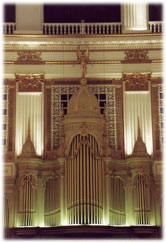
One of my favorite things to do before Christmas, when I lived in Philadelphia was to visit the John Wanamaker Department store, see the decorations, visit the huge brass eagle in the Grand Court and listen to the huge pipe organ.  While Mary Vogt was the principal organist at that time, my mother’s uncle, Howard Van Dyke served as a substitute for many years.

closeup

Built by the Los Angeles Art Organ Company for the 1904 St. Louis World’s Fair, the Wanamaker Organ was designed by renowned organ architect George Ashdown Audsley, author of The Art of Organ-Building. This heroic instrument had more than 10,000 pipes, and its construction was on such a lavish scale that costs soared to $105,000, bankrupting the builder.


1904 St. Louis World’s Fair — Festival Hall

In 1909, Philadelphia merchant-prince John Wanamaker bought the instrument for his new Philadelphia emporium. Thirteen freight cars were required to ship the entire organ from St. Louis, and installation took two years. The Grand Organ was first heard in the Store’s seven-story atrium on June 22, 1911, at the exact moment when England’s King George V was crowned at Westminster Abbey. Later that year, it was prominently featured when President William Howard Taft dedicated the Store.

Despite its immense size, the tone was judged inadequate to fill the huge court. Wanamaker’s opened a private pipe-organ factory in the Store attic, employing up to 40 full-time employees to enlarge the instrument. William Boone Fleming, the original factory supervisor, was hired to direct the work. Lavish construction and elegant workmanship made the Wanamaker Organ both a tonal wonder and a monument to superb craftsmanship. The largest pipe is made of flawless Oregon sugar-pine three inches thick and more than 32 feet long—so large that a Shetland Pony was once posed inside for publicity photos.

The smallest pipe is a quarter-inch in length. More than 8,000 pipes were added to the Organ between 1911 and 1917, and from 1924 to 1930 an additional 10,000 pipes were installed, bringing the total number of pipes today to 28,500.


Commanding these huge resources is a massive console with six ivory keyboards and 729 color-coded stop tablets. There are 168 piston buttons under the keyboards and 42 foot controls. The console weighs 2.5 tons; the entire instrument weighs 287 tons.

During the lifetimes of John Wanamaker and his son Rodman, the world’s finest musicians were brought to the Store for brilliant after-business-hours concerts, among them France’s Marcel Dupre, Louis Vierne and Nadia Boulanger, Italy’s Fernando Germani and Marco Enrico Bossi, and England’s Alfred Hollins.

At a 1919 Musicians’ Assembly, virtuoso Charles M. Courboin, in association with Leopold Stokowski and the Philadelphia Orchestra, performed before a standing-room-only crowd of 15,000. Since then, great organists have continued to perform at the Store, many making special pilgrimages.


French Horns in the
Orchestral Division

In 1986, the evening-concert tradition was continued as the Grand Organ marked its 75th anniversary with a Keith Chapman recital that attracted a huge audience. More recently, elaborate music events have regularly been sponsored by the Friends of the Wanamaker Organ, attracting visitors to Macy’s with representatives from all parts of the U.S.  In 2008 Macy’s celebrated its 150th anniversary with a Philadelphia Orchestra concert under Maestro Rossen Milanov. At the Wanamaker Organ, Peter Richard Conte performed Joseph Jongen’s Symphonie Concertante (1925) for the first time with the organ and orchestra for which it had been written.

Now a National Historic Landmark and valued in excess of $57 million, the Wanamaker Organ is of the American Symphonic design, which can play the great organ masterworks as well as the entire range of orchestral literature. The pipework encompasses the resources of three symphony orchestras; its String Organ alone has 7,000 pipes.


THE MAIN PEDAL DIVISION is unexpressive. It has forty-four stops and wind pressures of five to twenty-five inches.

THE CHOIR is on five inches of wind pressure.

THE GREAT DIVISION is on wind pressures of five to sixteen inches, and consists of unenclosed stops as well as a section enclosed with the Choir division.

IN TWO EXPRESSION CHAMBERS, THE SWELL is on wind pressures of five to twenty-two and a half inches. All are under expression. One of these expression chambers houses the Original String division designed by George Ashdown Audsley—the first independent String organ ever found in a pipe organ.

THE ENTIRE SOLO DIVISION is under expression, on a wind pressure of fifteen inches.

THE ETHEREAL ORGAN IS POWERFUL, rich and full in tone, entirely expressive. It has twenty-one stops, and a wind pressure of twenty-five inches. It is located on the seventh floor.

THE STRING ORGAN is entirely expressive, has eighty-seven manual stops and a wind pressure of fifteen to twenty-seven inches. It has a matching pedal of twenty-seven stops. Its tone is unusually rich and beautiful, producing at full volume a velvety carpet of lush string tone suggestive of hundreds of stringed instruments. Individual tablets enable the organist to reduce the sound to a gorgeous hush with a sweep of the stops. This division, with metal pipework by the famed Kimball company, occupies the largest space of any single organ chamber ever constructed. It is approximately sixty-seven feet long, twenty-six feet deep and sixteen feet high.


THE ORCHESTRAL, also with Kimball metal pipes, has pressures of fifteen and twenty inches and is entirely expressive. It has forty stops.

THE ECHO DIVISION is located opposite the main organ, on the seventh floor. Entirely expressive, it has a wind pressure of five inches.

THE PERCUSSION DIVISION is expressive and operates on pneumatic, vacuum and electric action.

THE MAJOR CHIMES are usually referred to as “tower chimes” because they were especially made for outdoor tower-chime playing. The largest chime of this set, Note C, is twelve feet long, five inches in diameter, and weighs 600 pounds. It is struck by a leather-topped hammer four inches in diameter, the stroke of which is nine inches. It weighs eighteen pounds and has an impact of seventy-two pounds of pneumatic pressure.

PULSATIONS OF THE TREMULANTS, two for each division, are controllable in ten stages by means of tremolo pulsation levers to the right and left of the music rack on the console. This device was invented and patented in the Wanamaker Organ Shop. It enables the organist to adjust the speed of an individual tremolo or of all the tremolos to suit the performer’s taste.

Thirty-six regulators furnish steady wind pressure from five to twenty-seven inches. The organ is electro-pneumatic throughout, requiring seven blowers totaling 168 horsepower.

PEDAL

75 ranks, 81 stops, 2,573 pipes

CHOIR

24 ranks, 19 stops, 1,452 pipes

GREAT

58 ranks, 43 stops, 3,634 pipes

SWELL

70 ranks, 51 stops, 4,361 pipes

SOLO

51 ranks, 35 stops, 3,640 pipes

ETHEREAL

23 ranks, 20 stops, 1,670 pipes

STRING

88 ranks, 87 stops, 6,340 pipes

STENTOR

1 rank, 2 stops, 61 pipes

ORCHESTRAL

31 ranks, 31 stops, 2,227 pipes

ECHO

33 ranks, 22 stops, 2,013 pipes

VOX CHORUS

8 ranks, 8 stops, 572 pipes

Click here for the STOPLIST.


Annals of Tablet Computers

It’s Google vs Apple as Christmas shoppers snap up one tablet computer every second

New and cheaper rivals to Apple’s iPad and models aimed at children help to set the tills jingling

Google Nexus 7

Some retailers are predicting that the Google Nexus 7 will be the biggest seller this Christmas. Photograph: Bloomberg/Getty

Retailers say 2012 will be a “tablet Christmas” as they gear up for a massive surge in sales of products such as the iPad Mini and Google Nexus 7.

John Lewis, Argos, Currys and PC World are all expecting strong demand for tablet computers in the next fortnight, with sales at PC World and Currys already up 1,000% year on year.

Last Monday – the day the retail industry calls “cyber Monday” because it is the busiest online shopping day of the year – PC World and Currys sold one tablet every second, according to a spokesman for Dixons, their parent company.

“We are still looking to sell a tablet every two seconds between now and Christmas,” he said. “iPads were big last year, but the new devices that have come out this year have really opened up the market to a much wider audience. There is also a much greater price range, which is making a big difference.”

He added: “Apple products have always been popular, but this year is totally different. More people are cottoning on to the fact that these tablets can make their lives easier in lots of different ways.”

Four rivals to the iPad have arrived in stores in the last six weeks, starting with the Kindle Fire HD and a new version of the Google Nexus 7 in October. This was followed by the iPad Mini and the Nook and Nook HD in November. Prices across the brands range from £159 to £529.

Most retailers said it was too early to say which brand of tablet would sell best, but one online consumer electronics retailer, ebuyer.com, expects Apple to be knocked off the top spot. “We think this year’s top-selling tablet will be the 32GB Google Nexus, as Google’s competitively priced tablet is trying to take a piece of Apple’s market share,” said a spokeswoman for the website.

John Lewis said sales of tablet computers across its stores were up 250% year-on-year and it expected that figure to grow in the next fortnight. “Sales of Apple’s iPad and iPad Mini are very strong, but this is the first Christmas we have seen real rivals to Apple on different platforms, including Android and Windows 8,” said Matt Leeser, head of buying for communication technology at the store. “Tablets such as the Google Nexus 7, Kindle Fire HD and Nook HD have all exploded on to the market and are selling very well.”

Argos said it expected to sell a million tablets by the end of the year. “We definitely believe this will be a tablet Christmas,” said Simon Barry, technology trading manager at Argos. “We are seeing more and more that people are wanting ‘my’ tablet rather than ‘our’ tablet – with multiple devices going into homes.”

He added that tablets aimed at children were also expected to be popular. These include the Nabi, which, according to maker Fuhu, is “the world’s first and most powerful tablet made just for kids”. It launched in the UK in October, priced £149.99. Its rival, the Innotab 2, is aimed at four- to nine-year-olds and costs £84.99.

Cheaper versions were also expected to sell well this Christmas, said Barry. The CnM Touchpad, a very basic version of the more sophisticated tablets, is on sale for less than £100.

The magazine publisher Future said last month that it was banking on a huge sales surge of e-editions of its titles. Mark Wood, its chief executive, said that the company was already shifting $1m (£620,000) in gross revenues a month from sales of its 100 digital titles.

Some shoppers are so desperate to get their hands on one of the new iPad Minis – there is currently a two-week wait before delivery – that they are prepared to pay out well over the odds for one. At the time of writing, an iPad Mini 16GB Wi-Fi version, which sells for £269 from Apple, was commanding £330 on eBay with an hour of bids left to go. Some sellers were listing prices as high as £399 for the same model.

Edmund de Waal’s Unfinished Business

I posted a book review for The Hare with Amber Eyes from More Intelligent Life several months ago. The writer of the review, Fiammetta Rocco, recently wrote a follow-up piece also published in Intelligent Life.  I am posting the first page here.  The entire piece runs to five pages.  It is worth reading in its entirety.

“The de Waal family gathered en masse in October for the launch of the Austrian edition. Edmund came by train, fresh from his German book tour. His wife, Sue Chandler, and their two sons flew in from London. His father Victor, now 82, was there too. Jiro Sugiyama came from Tokyo and invited the family to stay at the Grand Hotel which, like the Palais Ephrussi, had once been a private house, home to a Jewish banker and his grand-daughter.

The Palais Ephrussi is now owned by a law firm which bought it in 2009 for a reported €65m. (Elisabeth de Waal got just $30,000 in compensation for it from the Austrian government after the war.) The law firm invited Edmund and the other Ephrussi descendants to tea. Victor, who hadn’t been back to the house for nearly three-quarters of a century, showed his grandsons his old playroom and a hidden route to the roof. In the evening, the publisher’s guests stepped over the initials “JE” (for Joachim Ephrussi, the founder of the family) set in the marble entrance and gathered around de Waal in the courtyard. In his familiar floppy dark suit and thin tie, he stood on the spot where Emmy’s marquetry desk had come crashing down over the balcony, the first Ephrussi to address a gathering there since before the war.

“You cannot imagine how scary it is to do this,” he began. “If I had understood quite what I’d been given when I was given these little Japanese things I would have run away. In my naivety, I thought I could take six months off from my studio, run to Paris, skip off to Vienna, write my book, give it to my father to read and that would be that.

“But I had made a very stupid and personal pact, which was to go to every single place and be in every single space that these things had been and try and understand the feeling of the people who held them. And that, of course, was madness.

“When I began this book, I had not thought through what it would take to tell the story of 1938. It is still history you can reach out and touch. It’s history that unfolded hour by hour, day by day, in this house. The violence. The separation.

“When, after eight years, my grandmother returned, it was not to an empty house, but to an emptied house.

“I find that I am the same person and a different person. I make the same pots and I make different pots. I sit at my wheel and I think about the collections of porcelain that I make and I think about diaspora and stories and place. The process that has brought me here today has given back the story. Not the story about the dynasty, the banks, the gilding. That’s not the point. The point is that it is a family story, and like all family stories it goes on and on. This family story was given to me when I was given these objects.

“Restitution is a very loaded word. It has so many cadences. It is giving what has been stolen and looted. Of my grandfather’s library there is no trace. There are paintings hanging all over Vienna, all over Germany that were taken from this house. And that’s a crime, a straightforward crime.

“Yet there is also another restitution; the restitution of the story. What Anna gave back to my grandmother was continuity, it was her story, and it was giving with incredible evenhandedness. For me ‘The Hare with Amber Eyes’ has been the restitution to Vienna of this story, this family and this place.”

As he reached out to beckon his father and his young sons to join him on the podium, de Waal knew this was another milestone. But not the end of the story. The fellow guests who heard him tell the tale for the first time at that Harvard conference six years earlier had urged him to pick an unforgettable title. The original choice was “Anna’s Pocket”. Until de Waal finds out who Anna was and what became of her, there will always be a bit of the untold story driving him on.

Picture: the hare with amber eyes, one of de Waal’s collection of netsuke, that gave his book its title

Fiammetta Rocco is the Books and Arts editor of The Economist and the author of “The Miraculous Fever Tree”
read the balance of the piece using the following link http://moreintelligentlife.com/content/arts/fiammetta-rocco/edmund-de-waal?page=0%2C4