Who Knew?

Canada’s Dreams of Energy Independence Limited by Lack of Pipelines

By Kurt Cobb | Mon, 22 October 2012 22:47 | 2

Benefit From the Latest Energy Trends and Investment Opportunities before the mainstream media and investing public are aware they even exist. The Free Oilprice.com Energy Intelligence Report gives you this and much more. Click here to find out more.

You are not alone if you think it’s odd that Canada–the world’s ninth largest exporter of crude oil and petroleum products and the main supplier of oil imports to the United States–is itself a longtime oil importer, importing more than 40 percent of its oil needs this year.

The situation results from historical pipeline development which has left Canada without a major east-west pipeline to bring the huge surplus of oil produced in the western provinces–now primarily from tar sands–to the eastern part of the country. The country’s provinces from Ontario eastward currently import a little more than 60 percent of their oil needs from overseas. That may be set to change.

Winston Churchill once said, “You can always count on Americans to do the right thing–after they’ve tried everything else.” It seems he could have been talking about the Canadians and their oil predicament. Earlier this year TransCanada, a major pipeline company, proposed expanding the current pipeline system known as Keystone to carry more western Canadian crude to America’s Gulf Coast. But, the pipeline giant was rebuffed by the Obama Administration in an election-year gambit to satisfy environmentalists concerned about the impact of tar sands development on climate change and water quality. Enbridge, another Canadian pipeline company, has proposed the so-called Northern Gateway pipeline route from the tar sands to the British Columbia coast. From there the oil would be exported to satisfy growing Asian demand. But practically everyone along the Northern Gateway route has lined up against it including the British Columbian premier.

Now, yet another route is being considered, one that would allow TransCanada to live up to its name. The company’s latest proposal would take an east-west natural gas pipeline which is now being underused and convert it into an oil pipeline to bring western Canadian crude to currently import-dependent eastern Canada. The plan, which will require regulatory approval, may not face the stiff opposition that the other two projects faced since this pipeline is largely complete. It would require only some additional work to convert it and link it to refineries and storage depots.

Related Article: The Alamo II: Texans Up in Arms over TransCanada Land Grab

The result would be a flow of up to 1 million barrels per day of oil to eastern Canada, more than enough to displace all of Canada’s current imports and possibly allow for exports of crude oil from the eastern seaboard. Canadians would still be subject to world oil prices since oil would remain a global commodity that can be shipped to the highest bidder. But, the country would no longer be vulnerable to supply disruptions from abroad and would be in a position to prevent exports if a national emergency warranted it.

With this change Canada would move closer to true energy independence. It currently exports electricity to the United States and imports only a tiny amount of U.S. electricity due to historical infrastructure or regional rate differentials. Canada is the world’s second largest producer of uranium, providing 17 percent of global supply in 2011. Therefore, the country does not need to import any for use in its own nuclear power plants. In 2011 Canada was the world’s 14th largest producer of coal and exported about 30 percent of its production. Some imports were recorded. The long border with the United States, a major coal producer, sometimes makes U.S. imports more economical depending on the type of coal and the shipping distances. When it comes to natural gas, however, Canada’s National Energy Board reports that while the country produces 70 percent more than it needs, it still imports the equivalent of 31 percent of its consumption–even as it exports the equivalent of 100 percent of Canadian consumption to the United States. As with oil, historical pipeline infrastructure dictates this unusual arrangement. But that is a story for a future piece.

The oil industry has been working on a way to get growing volumes of oil out of western Canada cheaply for some time. And, the cheapest way is via pipeline. Producers have been suffering steep discounts to world prices with Western Canadian Select crude oil futures trading in New York at a discount of about $20 per barrel compared to American Light Sweet Crude which itself has been trading at approximately a $20 discount to Brent Crude in Europe. So, the total discount to prevailing world prices for western Canadian crude is currently around $40. It’s easy to see why the industry is anxious for a pipeline that will allow it take advantage of higher world prices.

Related Article: President Obama Says That We Have Enough Pipelines – I Disagree!

With opposition running strong against the two alternatives, the oil industry may be forced to consider the TransCanada pipeline conversion proposal to ship oil to eastern Canada, a proposal that happens to coincide with Canada’s national interest. But don’t expect to hear industry executives whistling “O Canada” at their desks just yet. It’s not clear how much support the project will find among those executives.

That support will be critical because the current Canadian government, which must approve the project, has shown itself congenitally incapable of distinguishing between the national interest and the interests of international oil companies. Therefore, the government isn’t likely to force the project on the industry even if the pipeline would be a good idea for Canada as a whole. However, if the oil industry ends up embracing the project, the Canadian government will almost certainly rubber-stamp it. And thus, the government and the industry may inadvertently end up doing what has for a very long time been within Canada’s grasp and in its best interest, namely, to free the country from imported oil.

By. Kurt Cobb
Azeri Gas

Clinton Thinks Azeri Gas is Important and so Should You

By Daniel J. Graeber | Sun, 21 October 2012 00:00 | 3

Benefit From the Latest Energy Trends and Investment Opportunities before the mainstream media and investing public are aware they even exist. The Free Oilprice.com Energy Intelligence Report gives you this and much more. Click here to find out more.

Secretary of State Hillary Clinton said U.S. energy policies extend beyond high-profile issues like the Keystone XL pipeline and retail gasoline prices. The State Department, she said, conducts a “great deal” of energy-related diplomacy when specific needs arise. In states like Iran, statecraft is needed to prevent the country from using oil and gas revenue to fund a controversial nuclear program. In Libya, diplomacy was needed to ensure oil market stability during last year’s civil war. For countries in the European Union, meanwhile, ensuring energy security is a matter of international and U.S. national concern.

Clinton told students at Georgetown University in Washington D.C. that energy issues cut across the entire spectrum of U.S. foreign policy.

“It’s a matter of national security and global stability. It’s at the heart of the global economy,” she said. “It’s also an issue of democracy and human rights.”

Energy policy, she said, is at the “core” of geopolitical manoeuvring. Nation’s rich in oil and natural gas reserves may be more powerful than others, meaning energy is also a source of conflict and cooperation.

Russian President Vladimir Putin, staving off criticism of monopolizing power in the Kremlin, met recently with BP’s Chief Executive Officer Bob Dudley to review the status of joint venture TNK-BP. Dudley was run out of his Moscow offices in 2008 when, as chief of TNK-BP, he was accused of favoring British interests. If BP shareholders approve of a sale of its half of the troubled venture to Rosneft, the Russian oil company may become one of the biggest in the world.

Related Article: Baghdad is Losing Iraqi Kurdistan – Empowered by Oil and Gas

Europe, meanwhile, is eager to break the Russian grip on the regional energy sector. Most of the Russian natural gas bound for European markets runs through Soviet-era pipelines in Ukraine. A troubled relationship between Kiev and the Kremlin has left downstream consumers in the Eurozone in the cold on more than one occasion.

Clinton said her focus on energy diplomacy was aimed at promoting competition and preventing monopolies in Europe. For many decades, the secretary said, the European community got most of its gas from Russian energy company Gazprom. With more gas reserves on hand in the United States, however, there are more alternatives on the global market, namely from Azerbaijan.

“They’d like to sell it, and Europe would like to buy it,” she said. “But first, they need to build pipelines.”

European leaders are pushing for a network of projects dubbed the Southern Corridor, a series of pipelines that includes the much-debated Nabucco pipeline. By tapping into Azeri reserves in the Caspian Sea, troubled economies in the European Union would no longer be vulnerable to the risky take-or-pay pricing schemes of Gazprom.

Clinton said that breaking up energy monopolies leads to stronger economies.  When one nation relies too much on another for energy, it’s at risk of being controlled by that nation. That, in turn, leads to national security threats, something NATO recognized when it placed a priority on energy security. With issues like energy, the secretary said, everything’s on the table.

“It’s not just a matter of economic competition, as important as that is,” she said. “It’s also a matter of national and international security.”

By. Daniel J. Graeber of Oilprice.com

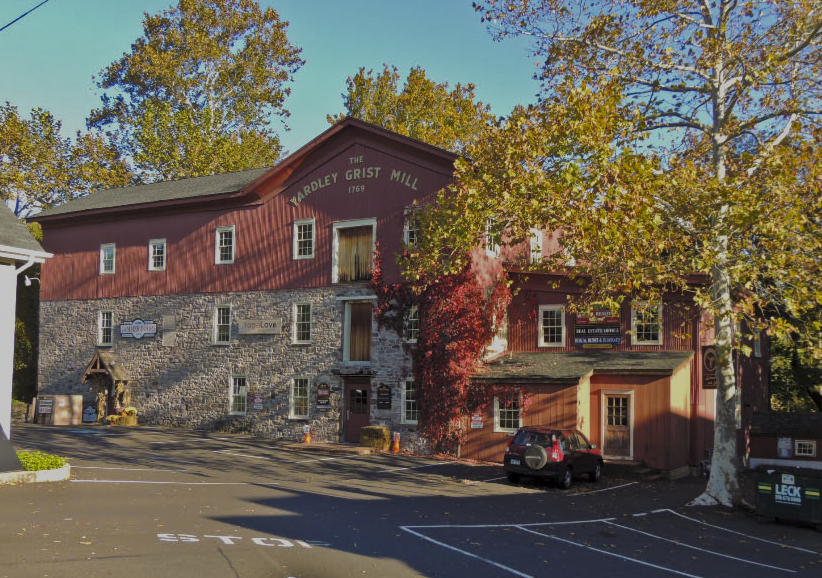
Grist Mill in Yardley, Pennsylvania

The borough of Yardley is located just north of Philadelphia, Pa, close to the Delaware River.  There is a small canal that parallels the Delaware River.  Years ago, this canal provided water flow to power the grist mill.


Corruption in China

LETTER FROM CHINA

BOSS RAIL

The disaster that exposed the underside of the boom.

BY EVAN OSNOS

OCTOBER 22, 2012


The crash at Wenzhou. The Rail Ministry had been determined to build seventy-five hundred miles of high-speed railway more quickly than anyone thought possible.

KEYWORDS

LIU ZHIJUN; CHINA; HIGH-SPEED RAIL; BULLET TRAINS; CORRUPTION; BRIBES; RAILWAY MINISTRY

On the morning of July 23, 2011, passengers hurried across Beijing South Station at the final call to board bullet train D301, heading south on the world’s largest, fastest, and newest high-speed railway, the Harmony Express. It was bound for Fuzhou, fourteen hundred miles away.

Beijing South Station is shaped like a flying saucer, its silvery vaulted ceiling illuminated by skylights. It contains as much steel as the Empire State Building and can handle two hundred and forty million people a year, thirty per cent more than New York’s Penn Station, the busiest stop in America. When Beijing South opened, in 2008, it was the largest station in Asia; then Shanghai stole the crown. In all, some three hundred new stations have been built or revitalized by China’s Railway Ministry, which has nearly as many employees as the civilian workforce of the United States government.

When the passengers for D301 reached the platform, they encountered a vehicle that looked less like a train than a wingless jet: a tube of aluminum alloy, a quarter of a mile from end to end, containing sixteen carriages, painted in high-gloss white with blue racing stripes. The guests were ushered aboard by female attendants in Pan Am-style pillbox hats and pencil skirts; each attendant, according to regulations, had to be at least five feet five inches tall, and was trained to smile with exactly eight teeth visible. A twenty-year-old college student named Zhu Ping took her seat, then texted her roommate that she was about to “fly” home on the rails. “Even my laptop is running faster than usual,” she wrote.

For the Cao family, in the sleeper section, riding in style was a mark of achievement. The parents had immigrated to Queens, New York, two decades earlier and worked their way up to stable jobs as custodians at LaGuardia Airport. They put two sons through college, became American citizens, and now found themselves back in China on a tour, posing for pictures in matching hats, standing ramrod straight beneath Mao’s portrait at Tiananmen Square. Their next stop would be a reunion with relatives in Fuzhou. This was the first vacation of their lives. Their son, Henry, who ran a camera-supply business in Colorado, was returning, for the first time, to a country that he had been raised to remember as poor.

Until now, China’s trains had always been a symbol of backwardness. More than a century ago, when the Empress Dowager was given a miniature engine to bear her about the Imperial City, she found the “fire cart” so insulting to the natural order that she banished it and insisted that her carriage continue to be dragged by eunuchs. Chairman Mao crisscrossed the countryside with tracks, partly for military use, but travel for ordinary people remained a misery of delayed, overcrowded trains nicknamed for the soot-stained color of the carriages: “green skins” were the slowest, “red skins” scarcely better. Even after Japan pioneered high-speed trains, in the nineteen-fifties, and Europe followed suit, China lagged behind, with what the state press bemoaned as two inches of track per person—“less than the length of a cigarette.”

In 2003, China’s Minister of Railways, Liu Zhijun, took charge of plans to build seventy-five hundred miles of high-speed railway—more than could be found in the rest of the world combined. For anyone with experience on Chinese trains, it was hard to picture. “Back in 1995, if you had told me where China would be today, I would have thought you were stark raving mad,” Richard Di Bona, a British transportation consultant in Hong Kong, told me recently. With a total investment of more than two hundred and fifty billion dollars, the undertaking was to be the world’s most expensive public-works project since President Eisenhower’s Interstate Highway System, in the nineteen-fifties. To complete the first route by 2008, Minister Liu, whose ambition and flamboyance earned him the nickname Great Leap Liu, drove his crews and engineers to work in shifts around the clock, laying track, revising blueprints, and boring tunnels. “To achieve a great leap,” he liked to say, “a generation must be sacrificed.” (Some colleagues called him Lunatic Liu.) The state news service lionized an engineer named Xin Li, because he remained at his computer so long that he went partly blind in his left eye. (“I will keep working even without one eye,” he told a reporter.) When the first high-speed line debuted with a test run in June, 2008, it was seventy-five per cent over budget and relied heavily on German designs, but nobody dwelled on that during the ceremony. Cadres wept. When another line made its maiden run, Liu took a seat beside the conductor and said, “If anyone is going to die, I will be the first.”

That autumn, to help ward off the global recession, Chinese leaders more than doubled spending on high-speed rail and upped the target to ten thousand miles of track by 2020, the equivalent of building America’s first transcontinental route five times over. China prepared to export its railway technology to Iran, Venezuela, and Turkey. It charted a freight line through the mountains of Colombia that would challenge the Panama Canal, and it signed on to build the “pilgrim express,” carrying the faithful between Medina and Mecca. In January, 2011, President Obama cited China’s railway boom in his State of the Union address as evidence that “our infrastructure used to be the best, but our lead has slipped.” The next month, the governor of Florida, Rick Scott, blocked construction of America’s first high-speed train, by rejecting federal funds. Amtrak had unveiled a plan to reach speeds comparable to China’s by 2040.

ILLUSTRATION: A. J. FRACKATTACK; PHOTOGRAPH: AFP/GETTY

“BOSS RAIL” CONTINUES


Read more http://www.newyorker.com/reporting/2012/10/22/121022fa_fact_osnos#ixzz29trmM6hj

More Nonsense from the Mittster

Romney betrays his business background

By October 19, 2012: 4:14 PM ET

mitt-romneyPolitician Mitt makes promises that Bain Mitt would have never made.

FORTUNE — Mitt Romney has been a politician for the past 13 years, but his sales pitch to voters relies heavily upon his private sector experience. Sometimes, however, the juxtaposition doesn’t ring true.

For example, check out this exchange from Tuesday night’s presidential debate:

Crowley: “If somehow when you get in there, there isn’t enough tax revenue coming in, if somehow the numbers don’t add up, would you be willing to look again at a 20 percent…”

Romney: “Well, of course they add up. I was — I was someone who ran businesses for 25 years and balanced the budget.”

I totally understand why Romney said what he said from a campaign context, but it doesn’t make a whole lot of sense.

As any venture capital or private equity investor will tell you, there is a big difference between what you think you know from due diligence and what you actually learn once buying the company. Moreover, the ability to lithely adjust to changing circumstances — sometimes internal, sometimes external — is a vital private equity trait (and one, many would argue that Romney has applied to his political career).

Mitt Romney the private equity executive would never tell his investors or colleagues that the pre-deal math was a slam dunk to add up. So Mitt Romney the presidential candidate shouldn’t tell voters that pre-election math is a slam-dunk, particularly if he then is going to use his business background to legitimize the assertion.

Sign up for Dan’s daily email newsletter on deals and deal-makers: GetTermSheet.com

Texas Land Grab

The Alamo II: Texans Up in Arms over TransCanada Land Grab

By Jen Alic | Thu, 18 October 2012 23:04 | 0

Benefit From the Latest Energy Trends and Investment Opportunities before the mainstream media and investing public are aware they even exist. The Free Oilprice.com Energy Intelligence Report gives you this and much more. Click here to find out more.

Texans are having nightmares of a Niger Delta nature, and while they have always been the friends of Big Oil, TransCanada is changing the rules of the game in a legally-aided land grab that will test just how tough Texans are.

Oil spills, the destruction of agricultural communities, impoverished farmers … this is what Texans fear as TransCanada paves the way to build its 1,179-mile pipeline to transport Canadian tar sands to refineries in south Texas.

The lawsuits against TransCanada are piling up to the dismay of the Keystone XL pipeline project, which has been beleaguered by political, socio-economic, environmental and legal woes at every step from its US origins in Montana to its final destination point in south Texas.

No one thought Texas would be part of the problem: Texans love their pipelines. Why the change of heart, then?

The simplest answer is that Texans love their pipelines because Big Oil has been paying big bucks for the privilege of running them through Texas farmland, but TransCanada is bullying them out of their fair share.

This is how it works: TransCanada makes an unacceptably low offer for the land it needs; the landowner rejects the offer; TransCanada gets the land condemned in court; then it legally acquires the land for a fraction of its original offer.

Condemning land is not a new tactic by Big Oil, but while US oil companies have traditionally kept this to a minimum, TransCanada has taken far too much advantage of this legal loophole to get what it wants. According to CNBC.com, the Canadian company has so far condemned over 100 tracts of land out of the 800 tracts it has acquired for the pipeline in Texas.

Companies like TransCanada who enjoy what is known as “common carrier status” can demonstrate to an US court that their construction projects are for the common public good (it’s called eminent domain). A landowner can of course appeal such a condemnation in the Supreme Court, and force the company to prove its claim more stringently, but in the end, Keystone XL generally wins.

For the most part, these appeal processes simply delay the inevitable.

Since Texans are being forced to give up their land for peanuts for the bigger picture “common good”, let’s look at why they aren’t buying it and why they don’t feel any less patriotic for their opinion. (Common good in this case meaning “national interest”)

First of all, Texans point out that TransCanada is a foreign company that does not feel obliged necessarily to use American steel for its pipeline construction. According to media reports, a large percentage of the steel used for construction is imported.

They also balk at the idea that much of the tar sands oil refined it Texas will be exported via the Gulf of Mexico.

If the US is going to export its crude oil that should mean that it is producing more than it needs. In other words, the US must achieve oil independence before it starts exporting oil; otherwise it’s moving away from rather than toward independence. Every good Texan knows this. The US is producing about 6.2 million bpd this year, and consuming twice that.

To the Texan mind, foreign-company plus exports does not add up to a reduction of US independence on foreign oil. It only adds up to revenues for TransCanada and Big Oil.

Also sitting uncomfortably at the back of the mind is the chance of an oil spill and the prospect of Canada’s dirty tar sands damaging their farmland and water resources.

In 2010, a pipeline owned by Enbridge ruptured, spilling some 800,000 gallons of tar sands into the Kalamazoo River in Michigan. A year later, the clean-up is ongoing and the damage vast.

Is there in fact any national interest here? Yes, but if most the refined oil is slated for export, the only “common good” is the creation of new jobs.

What is most interesting is that Texans will end up making Keystone XL a bipartisan issue. Previously, anyone who balked at Keystone XL environmental and socio-economic risks was a tree-hugging hippie. Anyone supporting Keystone XL was a Big Oil “yes man” with no respect for the environment. With Texans now up in arms over Keystone XL thanks to TransCanada, the debate will metamorphose into something more rational.

The Texans, in their own unique way, will bring legitimacy to this debate. After all, no one could accuse them of being tree-hugging liberals. Texans want Keystone, they want pipelines, but they won’t stand for being cut out of the “common good” equation. To this end, some landowners are opening the gates to activists to stage protests, and this has so far ended in a handful of arrests.

And it is important that this debate is legitimized to ensure that when Keystone XL goes forward (and it will) it goes forward with a least a modicum of respect for the “common good”.

Not only are Texans learning something new about Big Oil, but TransCanada is learning that Texans are proud and will command respect in the end.

Hopefully, this can be done without another Alamo or an armed Texan equivalent of the Movement for the Emancipation of the Niger Delta (MEND). But if worse comes to worse, and TransCanada persists in its bullying, Texans are not averse to a bit of brawling.

By. Jen Alic of Oilprice.com

Another Personal Best for the Mittster


OCTOBER 16, 2012

ROMNEY SETS NEW PERSONAL BEST FOR FAKING EMPATHY

POSTED BY ANDY BOROWITZ


HEMPSTEAD, NY (The Borowitz Report)—Republican Presidential nominee Mitt Romney set a new personal record tonight by pretending to care about average Americans for nearly ninety minutes.

Mr. Romney began the second Presidential debate by simulating concern for a college student named Jeremy’s employment future and maintained a consistent level of feigned concern on a variety of subjects for the remainder of the night.

“It was an awesome display of stamina,” said Mr. Romney’s running mate, Paul Ryan, who watched Mr. Romney pretending to be empathic from a shelter in Virginia, where Mr. Ryan was pretending to feed a homeless orphan.

Mr. Romney’s new empathy record surpasses his previous mark, set seven days ago at a rally in Sidney, Ohio, where he pretended to give a shit about his audience for nearly an hour.

Tonight’s display of bogus sensitivity made a big impression on a post-debate focus group, as a majority of participants agreed with the statement, “Mitt Romney has the facial expressions of someone who cares about me.”

Moments after the debate, Mr. Romney pronounced himself “thoroughly drained” by the forced display of humanity.

“This empathy stuff is exhausting,” he told reporters. “On Day One, it’s going to stop.”

Throughout the evening, Mr. Romney traded barbs with President Obama, the first black person he has talked to since his speech at the N.A.A.C.P.

Get the Borowitz Report delivered to your inbox.

Saul Loeb/Getty.


Read more http://www.newyorker.com/online/blogs/borowitzreport/2012/10/romney-sets-new-personal-best-for-faking-empathy.html#ixzz29gxz3MQZ

An Interesting App

TURN YOURSELF INTO A PLAGUE


A Game, a Gadget and an App: Tom Standage sketches with a finger, makes his morning coffee, and tries to wipe out the human race…

From INTELLIGENT LIFE magazine, September/October 2012

GAME Plague, Inc
Tired of saving the world in video games? This one’s for you. You are the plague, and your aim is to wipe out the human race by mutating to make yourself easier to spread, harder to kill and deadlier to your human hosts. The action takes place on a world map that changes colour as you infect more people. But make yourself too lethal and you’ll kill your hosts before you’ve circled the globe. Those pesky humans will be trying to develop a cure, and will shut down sea and air routes to contain you. A news ticker provides darkly humorous updates as governments struggle to cope. The game was created as a hobby by a management consultant, James Vaughan, who made the underlying simulation as accurate as possible. The good news is that it was much too hard and had to be made easier, suggesting that a single pathogen is unlikely to destroy us. “Plague, Inc” aims for fun rather than accuracy, but manages to inform and forces you to think about global trade and inequalities in health care. Whether you see it as educational, cautionary or a critique of other video games, it is an entertaining game that has already been downloaded a million times, despite the lack of marketing. So, yes, “Plague, Inc” has gone viral.
Plague, Inc for iPhone and iPad, 69p

GADGET AeroPress Coffee-Maker
Confession time. We’ve had two happy years together, but lately I’ve been cheating on my Nespresso machine. My new squeeze is the AeroPress, a beautifully simple coffee-maker that looks more like a chemistry experiment than an item of kitchen equipment. Slot in a paper filter, sit it on top of a mug, add some ground coffee, pour on the not-quite-boiling water and then depress the plunger, gently squeezing out the coffee beneath a cushion of air. Finally, fire the grounds into the compost bin with a neat and satisfying pop. The Nespresso still can’t be beat when it comes to cranking out half-a-dozen after-dinner espresso shots, but for my morning coffee ritual I now reach for my AeroPress. Things have got so serious, in fact, that I’m even taking it on holiday.
Aerobie AeroPress around £25 from creamsupplies.co.uk

APP Paper by FiftyThree
Of the many drawing apps on the iPad, Paper is surely the most elegant and attractive. Its minimalist, gesture-driven interface, explained in a quick tutorial video, means there’s no on-screen clutter. The drawing tools react to the speed of your finger, resulting in beautiful lines from the ink pen and realistic pencil shading. You flip pages reminiscent of a virtual Moleskine notebook, and an ingenious “rewind” gesture lets you undo mistakes. Best of all are the gorgeous and realistic watercolour effects. The basic app is free, but you have to pay for additional tools such as the pencil and watercolour brush. You’ll want the whole set.
Paper by FiftyThree for iPad: free, but £4.99 for the full set of drawing tools

Tom Standage is digital editor of The Economist and author of “An Edible History of Humanity”


Blighted Aspens with Stop Sign

I took this picture a last fall after the aspens had lost most of their leaves.  While processing the image I noticed a stop sign.  I converted the image to black and white and used a brush to paint the stop sign red.

Global Warming Update

New Study Shows that Global Warming Stopped 16 Years Ago

By Charles Kennedy | Mon, 15 October 2012 22:23 | 0

Benefit From the Latest Energy Trends and Investment Opportunities before the mainstream media and investing public are aware they even exist. The Free Oilprice.com Energy Intelligence Report gives you this and much more. Click here to find out more.

Figures that have recently been released by Hadcrut 4, the collaboration between the Met Office’s Hadley Research Centre and the Climatic Research Unit, describing the changes in global temperature. The results are astounding, and sure to put a spanner in the wold climate debate as reported by The Daily Mail: Global warming stopped around 16 years ago.

The data was collected from over 3,000 measuring points across both land and sea, and shows that between 1997 and August 2012, there has been no discernible difference in the average global temperature.

Global Temperature Changes

The data must be taken lightly, as it can be misleading. Following a particularly hot year in 2010 this same data was used to suggest that global warming was on the increase. But 2011 and 2012 have been cold years which bring the trend back down and shows that global warming has no overall aggregate effect.

Climate scientists are split over this news.

Related Article: Why we Need to Implement an Energy Transition – Quickly

Some, such as Professor Phil Jones, director of the Climatic Research Unit (co-authors of the study), believe that this period of level temperatures means nothing because it is far too short a period from which to draw conclusions.

Others, such as Professor Judith Curry, head of the climate science department at Georgia Tech University, believe that this data is proof that models being used to predict future global warming are ‘deeply flawed’.

Although even Professor Jones later admitted that no one truly understood the impact of natural variables such as ocean temperature cycles or the changing output of the sun, both of which have been in warm phases in recent years.

By. Charles Kennedy of Oilprice.com