More from the 2012 Election

October 9, 2012, 3:52 PM39 Comments

Romney Reveals That He Met Former Navy SEAL Killed in Libya

By TRIP GABRIEL

VAN METER, Iowa — One day after criticizing President Obama for his handling of the deadly assault on Americans in Benghazi, Libya, Mitt Romney revealed that he had met one of the former Navy SEALs killed at the diplomatic compound there.

Mr. Romney told a story for the first time of having met a young man at a neighbor’s home in Massachusetts, a former SEAL, and having discussed their mutual love of skiing and the new acquaintance’s postmilitary career in security work in the Middle East.

“You can image how I felt,” Mr. Romney said, “when I found out he was one of the two former Navy SEALs killed in Benghazi on Sept. 11.”

His campaign confirmed that the man, whom Mr. Romney did not name, was Glen A. Doherty, 42, a native of Winchester, Mass., who died at the diplomatic compound with the American ambassador, J. Christopher Stevens, when militants attacked.

Mr. Romney introduced Mr. Doherty’s death as part of a passage he has recently added to his stump speech about people he knew whose lives were cut short. As he has in recent days, he also mentioned befriending and counseling a 14-year-old boy with leukemia. The material is part of an effort the Romney campaign acknowledges is meant to humanize Mr. Romney’s image, which he himself initiated. The crowd quietly gasped at the description of Mr. Doherty.

But the story also seemed to serve a more political purpose, too, a reminder of Republican criticism of the Obama administration’s failure to quickly acknowledge that the Benghazi assault was the premeditated work of terrorists. In a foreign policy address on Monday, Mr. Romney harshly criticized the president for failing to assert American leadership across the Middle East.

On Tuesday, Mr. Romney seemed to draw a parallel between Mr. Doherty’s rushing into harm’s way in Benghazi and Mr. Romney’s own efforts to come to the aid of his country.

“This is the American way, we go where there’s trouble, we go where we’re needed,’’ Mr. Romney said of Mr. Doherty. “And right now we’re needed. Right now the American people need us. This is a critical time for us.’’

He pledged that “when I become president,’’ he would strengthen the economy, the American family and American values.


Reducing Carbon Emissions – from theTechnology Review

Romney Aide: Reducing Carbon Emissions from Coal Isn’t a Legitimate Goal

Obama and Romney campaigns debate climate change and energy policy.

6 comments

KEVIN BULLIS

Tuesday, October 9, 2012

The presidential campaigns haven’t had much to say about climate change, with energy policy taking a backseat to other issues for the two candidates. That changed at least for a few minutes last Friday at MIT, as the domestic policy advisor to Mitt Romney and a former special assistant for energy and the environment in Barack Obama’s administration debated energy policy and the role of government in promoting new energy sources.

In one of the most striking differences to play out during the debate, Oren Cass, Romney’s advisor, said his candidate thinks that government has no business reducing carbon emissions from coal—one of the most prevalent kinds of greenhouse gas emissions. Cass said Romney “believes climate change is occurring” and “believes human activity contributes to it.” But the candidate isn’t sure how much the climate is warming, how much humans are contributing to that, or what the impact will be. Romney says further scientific study is needed.

In sharp contrast, Obama’s advisor, Joseph Aldy, said his candidate continues to support limits on carbon dioxide emissions—and will push for them with or without the support of Congress. Obama believes that the science is clear enough to say that climate change is a serious problem, and more needs to be done about it than funding R&D.

Advertisement

At times, it seemed the campaign representatives  were not speaking the same language. While both candidates are on record for supporting “clean coal,” they appear to means something very different by the phrase. As an example of clean coal, Cass cited existing technology used by a new plant in Virginia that has low emissions of conventional pollutants like particulates. Aldy said Obama means technology that would also capture and store carbon dioxide, and that so far isn’t used at a large-scale in coal plants because of its high cost.

The two representatives also made clear that the candidates have different strong views on how new clean-energy technology should be developed. Romney would limit government funding to research and development, and once beyond the R&D stage, any alternative technologies would need to fend for themselves in the marketplace.

Meanwhile, Obama supports a range of additional assists for clean energy, designed to support the testing and scale-up of technologies, including loan guarantees and grants. He also, Aldy said, supports policies meant to limit carbon dioxide emissions, whether a cap-and-trade program or a clean energy standard mandating that utilities use a certain percentage  of clean energy (see “Energy Innovation Under Romney and Obama“).

Aldy also made clear that if the president cannot get Congress to enact such approaches, he intends to work through the Environmental Protection Agency to regulate carbon dioxide emissions the way other pollutants are regulated. “To be candid, if we’re going to make progress on this, we’re going to need some kind of work with Congress. And if we don’t, the President is going to continue to use the authority he has under the Clean Air Act,” he said.

Border Wars? Turkey and Syria

Turkey and Syria

Bad blood bubbles

Relations between the two neighbours are getting worse than ever

Oct 6th 2012 | ISTANBUL | from the print edition


A dangerous spat


AFTER a series of mortar bombs fired from Syria landed in the south-eastern Turkish town of Akcakale, killing five people on October 3rd, Turkey’s government ordered its forces to fire on Syrian military targets. The Turkish shelling, which continued into Thursday, reportedly killed several Syrian soldiers, raising the spectre of a tit-for-tat that could get out of hand. Turkey has repeatedly called on the UN to impose a buffer zone in Syria to protect civilians and, by implication, to give rebels trying to overthrow the Syrian regime of Bashar Assad a haven. This latest escalation of hostilities between the two neighbours makes the prospect of a wider intervention a notch likelier. But as The Economist went to press, both sides seemed loth to let the spat slide into a bigger punch-up straight away.

After the Syrian attack, Turkey’s mildly Islamist prime minister, Recep Tayyip Erdogan, convened his top generals for emergency talks, while Ahmet Davutoglu, his foreign minister, called on the heads of NATO and the UN, among others, to back Turkey’s appeals for a buffer zone in Syria. In Akcakale residents chanting slogans took to the streets to protest. The town has been prey to stray bullets from Syria in the past fortnight, as clashes intensified between rebels and troops loyal to Mr Assad.

Despite Turkey’s retaliatory strikes, which many Turks hope are a face-saving ploy rather than a prelude to war, it remained unclear whether the Syrian shells had been fired deliberately. Some Turks even speculated that the rebels’ Free Syrian Army, which Turkey has been helping by providing it with bases and probably arms and training, may have orchestrated the attack in a bid to lure Turkey into the conflict.

A military confrontation between Turkey and Syria has been mooted ever since Syria downed a Turkish air force reconnaissance jet on June 22nd near the Syrian port city of Latakia. Turkey growled about possible retaliation, massing its troops along the border and declaring that it had revised its rules of engagement with Syria.

Syria is now Mr Erdogan’s biggest headache, with opinion polls suggesting that most Turks are unhappy with his government’s so far fruitless attempts to change the regime in Damascus. The slaughter of Syrian civilians continues unabated. About 80,000 of them, at last count, had sought refuge in Turkey.

Mr Erdogan’s support for Syria’s rebels has complicated and soured Turkey’s other relations in the region, particularly with Iran, Syria’s main local ally. Iraq’s prime minister, Nuri al-Maliki, a Shia, has also turned against Mr Erdogan for coddling his Sunni rivals. Meanwhile, Mr Assad has resumed the backing his father Hafez, who was president before him, used to give to the Kurdistan Workers’ Party (PKK) in Turkey, ceding control of a string of towns along the Turkish border to the PKK’s allies in the Democratic Union Party, a group of Syrian Kurds better known as the PYD. Turkey’s enthusiasm for a buffer zone may well be boosted as much by its fear of these newly emboldened Kurds as by its concern for Syria’s beleaguered people.

from the print edition | Europe

Aspens Abstracted

For those of you who have had your quota of aspen pictures, I am posting yet another; this time I have used the wonders of Photoshop to show them in abstract form.

Trouble in the Eurozone

Europe’s Richer Regions Want Out

From the New York Times

By 

PARIS

Multimedia

CATALONIA may be the catalyst for a renewed wave of separatism in the European Union, with Scotland and Flanders not far behind. The great paradox of the European Union, which is built on the concept of shared sovereignty, is that it lowers the stakes for regions to push for independence.

While a post-national European Union may be emerging out of the euro zone crisis, with a drive for more fiscal union and more centralized control over national budgets and banks, the crisis has accelerated calls for independence from member countries’ richer regions, angry at having to finance poorer neighbors.

Artur Mas, the Catalan president, recently shook Spain and the markets with a call for early regional elections and promised a referendum on independence from Spain, although Madrid considers it illegal. Scotland is planning an independence referendum for the autumn of 2014. The Flemish in Flanders have achieved nearly total autonomy, both administrative and linguistic, but still resent what they consider to be the holdover hegemony of the French-speakers of Wallonia and the Brussels elite, emotions that will be on display in provincial and communal elections Oct. 14.

There are countless things that hold unhappy countries, like marriages, together — shared history, shared wars, shared children, shared enemies. But the economic crisis in the European Union is also highlighting old grievances.

Many in Catalonia and Flanders, for example, argue that they pay significantly more into the national treasury than they receive, even as national governments cut public services. In this sense, the regional argument is the euro zone argument writ small, as richer northern countries like Germany, Finland and Austria complain that their comparative wealth and success are being drained to keep countries like Greece, Portugal and Spain afloat.

The crisis has also produced a loss of confidence in traditional leadership, with voters punishing incumbents and mainstream political parties. That has helped more atavistic nationalist parties, like the National Front in France and Golden Dawn in Greece. But in separatist regions, the same disaffection tends to favor parties advocating independence.

“The whole development of European integration has lowered the stakes for separation, because the entities that emerge know they don’t have to be fully autonomous and free-standing,” said Mark Leonard, the director of the European Council on Foreign Relations. “They know they’ll have access to a market of 500 million people and some of the protections of the E.U.”

Heather Grabbe, who worked for five years as a political adviser to the E.U.’s commissioner for enlargement, agreed: “If you’re a small country in the E.U., like Malta or Luxembourg, you’re likely to be overrepresented in Brussels compared to your size, so go for it.” Now the Brussels director for the Open Society Institute, Ms. Grabbe said the key variable for separatism is less a matter of money than of historical grievance and language.

“A lot of the pressure is about revisiting old settlements and defeats and agreements about who commits what to central budgets,” she said. “But when it comes to the crunch, it’s not about money but national myths — what kind of people we are, meta-narratives and emotions: ‘Do we feel oppressed? Do we feel safe enough to leave?’ Ghosts of history return, and while economics plays a role, in the end people vote with their hearts.”

But the crisis has also presented a real conundrum for regional leaders, because it has undermined the attraction of the European Union. In Scotland, for example, there was an assumption that if independent, it would join the bloc without a lot of fuss, since Scots are already citizens of the European Union. (After all, some 20 million East Germans became members of the European Union overnight without even having to whistle the anthem.) But would Scotland inherit the British “opt out” from the euro, or, as a new E.U. state, would it have to commit to the euro? And if so, who would be responsible for bailing out the Bank of Scotland, if it came to that?

As euroskepticism rises in the United Kingdom, these issues have come to bedevil Alex Salmond, the leader of the Scottish National Party, whose slogan is “Scotland in Europe.” The 2014 referendum is supposedly timed to the 700th anniversary of a decisive episode in the first war for Scottish independence, the Battle of Bannockburn.

TRADITIONALLY, the European Union has been popular with the leaders of these regions, said Josef Janning, director of studies at the European Policy Center. “They see strengthening the power of Brussels as diminishing and relativizing national governments, a process accelerated by the single market in Europe,” Mr. Janning said. Many of them have formed regional groupings that bypass the central government — Catalonia, along with Baden-Württemberg in Germany, Rhône-Alpes in France and Lombardy in Italy, for example, are regional powerhouses that call themselves “the four motors for Europe” and together have a bigger G.D.P. than Spain.

“But now,” Mr. Janning went on to say, “comes the crisis,” which presents a dilemma for the regions, because it also means a reconcentration of power by national capitals trying to cut the national budget. “Now eyes are again on Madrid and Rome and Paris and Berlin,” he said, “so regional opportunities are squeezed, and the affluent are made to pay.”

While European leaders believe the answer to the crisis is “more Europe,” which would ordinarily please separatist regions, European voters and taxpayers are shaken, skeptical and angry. Mr. Janning told me: “These regional entities and leaders need to be on the right side of public sentiment and feel close to public opinion and regional identity. So now they’re torn.”

The case of the Basques is a good example. With the defeat of the independence army ETA, which announced the “definitive cessation” of the armed struggle a year ago, the Basques are doing well. They are watching Catalonia and Scotland carefully, but their level of autonomy is already so high, with their own virtual embassies abroad and control over their own taxes, unlike Catalonia, that independence can, to the Basque public, seem destabilizing.

There are also larger anxieties at play, as the frozen world of the cold war slowly melts. For nearly half a century after World War II, until the Soviet collapse, there were few if any border changes in Europe, east or west, with bizarre outcroppings like Transnistria or Kaliningrad, or a divided Berlin paralyzed in amber. The years that followed the fall of the Berlin Wall and the implosion of the Soviet Union were an effort, Ms. Grabbe noted, “to find a new normal.”

European (and NATO) enlargement to the east was a major accomplishment, but it distorted the cores of both organizations, especially the European Union. And now with the new crisis of the euro, “Europe seems shakier, there’s so much anxiety,” Ms. Grabbe said. “Some of these taboo questions,” she said, “are coming out again,” with economic, legal and ethnic trouble re-emerging in the new states, like Hungary and Romania, and new divisions in the old ones.

Mr. Leonard, of the European Council on Foreign Relations, said he was recently in Barcelona, where Catalan officials were obsessively asking him about Scotland. “Their knowledge of internal Scottish affairs was much bigger than mine,” he said. “So it’s clear they’re all watching and playing off one another.”

<nyt_author_id>

Steven Erlanger is the Paris bureau chief of The New York Times.

<nyt_correction_bottom>

<nyt_update_bottom>

A version of this news analysis appeared in print on October 7, 2012, on page SR4 of the New York edition with the headline: Europe’s Richer Regions W

First Snow of Autumn in Evergreen, Colorado

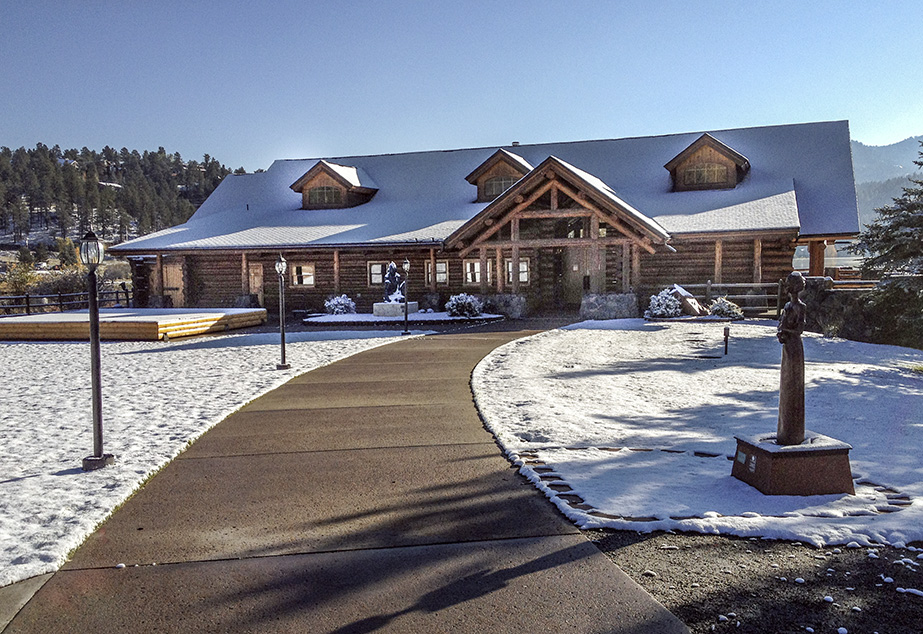
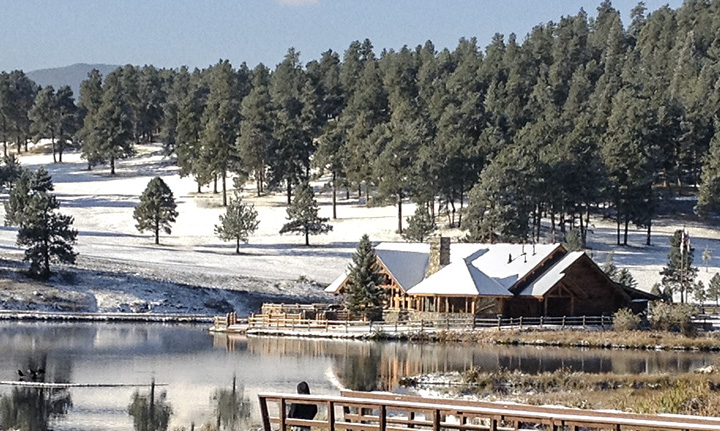
We had our first snow last night and early this morning.  The snowfall did not amount to much, but with the green of the evergreens, gold of the aspens, and pure white of the new falling snow, the morning was absolutely beautiful.  The temperatures were in the low 20s Fahrenheit, but with the low humidity we did fines.


This is the publice Lakehouse at Evergreen Lake, the focal point of our mountain community.  This side was in the shade, I lightened the shadows using the adjustment brush in Photoshop Camera Raw.


This is the Lakehouse from the other side.  It was in full sun, so I had to tone the highlights down a bit.

We may get some more snow tonight.

James McNeill Whistler – from the Smithsonian

Whistler’s Neighborhood: Impressions of a Changing London

Whistler's Neighborhood: Impressions of a Changing London

September 8, 2012 – September 8, 2013

Museum: Freer Gallery of Art

Location: Level 2


James McNeill Whistler (1834–1903) lived in London’s Chelsea neighborhood from 1863 until his death. Bordering the Thames, Chelsea was home to artists, aristocrats, tradesmen, and paupers. In the 1880s, a period of great social and topographic upheaval in Chelsea, Whistler depicted the storefronts and street life outside his door. Historic buildings were razed and replaced by mansions for the upper class, forcing the poor into squalid conditions. The diminutive etchings in Whistler’s Neighborhood, which also features watercolors and small oil paintings, underscore the immediacy of the artist’s quick impressions of his evolving neighborhood. Together, the works form a time capsule of a rapidly changing city


More Information


More on Biofuels

Which Biofuels Hold the Most Promise for the Future – Interview with Jim Lane

By James Stafford | Wed, 03 October 2012 22:44 | 4

Benefit From the Latest Energy Trends and Investment Opportunities before the mainstream media and investing public are aware they even exist. The Free Oilprice.com Energy Intelligence Report gives you this and much more. Click here to find out more.

Following record droughts across the United States the benefits of the ethanol subsidy were once again hotly debated and biofuels in general found themselves generating quite a few unflattering headlines. But as always the mainstream media overreacted and we wanted to help put the record straight as to whether biofuels are an expensive folly or if they really do offer an affordable source of liquid fuel that can help us lower our reliance upon gasoline.

To help us look at these issues and much more we were fortunate enough to speak with Jim Lane, the Editor & Publisher of Biofuels Digest. 

In the interview, Jim discusses:

•    Why there will be a massive drop in gasoline demand.
•    Which biofuels hold the most promise for the future.
•    Investors should be looking at marine biofuels.
•    The truth behind the Air Force paying $59 per gallon for jet fuel.
•    Which biofuel companies investors should be keeping an eye on.
•    Why electrofuels are such an exciting opportunity.
•    Why peak phosphorus is a major concern.

Interview by. James Stafford of Oilprice.com

Oilprice.com: The drought across the U.S. has led to many pundits predicting a second ethanol crash due to the under supply of feedstock like corn. Some estimates say that the US will likely lose nearly 40% of its corn crop, and possibly more, which means that the price of corn will continue to rise. How do you see the situation developing in the U.S. for ethanol producers?

Jim lane: The global corn crop this year was the 2nd biggest ever, and the US crop the 8th biggest. Whatever disruptions that will occur are already priced in – we’ll continue to see lower production levels from US producers, but that will likely bring down ending stocks rather than cut into sales.

Oilprice.com: Where do you stand on the debate over the RFS?

Jim lane: The industry favors maintaining RFS2 in its current structure.  Here in Digestville we see the new 54.5 mpg CAFE standards creating a massive drop in gasoline demand. That’s going to put intolerable pressure on RFS2 in our view. We’d rather see either state or federal public utilities for fuel – keeping a free market in supply and demand but having the utility in place to provide long-term supply contracts for renewables. Offtake contracts offer better source of financeable stability for advanced biofuels, in our view.

Oilprice.com: What is your favourite source of biofuel? There have been numerous articles and reports released about potential super biofuels such as Agave, Jatropha, Sorghum, switchgrass, etc… Which do you think hold the most promise for the future?

Jim lane: It comes down to what is best for that locale – most cost effective and sustainable. It will vary. Having said that, marine biofuels looks interesting (e.g. seaweed) and direct conversion of brackish water, sequestered CO2 and water into biofuels are very exciting to contemplate.

Oilprice.com: Are there any new technologies/developments taking place that people may not be aware of, which stand a real chance of transforming the biofuels sector?

Jim lane: The aforementioned direct conversion technologies. Plus, electrofuels – which are similar but use electricity as an energy source rather than sunlight.

Oilprice.com: World rock phosphate production is set to peak by 2030. Since the material provides fertilizer for agriculture, the consequences are likely to be severe, and worsened by the increased production of biofuels. Do you see phosphate shortages as a threat to the biofuel industry?

Jim lane: Phosphorus is a material necessary to make the backbone for DNA, so it’s a real concern if not addressed – and even if fertilizers are sourced elsewhere. Recovering and aggregating other sources of phosphorus is a must.

Oilprice.com: Biofuels are well known for using a great deal of energy in their production – could you talk a little about the energy returns from the different types of biofuels?

Jim lane: I think you are referring to first-gen biofuels. Cellulosic biofuels offer 8-1 and 9-1 net energy returns. Passive algae farming offers even more.

Oilprice.com: Which biofuel companies should investors keep an eye on in the future?

Jim lane: The cellulosic biofuels companies like INEOS Bio and Mascoma are just now commercially deploying – right after that is a generation of thermochemical technologies like KiOR. After that, post-biomass companies like Joule are going to be heading for scale.

Oilprice.com: In a recent article we covered sweet sorghum as a biofuel investors should keep an eye on as the Environmental Protection Agency (EPA) prepares for its final approval of the grain for ethanol production. Unlike corn, it does not compete with food crops, while environmentally, its footprint is rather small. What are your thoughts on sweet sorghum?

Jim lane: It’s an excellent rotation crop with sugarcane, highly suitable for Brazil for example – it can grow during the off-season for cane.

Oilprice.com: What is the environment like for biofuel investments? What biofuels are receiving the most investment and which countries are the biggest investors.

Jim lane: All sectors have been doing pretty well of late, though companies that make intermediates have market flexibility and have been doing especially well. Ditto for those who can make chemicals as easily as fuel. US by far is the biggest investor, though China is coming along.

Oilprice.com: An innovative study by Zah et al. which was commissioned by the Swiss government found that most (21 out of 26) biofuels reduce greenhouse-gas emissions by more than 30% relative to gasoline. But nearly half (12 out of 26) of the biofuels—including the economically most important ones, namely U.S. corn ethanol, Brazilian sugarcane ethanol and soy diesel, and Malaysian palm-oil diesel—have greater aggregate environmental costs than fossil fuels. How do you respond to this?

Jim lane: We need more data and less assumption-based modeling. It all comes down to how you count indirect land-use change. The models are hugely sensitive to untested assumptions. What is needed is a credible data-set of land use, and a model that can predict real outcomes.

Oilprice.com: What is your opinion on electrofuels? Do you believe that they are the future of biofuels?

Jim lane: They are a fascinating opportunity to get around the limitations and inefficiencies in photosynthesis. Right now we are going through a promising round of investments from ARPA-E – we’ll have to wait and see if the data looks good.

Oilprice.com: Do you believe that the new process developed by researchers at the Michigan State University, which claims to increase the energy recovered from corn in the production of ethanol by 2000%, could prove a hero of the biofuel industry and see its rise to become a major source of transportation fuel?

Jim lane:  I doubt there will be much more corn ethanol capacity building.

Oilprice.com: A lot of people are talking about algae biofuels and how researchers should be focusing their attention here. A recent study put out by the respected energy research firm SBI predicts a compound annual growth rate of 43.1% and a $1.6 billion market in 2015 for algae biofuels. That is double-digit growth for the emerging industry. What are your thoughts on algae biofuels? Should more research be focused on algae than crops like corn, sorghum, switchgrass, etc..?

Jim lane: The DOE has a funding opportunity next year focused on algae yields, and that’s welcome, and for now that is what is needed. With respect to other feedstocks – they all deserve research on stress tolerance, pest resistance, and yield improvement .

Oilprice.com: Some start-up companies are abandoning biofuels and are instead using the same processes to make higher-margin chemicals for products such as plastics or cosmetics. Do you see this as a growing trend amongst biofuel producers?

Jim lane: The poorly-financed ones will have to go this route – and why not? It’s all the same barrel of oil they are replacing, whether it is the top of the barrel, economically, or the bottom.

Oilprice.com: The US Navy recently paid $26 a gallon for the biofuel it used in the RIMPAC exercises, and the Air Force paid $59 a gallon. What are your thoughts on such extravagant spending?

Jim lane: They need to test and certify the fuels, and the quantities are small. Remember, they need marine military spec fuel, this isn’t stuff you can draw off the same pump used for land transport.  If you ordered the same quantity of fossil fuels, it would cost the same as they are paying for advanced biofuels. When it goes to commercial volume, the costs will be the same as fossil fuels.

Oilprice.com: Do you believe the shale revolution and improvements in oilfield extraction technologies will affect investments in biofuels?

Jim lane: Two things we are already seeing. There’s a tremendous uptick in interest in GTL/biofuels and CTL/biofuels mixes – where you get the price attributes from the one and environmental attributes from the other. We’re also likely to see more effective distribution of CO2 for enhanced oil recovery, and that’s a feedstocks delivery system for biofuels as well.

Oilprice.com: Jim, thank you for taking the time to speak with us.

For those of you who wish to learn more about biofuels please take a moment to visit Jim’s superb website at:www.BiofuelsDigest.com

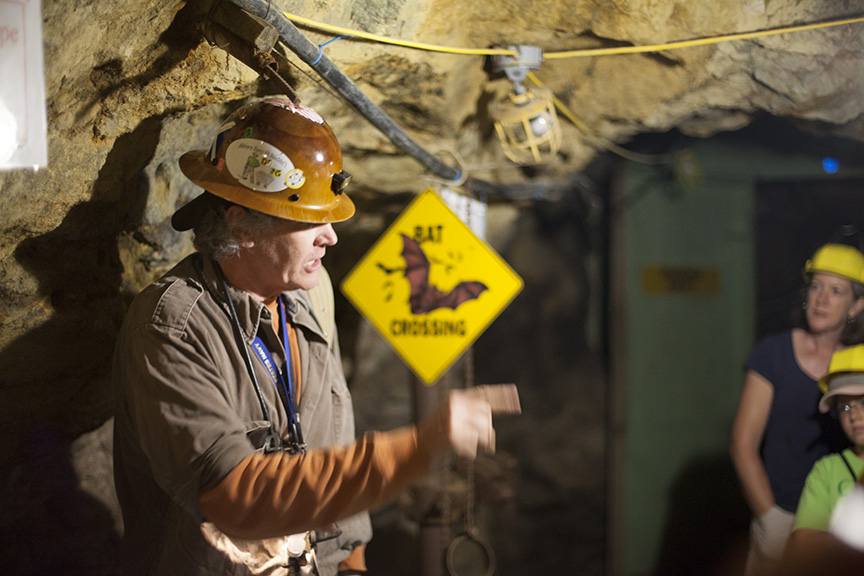
Bat Crossing Sign at Phoenix Gold Mine at Idaho Springs

A reader requested to better-focused image of the Bat Crossing sign at the Phoenix Gold Mine.  Here it is.

Gold Mine Tour

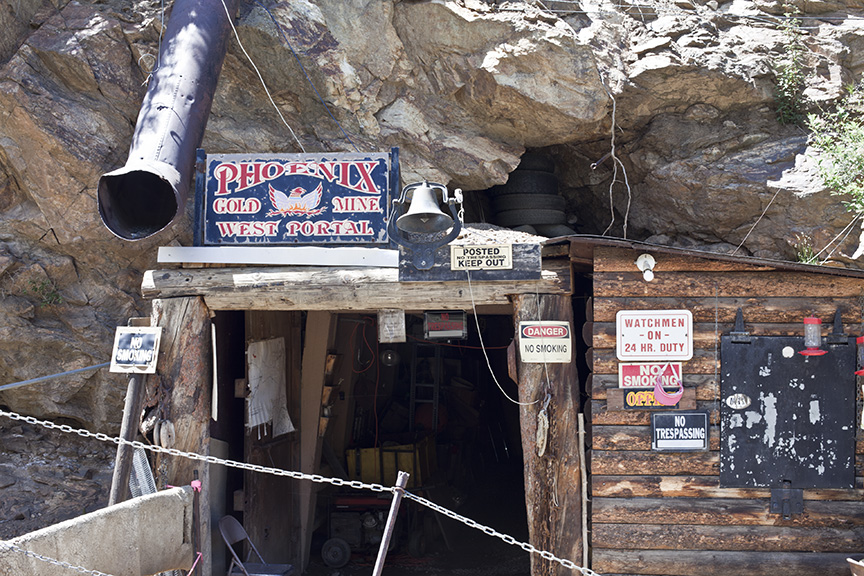
I received some comments on my Clear Creek Colorado post and am adding these pictures from the Gold Mine Tour at the Phoenix mine located just west of downtown Idaho Springs, Colorado.


This is the entrance to the mine.  It gets really dark inside, but there is lighting.


This is our tour guide.  I think he has spent too much time in the mine and is a bit loopy


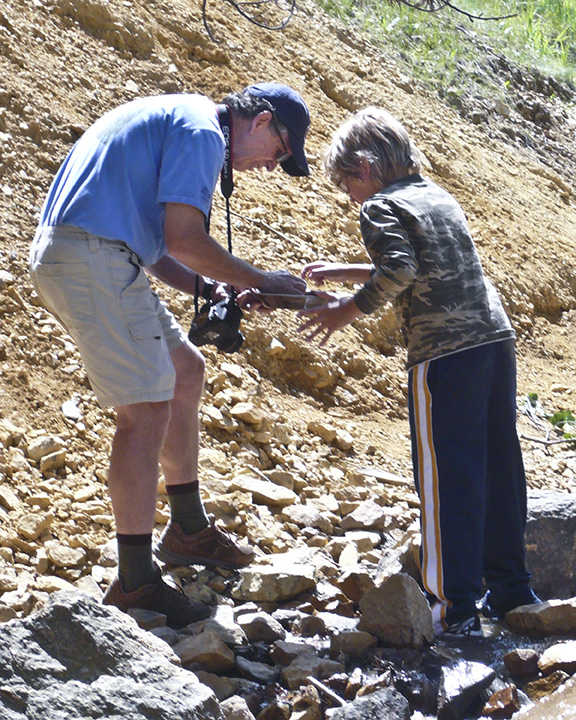
This is my grandson Richard and me panning for gold – I still have to keep my day job.