Social Media Feeds Will Spin Televised Debates

From Technology Review

NEWS  //  WEB

The Real Debate Will Take Place on Facebook and Twitter

Campaigns are gearing up to shape social media reactions in real time.

4 comments

DAVID TALBOT

Tuesday, October 2, 2012

Social debate: The first debate between Mitt Romney and Barack Obama will be amplified on social media platforms.
AP Photo | Cliff Owen and Carolyn Kaster

When President Obama and Mitt Romney take the stage for their first debate in Denver tomorrow night, a far more extensive shadow debate will unfold across social media. Campaigns and supporters will aim to seize the online “conversation” in a vast game of spin unfolding well beyond the telecast and media coverage.

As a sign of just how pervasive and crucial social media has become, in some states elected officials are only one degree of “friend” separation from nearly every Facebook account holder in that state, says JD Schlough, a Democratic political strategist. And by one analyst firm’s count, Twitter has 140 million U.S. users, more than 30 million of whom joined in 2012 alone.

“All social media is a conversation, but the amount of people having that conversation in 2012 is a lot greater than it was in 2008. That conversation is going to happen whether the campaign influences it or not—so they better get their message out there and hold the other side accountable for mistakes,” Schlough says.

Advertisement

On Thursday morning, a growing crop of analytics firms will drill down to see which moments—which gaffes, one-liners, and key messages—resonated the most, and which social media influencers did the best job amplifying them (see “Facebook: The Real Presidential Swing State“).

It’s likely that more than 50 million people will be watching the action Wednesday at the University of Denver. And whether it was Richard Nixon’s haggard look in 1960 or Ronald Reagan’s dismissive “There you go again” line against Jimmy Carter in 1980, experience shows that a single impression or one-liner can carry or ruin the night for either candidate.

This could be especially evident online. During the Republican presidential debates in Iowa last fall, when Mitt Romney made his infamous $10,000 bet with Rick Perry, playing into the stereotype of him as a clueless plutocrat, this spawned some 3,400 tweets. And the Democratic National Committee poured gas on the fire, creating the hashtag #what10Kbuys, which became a trending topic.

In terms of his online and mobile presence, the president has a strong advantage. According to figures from Nielsen, BarackObama.com had 6.4 million unique visitors in August 2012, reaching 2.9 percent of Americans who were online that month. MittRomney.com had 3.3 million unique visitors during that time, about 1.5 percent of the American population online. On mobile, the figures were similar. Obama’s official app and mobile website had 1.8 million unique users during August, from Android and iPhone owners in the United States. MittRomney.com—which includes both mobile apps and Web—had only 881,000 unique U.S. users.

On social media platforms highly influential tweeters can make all the difference, and a growing number of firms aim to identify which Twitter members are driving the conversation—ranking people by followers, frequency of tweeting, and frequency with which their tweets are further distributed.

Earlier this year PeopleBrowsr, a San Francisco-based analytics company, analyzed how influencers helped launch public campaign against Chik-Fil-A, the fast food restaurant whose president drew fire from some quarters for donating to right-wing groups that opposed same-sex marriage.

This influence can spill into mainstream media coverage. On July 17, the Chik-Fil-A topic was mostly remarked upon by noncelebrities and a few gay activist groups. The following day the tweets came from journalist David Carr and bloggers and celebrities like Pink and Rob Delaney. The day after that, the mainstream media, including the Guardian, NBC, and AOL, started covering the story.

If marketers and political campaigns can determine which influencers have the biggest sway on different topic and in different geographical areas, they can wage campaigns to deliver messages to different interest groups, says Shawn Roberts, marketing director for PeopleBrowsr, which is not itself doing political campaigns.

“If they can get those influential people talking, those are the folks that will drive opinion,” he says.

Overall the goal is not just to more broadly deliver a message, but to ensure that it is delivered from trusted friends—the holy grail of marketing. After all, you are more likely to see a movie when a friend recommends it, rather than if you’ve seen an advertisement.

That’s why campaigns want to use all means possible to prime social media to distribute talking points in real-time. “If we know that people believe stuff they hear from friends more than politicians, and one of them does something stupid, or smart—or if there is a contrast on an issue—it amplifies the impact of the debate to hear and to react and add your own spin,” Schlough says. “Much like the convention, they will seek to use the social media to capitalize on the good moments and fact-check the hits the other side is throwing.”

Bluefin Labs, a startup in Cambridge, Massachusetts, that analyzes social media conversations, has been shepherding a list of 400 to 500 most politically influential people on Twitter, but has not yet done any analytics on them.

That may change after the debates. The company plans to analyze shifts in how people are taking about the race, says William Powers, who directs Bluefin’s The Crowdwire blog. “Are they just looking at it as a political race, as a race between celebrities, or are they looking at it as a contest over positions on the issues? Let’s face it, the bigger questions are: What are these guys going to do when they have power?” The first analytics might be posted Thursday, after the debate, he says.


More Change We Could Believe In

Replacing Debates with Kittens Would Be ‘Just as Informative, and Great for Productivity’

mcwetboy via Flickr

Today, Elspeth Reeve noted that even the campaigns are treating the upcoming presidential debates as little more than a reality show. Why can’t we just watch kittens instead, asks commenter mhwood:

Why not replace the whole thing with hilarious kitten antics? Just as informative, and great for productivity. win-win, guys!

We see you read our chart of the day, which graphs the relationship between baby animal pictures and increased worker productivity. While we aren’t so sure it’s a good idea to replace the Obama and Romney showdown with frolicking kittens, we do hope one of the candidates will propose cute kittens as a way to jumpstart the economy. One of them really ought to run on the platform “a chicken in every pot, and a cat jumping in and out of every box.”

Want to add to this story? Let us know in comments or send an email to the author atdwagner@theatlantic.com. You can share ideas for stories on the Open Wire.
David Wagner

Click here to find out more!


Click here to find out more!

Clear Creek Colorado

Clear Creek, which roughly follows Interstate 70 west of Denver, was the location of much of the gold mining in the 1800s.  There are two major towns in Clear Creek county that are located on Clear Creek, Georgetown and Idaho Springs; a smaller town – Silver Plume was also the site of meaningful mining activity.

This is a beautiful time of year along Clear Creek as the aspens have turned golden creating a canvas mostly of dark green with brilliant flashes of gold.  And…gold will be the theme of this post.

Tourism has replaced gold and silver mining as the major industry along Clear Creek.  There are two major mines that host tours.  My family and I have toured the Phoenix mine.  The tour is worthwhile; you can pan for gold and experience the frustration of most of the early miners, but you are not relying on the ore you find for your livelihood, which is a significant difference.

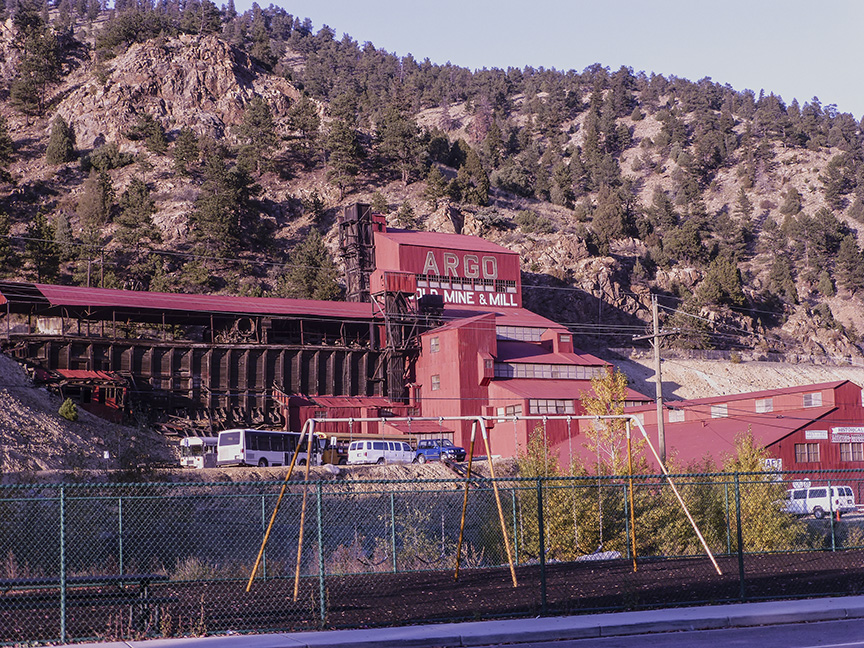
The Argo Mine is located within the town limits of Idaho Springs and is pictured below:


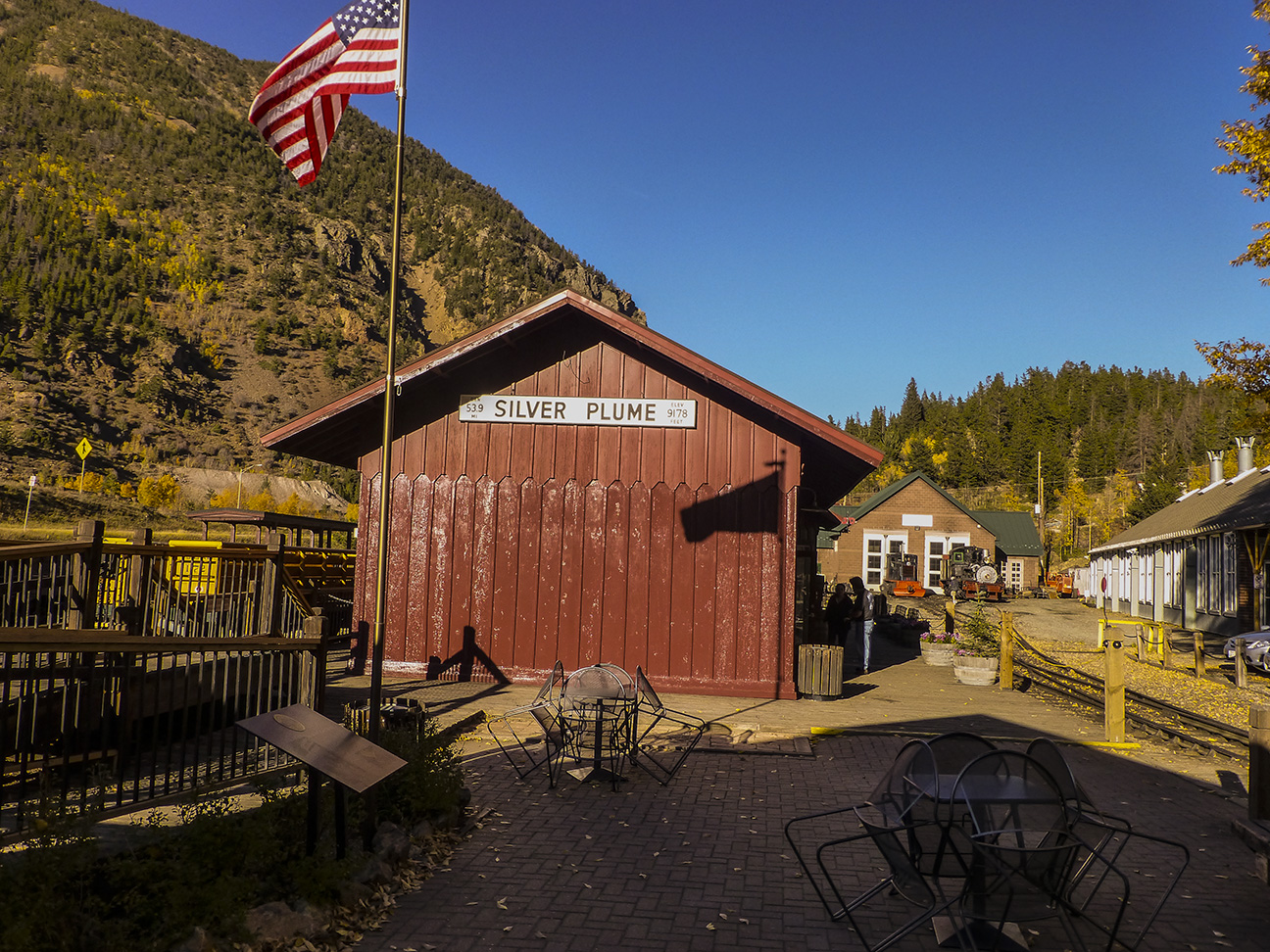
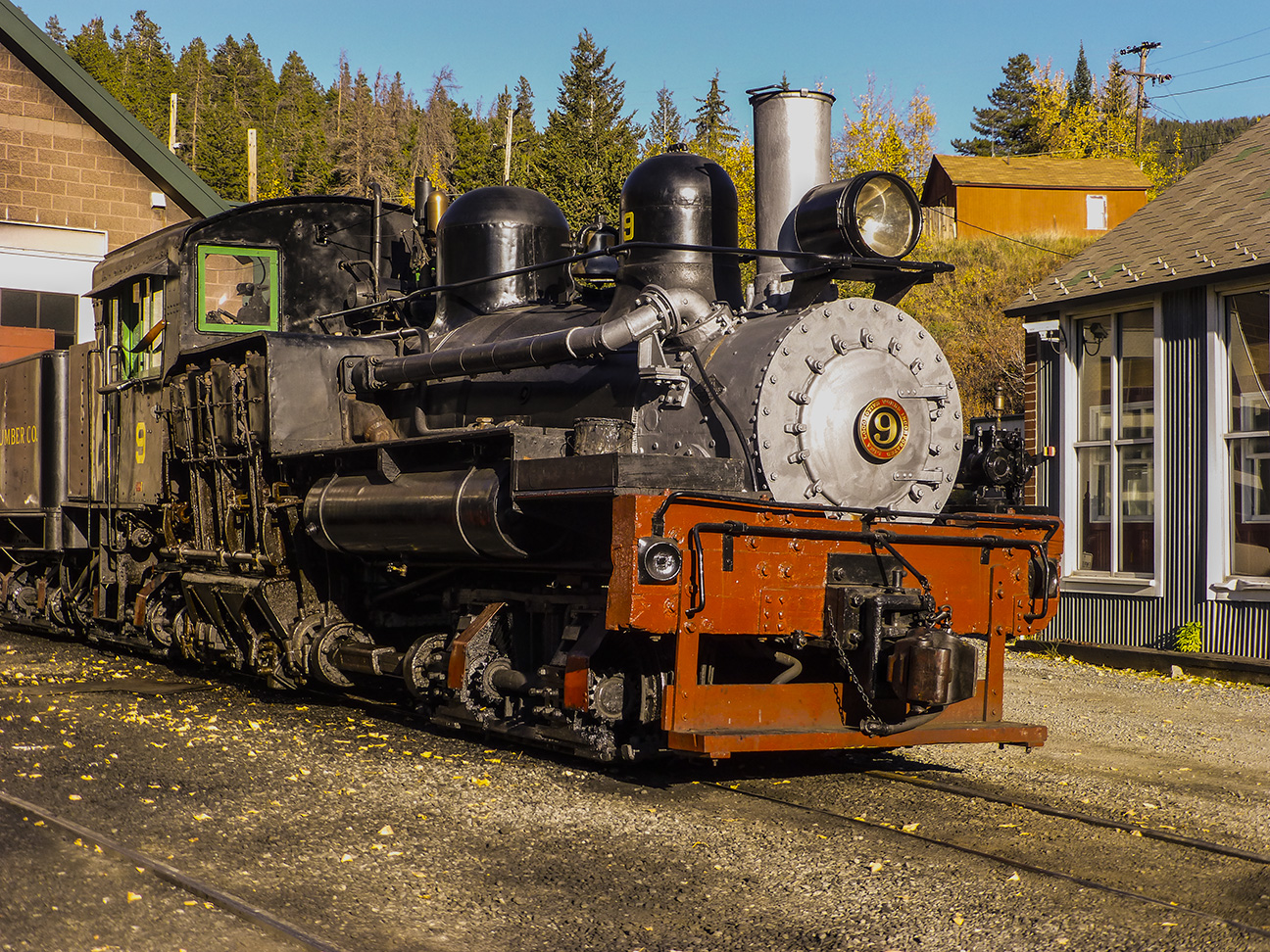
Of course, it was necessary to move the gold and laborers from the mines to markets where it could be sold and where the miners got their supplies.  This necessity lead to the local Georgetown Loop railroad.  The rail yard where the steam engines were serviced is located up the mountain from Georgetown in Silver Plume.  The Station and the No 9 steam locomotive are shown below:

A visit to the Clear Creek area is both enjoyable and educational any time of year, but summers, while crowded with tourists is the best time to visit.  If you can’t make it then, come in mid-September to mid October when the aspens are yielding their special gold the mountains.

Facebook Meet Medvedev – from the Atlantic Wird

When Zuck Met Medvedev

Dmitry Medvedev/Instagram

Officially, according to Russian news agency RIA Novosti, Zuck is in Russia to meet with Medvedev and “discuss the social media giant’s potential cooperation with Russian burgeoning innovation sector” and “presented Medvedev with the opportunity to burnish his credentials as a forward-thinking – and relevant – modernizer after his departure from the Russian presidency, which many critics have claimed was an unceremonious exit into irrelevance.” Though there are some reports that Zuck’s there to recruit top talent away, as Russia’s Vkontakte social network—not Facebook—is basically the Facebook of Russia at the moment. Whatever the reason for Zuck’s visit, the social media gods have aligned and blessed us with this glorious picture of Dmitry Medvedev longingly looking at Dmitry Medvedev meeting Mark Zuckerberg (shhh, nevermind that it’s on social media rival Twitter and finding Dmitry Medvedev’s Facebook page is really hard to find):


Guatamala Photos

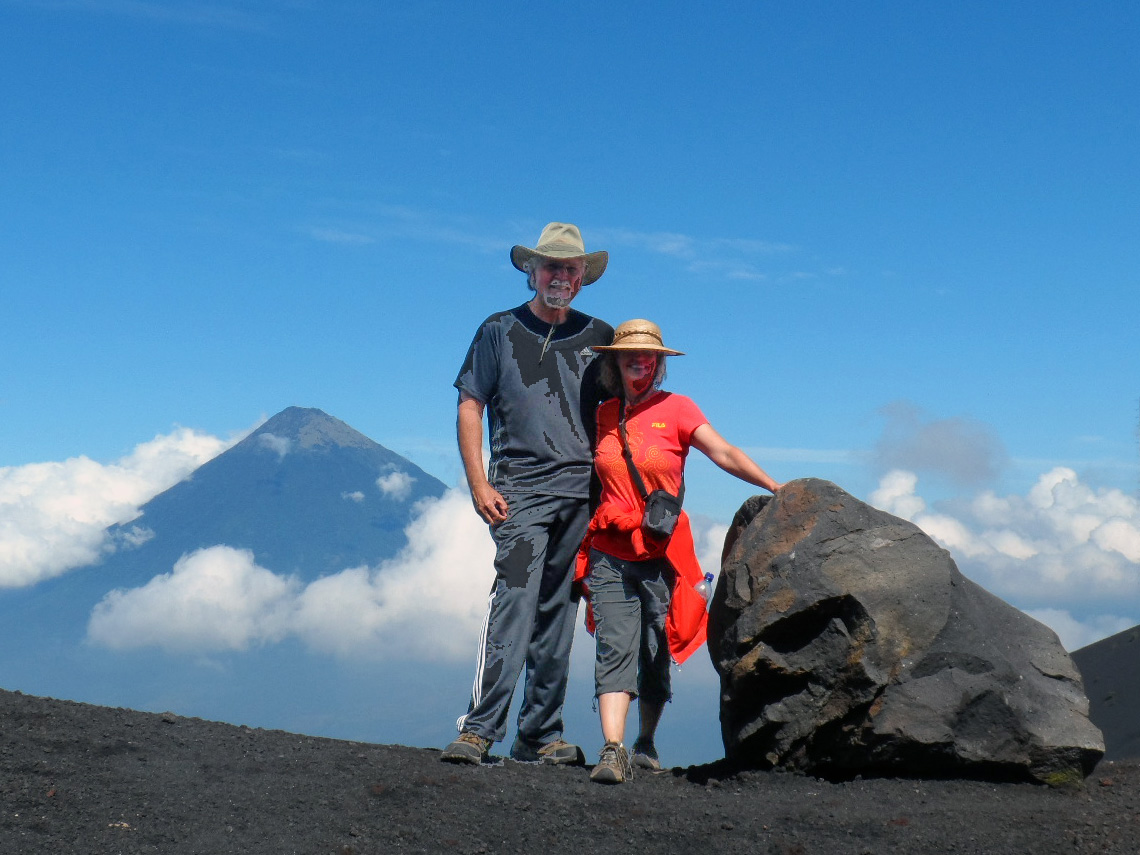
My long-term friend and client Sam sent these from Guatamala.  He and his wife Karen sold their home and many of their worldly possessions some time back and have been traveling in Latin and South America. I am posting two photos they sent me:

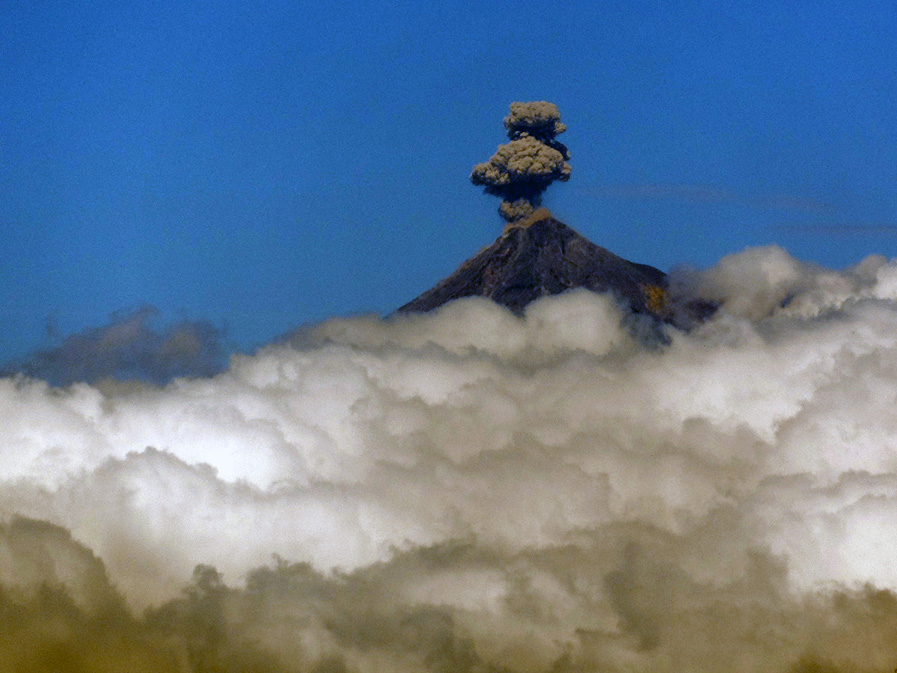
Pacaya Volcano


The image above shows the Pacaya Volcano in Guatamala

The image below shows Sam and Karen near the top of their hike near the Volcano


Whoever took this picture did not realize how backlit it is.  I have tried to brighten their faces using the quick selection tool to adjust the brightness.  Of course the photographer could not move the sun or the volcano and I am being a bit picky.

Election in Georgia – From the Economist

Georgia’s election

Pain and grief in Georgia

Modernisation is one thing, democracy another. Georgia faces a dangerously polarised election

Sep 29th 2012 | TBILISI | from the print edition


THE parliamentary election on October 1st will be Georgia’s most important since the 2003 Rose Revolution, when President Mikheil Saakashvili and a bunch of mostly young, English-speaking followers came to power. Now their United National Movement (UNM) faces the biggest challenge yet from Georgian Dream, a coalition headed by Bidzina Ivanishvili (pictured above), an enigmatic tycoon who made his fortune in Russia.

A new constitution comes into force next year, when Mr Saakashvili’s final term in office ends. Many of his powers will go to the prime minister, chosen by the new parliament. The election is also a referendum on the past eight years. Economic and administrative reforms have turned the country into an ex-Soviet showcase. Petty corruption has all but vanished. But modernisation has outstripped democratisation. State media and the judiciary hew to the official line. Complaints abound about arbitrary and venal tax inspections. Big business and the ruling elite are closely linked. Irakli Alasania, a former ambassador to the UN and one of many luminaries of the Saakashvili team now with the opposition, cites a “culture of non-accountability.”

Rhetoric on all sides is heated, if not hateful. In the western city of Zugdidi, Mr Ivanishvili told cheering crowds: “The days of Saakashvili’s criminal regime are numbered”; the election would be a day of “real responsibility”. His camp says the Rose Revolution has decayed into authoritarian greed to which the West turns a blind eye. The opposition has spent a fortune trying to persuade foreign opinion of this.

A shocking example of misrule came with the release on September 19th of videos showing rape and beatings in prisons. Mr Saakashvili promised an investigation, fired several senior officials and put a human-rights ombudsman in charge of the prisons. The authorities say the videos were contrived by the opposition and leaked to coincide with the election. Bad prison conditions are a long-standing problem and a symptom of a weak opposition’s failure to scrutinise the regime. Georgian Dream’s candidates say the scandal reveals the regime’s true face.

Mr Ivanishvili used to be a reclusive figure who raised penguins on his Black Sea estate and doled out money to dozens of Georgian poets and actors. Few even knew what he looked like. His sudden declaration in October last year that he would seek to become prime minister was as mysterious as it was explosive. Until then, the UNM had counted on an easy victory.

Georgian Dream comprises six parties, including denizens of previously moribund opposition groups. They include free-market liberals, xenophobic nationalists, and those who hanker for the era before 2003. Mr Ivanishvili’s cash and personality unite them, for now (he says he will stay prime minister for only two years, if he wins). David Usupashvili, head of the liberal Republican Party, says his party would gain no more than 2% running alone. Georgian Dream was the “only realistic, pragmatic choice”, but the coalition is “not eternal”.

Aside from better relations with Russia (Mr Saakashvili’s have been dire since the disastrous war of 2008), the coalition’s platform is vague. Words and deeds suggest it is less interested in winning the election than in preparing for a fight afterward.

Mr Ivanishvili refused to take part in debates (he said he would debate only with Mr Saakashvili). He has given conflicting signals about whether he will recognise the election result if Georgian Dream loses but international observers judge them free and fair. A European diplomat says the strategy is not about winning elections, but “delegitimising” them. Another observer in Tbilisi agrees: “Either they’ve run the worst campaign ever or it was never their intent to compete.”

Chiora Taktakishvili of the UNM admits the party may have been “too focused on results at the expense of compromise and dialogue.” But many in the UNM see Mr Ivanishvili and Georgian Dream as representing the poisonous politics of the past and threatening Mr Saakashvili’s achievements since 2003.

Whatever the result, the election is unlikely to end the country’s dangerous polarisation. Geographic and ethnic tensions may only grow. The opposition thinks it is fighting a dictatorship that will stop at nothing to keep its power. On election day, each side may release its own exit polls and declare victory. The loser will feel not only disappointed but also dispossessed. For a volatile country in a bad neighbourhood, that is a dangerous brew.

from the print edition | Europe

What a nut job!

Zombies at Google Campus


Observations

Observations


Opinion, arguments & analyses from the editors of Scientific American

Observations HomeAboutContact

Zombies Invade Google Campus

By Mariette DiChristina | August 21, 2012 |

She looked perfectly normal. But what was she doing roaming around at night on the Google campus in Mountain View, Calif?

She’d been drawn out of her home, following the light, and now was taking mincing steps across a white bed sheet. Had she just taken “the flight of the living dead”? Was she actually a “ZomBee”?

Honeybee drawn by light to leave the hive at night suspected to be a “ZomBee,” parasitized by a fly. Sadly, it proved true. Credit: Mariette DiChristina

Her hunter, the genial John Hafernik, was clearly excited about the possibility but, as a scientist, would only acknowledge what we had observed directly so far. “Well, leaving a hive at night is definitely not normal behavior,” said Hafernik, a biologist at San Francisco State University and trustee and president of the California Academy of Sciences, sounding almost cheerful.

We watched as another honeybee left the Google Crittenden Campus hives and buzzed toward the light traps Hafernik had set up. The insect dropped onto the slippery metal surface fitted into a plastic bucket below a light, sliding down through a hole and making a small plunk when she hit the base. We had captured another possible ZomBee—an Apis mellifera honeybee that might have been parasitized by the Apocephalus borealis, a type of phorid fly. The fly’s brood eats the living tissue of their soon-dead hosts, leaving empty, sometimes headless husks. As we watched, other bees gradually joined the first two in the bucket atop a white sheet. I shivered with feelings of horror and a kind of delight at the discovery. Or maybe it was just a cool evening.

It was Saturday, August 4, and a group, including Fred Guterl, Scientific American’s executive editor, and me, had followed Hafernik from our evening meeting site at Scipio, the annual “unconference” organized by the O’Reilly Media, Nature Publishing Group, Digital Science and Google on its California campus. We were out to conduct some citizen science by finding the zombie-like parasitized bees. In a short time, our hunting party snared six honeybees acting suspiciously. I asked Hafernik: How do you know if they’re actually infected? “We watch them,” he said. Maggots will emerge after about two weeks.

From the six bees we caught, 11 pale, wriggling maggots later appeared and grew into 11 brown, pill-shaped pupae. Although the parasitizing fly creates ZomBees, the maggots are apparently not much interested in brains. The fly lays their eggs in the abdomen, or back end, of the bees. The maggots eat their way through the abdomen and thorax (middle) and exit below the head. Sometimes the head falls off.

As Hafernik explained, the honeybee is not a native species, so the A. borealis fly’s parasitization is a relatively new phenomenon, occurring only within the past few hundred years. The fly’s other known hosts are bumblebees and paper wasps. In their study, Hafernik and colleagues found more than three quarters of the sites sampled in the San Francisco area had infected honeybees. (Read the paper Hafernik and colleagues published in January in PLoS ONE, “A New Threat to Honeybees, the Parasitic Phorid Fly Apocephalus Borealis”).

Honeybee colonies have suffered from die-offs in recent years from colony collapse disorder, or CCD, where the insects abandon their hives. The bees are also subject to mites and other parasites. Studies of the phorid infection may help in understanding hive-abandonment behaviors in CCD.


The ZomBees that we had found in early August, Hafernik later reported in an e-mail to SciFoo attendees, were the southernmost record of an A. borealis infection in the San Francisco area. In his e-mail, he updated us about more hives“On August 13, Googler and ZomBee hunt participant Bart Locanthi noticed unusual behavior around the honey bee hives at the Google West Campus. Apparently, honey bees were being attracted to a glass door behind the hives at night as Googlers burned the midnight oil inside. When I checked the areas, there were a number of dead bees with A. borealis pupae near them and a few maggots slithering around as well. Thus, these hives are also infected.” Here are Hafernik’s photos of the bees, maggots and pupae. Hafernik hopes to continue to work with the Google beekeepers to monitor the hives.

After about an hour, the Google sprinklers came on, driving the hunting party away from the chilling scene of the living dead and back to the warmth of indoor conversations and the hope that we had contributed in some small way to science. As Hafernik later reassured us in his note: “The hunt was not only fun, but also produced useful data for the ZomBee Watch citizen science project.”

Want to help the scientists find parasitized bees? You can learn more at the ZomBee Watch citizen-science project.

Update: Hafernik shared this photo he shot this morning of more bees and pupae from Google hives.

Vials of parasitized honeybees with pupae from maggots that emerged. Credit: John Hafernik

Mariette DiChristinaAbout the Author: Editor in Chief, Mariette DiChristina, oversees Scientific American,ScientificAmerican.comScientific American MIND and all newsstand special editions. Follow on Twitter @mdichristina.More »
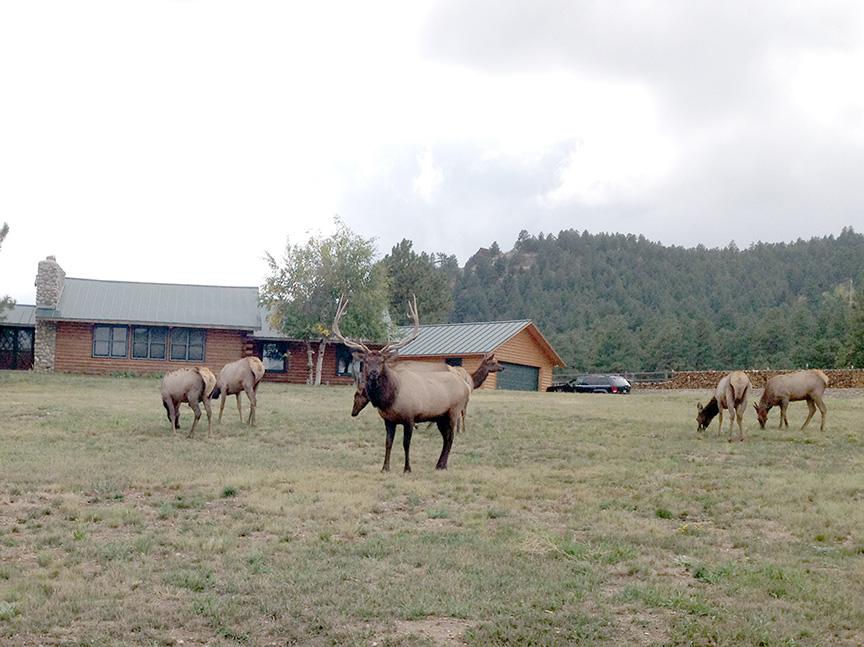
Bull Elk and the girls – Evergreen Co

There is a lot of heing and sheing going on in the meadows near our house this time of year.

Beam Yourself to Work

Beam Yourself to Work in a Remote-Controlled Body

Telepresence systems that let you go to work remotely have proved awkward to use. One startup thinks it has solved those problems.

5 comments

TOM SIMONITE

Tuesday, September 25, 2012

New hire: This five-foot-tall remote controlled telepresence system makes it easier for remote workers to bond with colleagues, according to Suitable Technologies.
Suitable Technologies

The tech boom in the San Francisco Bay Area has created intense competition for software engineers. Kids straight out of college can start salary negotiations at six figures, and rents are rocketing.

Scott Hassan, an early Google engineer and now an investor and entrepreneur, thinks he has the solution for companies that think they’re wasting time and money chasing new hires: make it more practical for engineers living in cheaper places to telecommute to work. His company, Suitable Technologies, has developed a roving telepresence system that is five feet, two inches tall, placing its 17-inch screen at roughly the right height for a hallway conversation. It is not the first mobile telepresence system to hit the market, but Hassan says it has features that will make it more practical and less awkward to use than previous systems.

Enabled by increased use of computers and the Internet, teleworking has become more common over the past decade. But Hassan says existing technologies are lacking. “We need a better mode for collaboration than Skype, or a phone,” says Hassan. “We should be able to travel instantly and not just as a voice or a screen on the wall.”

Suitable Technologies will begin taking orders for the $16,000 Beam RPD telepresence system today (the charging dock costs an additional $950). Orders will begin shipping from the company’s Palo Alto, California, factory in November.

Hassan says the system can be used to save on the expense and time of long-haul travel, or to allow remote workers to be more fully integrated into an office.

“Being able to source people from anywhere in the world is a big advantage to companies,” he says. “In most jobs, you don’t actually touch anybody, but it’s useful to be able to see and talk with people informally.” Hassan says a remote worker could stay logged into a Beam system all day, so that anyone can stroll up and start a conversation with them, just as they would in person. Likewise, the Beam’s pilot can roll over to a colleague, or attend any formal or informal meeting.

Beam has an eight-hour battery life and weighs approximately 100 pounds (45 kilograms), making it sturdy enough to shove office chairs or a partly closed door out-of-the-way. The operator’s interface shows the view from a camera over the screen, as well as smaller views looking down, toward the unit’s base. A user drives it by moving a mouse over their view of the distant world, and clicking where they want to go. A graphical overlay indicates the direction and speed the Beam will move in.

Suitable Technologies was spun out of Willow Garage, a robotics research lab founded by Hassan in 2006. Willow Garage has developed an open-source operating system for robots,ROS, which powers other products, including the recently unveiled Baxter (see “This Robot Could Transform Manufacturing“), and it underpins leading work on having robots autonomously carrying out new kinds of chores (see “Robots that Learn from People“). Hassan says that his new company’s project is not a robot, because it lacks sensing and autonomy. Instead, he refers to it as an RPD, for remote presence device.

Suitable Technologies is not the first company to develop such a telepresence system (see “Telepresence Robots Seek Office Work“). But other systems have demonstrated that technology still needs some polish. Social interactions between people and such telepresence systems have tended to be awkward—including for the pilot (see “The New More Awkward You“). Hassan says that Suitable Technologies has done more in-depth research and development to come up with a design that mitigates those problems. The large screen allows a person’s face to be a natural size, whereas the phone-sized screen from competitors such as Vgo and AnyBots makes it difficult or impossible to read facial expressions.

“You’d think putting a laptop running Skype on a stick was easy and all you needed,” says Hassan. “We learned in our research that it’s a lot harder than you think to make it really work.”

Another innovation of Beam is that it has two Wi-Fi radios, so it can connect to two wireless networks at the same time. That removes the problems of “hopping” between the multiple Wi-Fi networks present in a typical workplace, says Hassan, which can cause breaks in video and audio streams. When Beam moves toward the edge of one network’s range and into that of another, its spare radio connects to the new signal while the first keeps working, allowing an instant handoff, says Hassan.

Beam also has a wide-angle camera to reduce the tunnel vision effect of looking at the world through a regular camera, and a second camera that allows the pilot to see around the unit’s base. An array of six microphones, including some on the rear of the Beam’s screen, allow for noise-canceling so the distant pilot can hear clearly. It also allows the user to hear voices to the unit’s side and rear, useful in group situations.

Suitable Technologies got started after Willow Garage hired an engineer that lives in Indiana and built a prototype roving telepresence system called Texai to make it easier for him to communicate with colleagues at the company’s labs in Menlo Park. Before long he was wheeling up to his own desk every day, and several other companies expressed interest in the design (see our profile of Leila Takayama, a social science researcher who researched how to make that prototype better suited to social interactions). That engineer now works at Suitable Technologies, and commutes using a prototype of the product launched today. Research on Texai continues at Willow Garage—for example, into how to give it the ability to correct an operator’s steering when the unit’s about to run into something.