Millionaires Not Paying Taxes

The Millionaires in the 47 Percent

By MICHAEL COOPER

When President Obama was asked Thursday afternoon at the Univision candidate forum about Mitt Romney’s now-famous surreptitiously videotaped remarks about the 47 percent of Americans who do not pay federal income taxes, the president said, as part of his answer, that “there are a whole bunch of millionaires who aren’t paying income taxes either.”

How many? There were about 7,000 filers who reported making more than $1 million but did not pay federal income tax in 2011, according to the Tax Policy Center. Overall, there were about 110,000 filers who reported more than $200,000 in income that year but did not pay federal income taxes.

New Russian Diamond Mine puts DeBeers at Risk

Russia’s Giant Diamond Mine Could Collapse the Global Diamond Market

By Joao Peixe | Wed, 19 September 2012 21:35 | 2

Benefit From the Latest Energy Trends and Investment Opportunities before the mainstream media and investing public are aware they even exist. The Free Oilprice.com Energy Intelligence Report gives you this and much more. Click here to find out more.

Russia has been the world’s largest diamond producer for the past 3 years. Its diamond mines in Yakutia produce massive profits in a tightly controlled market. However it has just been released that the Russians have been sitting on a monolithic mine for 40 years. In the 1970s they discovered a diamond field beneath a meteorite crater which contains trillions of carats, and could supply the world with diamonds for 3,000 years.

They didn’t release this information earlier in order to keep the diamond market under control, and the prices high.

Nikolai Pokhilenko, the director of the Novosibirsk Institute of Geology and Mineralogy, said that “the resources of super-hard diamonds contained in rocks of the Popigai crypto-explosion structure, are by a factor of ten bigger than the world’s all known reserves. We are speaking about trillions of carats. By comparison, present-day known reserves in Yakutia are estimated at one billion carats.”

RELATED: The Real Reason Behind Oil Price Rises – An Interview with James Hamilton

More Aspens at Squaw Pass

It is that time of year in the Rockies!

Aspens at Squaw Pass

The aspens are really turning golden now.  Too bad I am not a Packers Fan with all of this green and gold.

Extremely Efficient New Vehicle From Tesla

Tesla Model S Completes Trip from LA to Las Vegas on One Charge

By Charles Kennedy | Sun, 16 September 2012 00:00 | 0

Benefit From the Latest Energy Trends and Investment Opportunities before the mainstream media and investing public are aware they even exist. The Free Oilprice.com Energy Intelligence Report gives you this and much more. Click here to find out more.

Motor Trend, the US automobile magazine, was recently loaned a Tesla Model S electric vehicle in order to put it to the test, and determine if it is worthy of the wonderful claims that Tesla make of it.

The Tesla Model S with the large battery was designed to cure any fears over range, and the guys at Motor Trend decided to drive it from LA to Las Vegas on one charge in order to assess the new improved range.

The EPA suggest that the Tesla Model S will get an estimated range of 265 miles per charge, whereas Tesla claim it will do 300 miles.

Nervous that the car may not quite make it, despite the fact that the trip was only 212 miles in length, they decided to keep speeds low, cruising at about 65 mph, and keeping the air conditioning off, despite the scorching temperatures.

Only once they neared the end of the journey, with plenty of range still showing on the dash, they decided to crank up the air con and travel in relative comfort.

They arrived in Las Vegas having used 60.6 kilowatt hours of energy, the equivalent of about 1.8 gallons of gasoline, and giving them an average of  85 mph.

Once they arrived they still had a range of 74 miles showing, which led them to wonder if they could have traded that 74 miles for 112 miles of air conditioning.

So, the Tesla made the trip with ease, although it would be more useful, and more realistic, to have done the trip at normal cruising speeds with the air-con on. Maybe that could be the next test.

By. Charles Kennedy of Oilprice.com

Feed Store i Eustis, Florida – Photography

We were visiting the Orlando area this time last year.  On the date this was taken, we were returning from the Daytona area and took a wrong turn and ended up in a rural farming area.  I thought this picture of a local feed store described this part of Florida best.


I am using a trial version of the new Photoshop CS6.  The filters tab no longer seems to contain the full set of artistic filters, though it appears you can access other filters online.  This image was rendered using the oil painting filter.

Latest Known Addition to Drone Warfare

Autonomous helicopters

Robocopter arrives

After unmanned drones, pilotless helicopters are taking to the sky to deliver supplies to troops

Sep 15th 2012 | from the print edition


UNMANNED attack aircraft, such as Predator and Reaper, have become a familiar part of modern warfare. But an army, famously, marches on its stomach, and campaigns can be lost as easily by a lack of supply as by a lack of firepower. That, combined with the increasing squeamishness of rich countries about taking casualties, is leading to the use of a new type of drone in the form of unmanned helicopters to deliver supplies. Pioneered by the armed forces, these hovering robots will also find civilian roles.

Two unmanned helicopters have been flying experimental combat missions delivering goods to American marine outposts in Afghanistan since December 2011. The project has been such a success it has twice been extended and may well run until September 2013. The helicopters in question are modified versions of the K-MAX, built by Kaman, an American aerospace firm. They are used in a number of military roles and in civilian jobs, such as logging and power-line construction, as a sort of airborne sky-crane cum delivery truck.

Strange bird

The K-MAX (pictured above) is a “synchropter”, with two sets of intermeshing blades, synchronised so as not to hit each other. It looks ungainly, but it is a robust system. The rotors turn in opposite directions to cancel out torque, the twisting action which requires conventional helicopters to use a tail rotor—a hazardous appendage. The modification for autonomous flight was carried out in a joint venture with Lockheed Martin, a big American defence contractor. By August the two K-MAXs had flown 485 autonomous sorties carrying over 900 tonnes of cargo.

The K-MAX was selected because it can carry over 2,700kg, which is more than its unladen weight. Unlike many large fixed-wing drones, which are flown under remote control by ground-based pilots, a modified K-MAX flies autonomously along a programmed course using GPS to navigate via specified way points. It can also be operated by remote control. The craft use a number of sensors, some of which Lockheed Martin is keeping mum about. These give the helicopter an awareness of its surroundings which is precise enough for it to land in total darkness. The American army is interested in adding a sophisticated camera to survey landing sites and spot potential threats. The camera could also help direct a helicopter from the ground and be used in civilian roles, like fire fighting or search and rescue.

The army has also suggested fitting some form of self-defence, like a gun which the camera could be used to aim. At present the K-MAX has no defensive systems, but Lockheed Martin says the helicopters could easily be fitted with armour, machine-gun pods or flares which could be fired as decoys to divert ground-launched missiles. But this would eat into its cargo-lifting capacity.

The unmanned K-MAX carries its cargo externally on a 25-metre cable. The helicopters are monitored as they fly autonomously to a forward operating base, where a marine controller on the ground takes over using a portable device to direct the drop. However, the helicopters can deliver a load to given co-ordinates without any human intervention. Jim Naylor of Lockheed Martin says the craft have been tested with radio beacons placed where the drop is needed. The K-MAX then delivers its cargo to within three metres.

The K-MAX has a four-hook carousel, so it can drop off supplies at several locations in one mission. As confidence grows the marines have been experimenting with new techniques. In May they carried out the first “hot hook-up from hover”, which involved attaching cargo while a K-MAX was in flight. This is faster and takes less time than landing to pick things up.

The top speed of the K-MAX is only about 100 knots (115 mph), but it has all the virtues of unmanned aircraft: it never gets sick, tired or goes on leave. Helicopter pilots are a scarce resource who take years to train. Terry Fogarty, in charge of unmanned systems at Kaman, says that the single-pilot-manned K-MAX can be flown up to 12 hours a day on logging operations, requiring a change of pilots. In its unmanned form a K-MAX might fly for most of the day. Moreover, if pilots are grounded by reduced visibility during, say, a dust storm, the unmanned version keeps going.

Other systems for autonomous helicopters are being developed. One, called HERMES—or less elegantly the Helicopter Remote Manipulation of External Slingloads—has been produced by Advanced Optical Systems, an American firm, for the US Armed Forces. It uses sensors on an unmanned helicopter to locate a load and pick it up automatically without having anyone on the ground.

Safe landings

Hazards such as buildings, trees and power lines in the drop zone can be a problem. But the American navy’s Autonomous Aerial Cargo/Utility System (AACUS) first surveys an area to locate such problems before selecting a suitable landing site. It then plots a safe approach route to land without help from a ground controller.

This is straightforward enough in benign flying conditions, but the aim is to be able to do it on a steep, unprepared slope in high winds. Although autonomous, an AACUS-equipped craft can communicate with people on the ground to let them know where it is landing. It could be used not just for delivering fuel, ammunition and other supplies, but also for evacuating casualties. (Though there are concerns about carrying injured people on a robotic aircraft without a doctor or a medical attendant on board.)

If the K-MAX assessment continues to be successful, the next stage could be an order for more pilotless helicopters by the marines. The army may also be interested. And commercial applications would follow. A change in the rules on airspace regulation would be required for civilian use of drones really to take off, especially in areas where other aircraft operate. Aviation authorities are looking at this, but want to see progress on autonomous safety systems.

An American start-up, Matternet, envisions using small unmanned electric helicopters with a 2kg payload to transport medicine, vaccines and blood samples in remote places. The user puts a package in the load bay and presses a button for the helicopter to take off and make its delivery. Andreas Raptopoulos of Matternet says the firm hopes to conduct a feasibility trial in the Dominican Republic later this year.

Larger electric helicopters could transform the economics of unmanned transport. E-volo, a German company, recently won the Lindbergh prize for innovation, awarded by an American foundation set up to commemorate Charles Lindbergh’s pioneering New York-to-Paris flight. E-volo has produced a flying machine it calls the Volocopter. With 16 rotors, it looks like a scaled up version of some flying toys, although one that is big enough to carry an adult. Given suitable software, unmanned Volocopters could become flying delivery vans, bypassing congested roads. Indeed, one website recently offered to deliver tacos with miniature robotic quadcopters. It was a spoof, but one day fast food really could be delivered this way.


Volocopter under human control


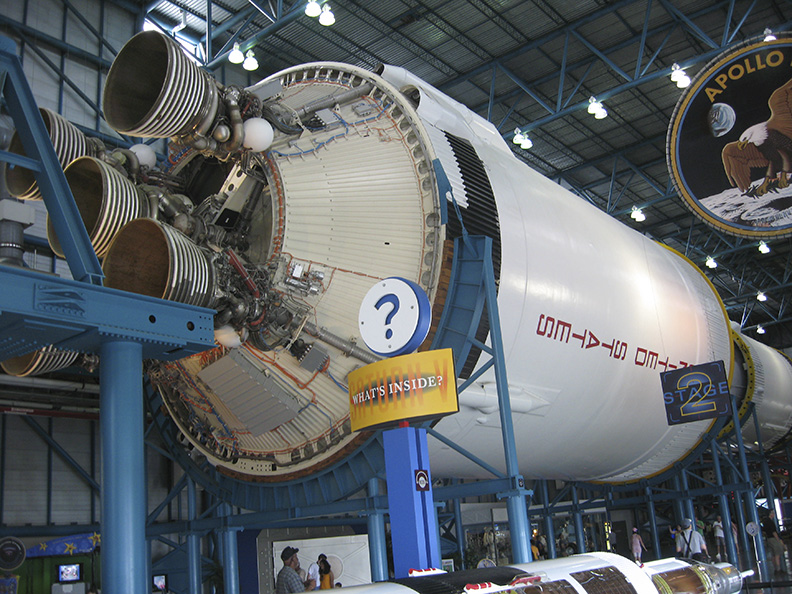
Booster Rocket at Cape Canaveral Florida

Picture taken inside exhibit hall at Cape Canaveral, Florida.

If True, This Would be Change We Could Believe In

Some Republicans Try Out a New Campaign Theme: Bipartisanship

<nyt_byline>

By  and 
<nyt_text><nyt_correction_top>WASHINGTON — A woman who appears in an advertisementsupporting Representative Jon Runyan, a New Jersey Republican, boasts about how he works “with both parties.”

Charles Rex Arbogast/Associated Press

Representative Bobby Schilling, an Illinois Republican, is highlighting his work with a Democratic congressman from Iowa.

Richard E. Mourdock of Indiana, whose Senate campaign has been most notable for his derision of legislative compromise as feckless, now says he would “work with anyone.”

While out and about on the campaign trail, Representative Bobby Schilling, Republican of Illinois, talks so much about all the great things he has done with Representative Dave Loebsack, a Democrat from nearby Iowa, that one would think the two were related.

Partisan obstreperousness, the force that propelled Congressional Republicans to widespread victory in 2010, is suddenly for many of them as out of style as monocles. In campaign advertisements, some lawmakers who once dug in against Democrats now promote the wonders of bipartisanship. And legislatively, Republicans in tough races are seeking to soften their edges by moderating their votes, tossing their teacups and otherwise projecting a conciliatory image to voters.

The Republican quest for bipartisanship — at least nominally — is not hard to explain. ANew York Times/CBS News poll conducted last week and released this weekend showed that 44 percent of Americans see Republicans at fault for gridlock in Washington, compared with 29 percent who blame President Obama and the Democrats. Nineteen percent said both were to blame. That imbalance has persisted at almost exactly those proportions since last year.

Democrats have noted Republicans’ efforts to present themselves as agreeable, and say they will try to beat them back.

“They’re going to redefine, and we are going to remind. That’s what this is about,” said Representative Steve Israel of New York, the chairman of the Democratic Congressional Campaign Committee. “They were swept in on a Tea Party tsunami. The wave has receded, and they are left high and dry with their voting records.”

With less than two months until Election Day, some House races may turn on whether the incumbent Republicans can shake the Tea Party label that Democrats are eager to press to them like flypaper.

Representative Nan Hayworth, a Republican freshman from New York, has taken to pointing out that she has voted for bills supported by Mr. Obama “a third of the time.” As she zoomed through the Rotunda the other day in her signature spike heels, on her way to visit with Representative Paul D. Ryan, the Republican nominee for vice president, Ms. Hayworth was asked if she was shifting to the center.

“Nope,” she said, never breaking stride. “I’ve been doing that from the start.”

Ms. Hayworth has a point: the conservative Club for Growth ranked her as the 172nd most conservative House Republican, about in the middle of the pack. But House Majority PAC, a Democratic political action committee, started an advertising campaign on Wednesday explicitly tying her to the Tea Party.

“Some tea parties are nice,” the advertisement’s narrator says. “But Nan Hayworth’s Washington Tea Party would roll back decades of progress for women.”

On election night in 2010, as Tea Party conservatives were being swept into office, Representative Roscoe G. Bartlett of Maryland, a 10-term Republican, declared: “The Tea Party came to where I was. I’ve always been there.”

But then came Maryland’s redistricting and an influx of Democratic voters to Mr. Bartlett’s once-reliable Republican corner of the state. Now much of his advertising emphasizes his support for higher education, including contributions to college funds out of his own pocket.

“Roscoe has never been afraid to buck his own party,” a radio ad intones. “Roscoe Bartlett, an independent voice for Maryland.”

Mr. Mourdock, who defeated the longtime Senator Richard G. Lugar in the Republican primary in Indiana, in part by casting Mr. Lugar’s willingness to reach across the aisle as a personality flaw, is now working overtime to soften that position. In one of his campaign’s advertisements, the Indiana lieutenant governor, Becky Skillman, says Mr. Mourdock will “work with Republicans and Democrats.”

This message “has great appeal among independent voters,” said Brose McVey, Mr. Mourdock’s deputy campaign manager.

“Hoosier voters aren’t buying what Mr. Mourdock is selling,” said Representative Joe Donnelly, his opponent. “In fact, when asked this week, he could not name one Democrat he would work with if elected to the U.S. Senate.”

For Republicans in particularly tough races, compromise is their central campaign theme. Representative Robert Dold of Illinois has made three ads that emphasize his independence. “I took on my own party to support funding for Metra,” he says in one, referring to a commuter rail system.

At least four Republicans have drafted their mothers to help smooth their rough edges. Representative Rick Berg of North Dakota, for instance, looks as if he has just finished a pancake breakfast prepared by his mother in one soft-spoken testament by her.

“I’m Rick Berg.” “And Rick’s mom.” “And we approve this message.”

Some of the moderation has extended to legislation. Several Republican lawmakers, like Representative Kristi Noem of South Dakota, made the unusual choice of signing a petition sponsored by Democrats to force a vote on the House Agriculture Committee’sfarm bill.

Last week, Representative Scott Rigell of Virginia voted against a short-term budget agreement, not because it cut too little, as some Republicans argued, but because it did not provide money for work in his district on two aircraft carriers.

Even the most ardent conservatives appear to be trying to tone down their image. Last week, the Republican Study Committee, a group of right-leaning House members who often vote against their leadership’s spending measures as being too expansive, held a “poverty summit” meeting with black and Hispanic pastors to hear ideas about easing poverty — not the kind of policy initiative the group is known for.

Representative Steve Southerland II of Florida, a Tea Party freshman, introduced himself there as “an individual whose heart hurts because individuals do not have the opportunity to improve their plight.” (The group’s proposed budget seeks to cut over $2 trillion from programs for the poor over six years.)

Some Democrats in Republican-leaning states are playing the same game. In one ad, Heidi Heitkamp of North Dakota, a Democrat running for the Senate, is standing in a farm field saying she is not the candidate for voters looking for a partisan on either side. She also trumpets her support for the proposed Keystone pipeline expansion, which many Democrats oppose.

Senator Claire McCaskill of Missouri has her own new advertisement in which she boasts about her rating as the senator considered dead center in the divided Senate, 50th out of 100.

For candidates with long political histories, the record can be inconvenient. During a recent debate, George Allen, the Republican nominee for a Senate seat from Virginia, talked about working with Hillary Rodham Clinton when he was previously in the Senate. His opponent, Tim Kaine, pointed out that Mr. Allen was then fond of saying, “I’d rather be drinking beer with George Bush than nibbling cheese and drinking wine with Hillary Clinton at her mansion.”

For every moment of conciliation that Mr. Allen seeks to highlight, there are remarks like those he made during the 1994 Virginia Republican Convention, when he said of Democrats, “Let’s enjoy knocking their soft teeth down their whining throats.”


<nyt_correction_bottom>

<nyt_update_bottom>

How Your Wireless Carrier Overcharges You – from Technology Review

How Your Wireless Carrier Overcharges You

Bad coverage and streaming video can confuse carriers into making you pay for data you never receive.

TOM SIMONITE

Thursday, September 13, 2012

Maximilian Bode

When your wireless carrier charges you for the amount of data you used on your cell phone in a given month, how do you know the bill is accurate? It very well might not be, according to a new study.

This question is more important to consumers than ever. Over the past year, the growth in the popularity of smartphones has led the largest U.S. mobile carriers to replace unlimited data plans with ones that place caps on data usage, and charge extra for exceeding those limits.

Working with three colleagues at the University of California, Los Angeles, computer science PhD researcher Chunyi Peng probed the systems of two large U.S. cell-phone networks. She won’t identify them but says that together they account for 50 percent of U.S. mobile subscribers. The researchers used a data-logging app on Android phones to check the data use that the carriers were recording. The carriers were found to usually count data correctly, but they tended to overcount—and hence potentially overcharge—when a person used applications that stream video or audio, and particularly when coverage was weak or unreliable.

The researchers determined that even typical use of a phone could lead the data to be overcounted by 5 to 7 percent, Peng says. That could cost customers money. The two largest U.S. wireless networks, AT&T and Verizon, both charge a user $15 for straying into each new gigabyte of data over the data cap.

The problem stems from the way networks count data use. They count data as it leaves the heart of a company’s network and sets out on the journey to the mobile tower nearest a subscriber. That means data is counted whether a phone receives it or not. If a person on a bus is streaming video but enters a tunnel and loses her connection, for example, video that she never sees will already have been counted toward her plan.

The problem affects video and audio streaming apps in particular because they use protocols that don’t require the receiving device to acknowledge the receipt of every chunk of data, or halt data transmission immediately, as Web browsers or many other apps do. That means a video app will keep sending data for some time, oblivious to the fact that a device can’t receive it.

Using a custom app made to demonstrate the flaw they had uncovered, the UCLA researchers racked up a charge for 450 megabytes of data they never received. “We wanted to explore how bad it could be, and stopped after that,” says Peng. “There’s apparently no limit.”

The researchers also found that data use can be hidden from the two cellular networks they tested. Cellular networks’ data accounting ignores a type of data transfer known as a DNS request, used by Web browsers to translate Web addresses into the numerical address of the server hosting a website. A normal request for data can escape a network’s data accounting when disguised as a DNS request, says Peng. An app developed to exploit that was able to use 200 megabytes of data without the carrier recording any of it, a tactic that mobile carriers would probably like to block.

It should be relatively simple for mobile network operators to tweak how they measure the data transferred to their customers’ devices, says Peng, by adding software to make the phones give some feedback to the central data loggers. She notes that carriers might argue that their current accounting is fair, since they incur the costs of transmitting data whether it successfully reaches a device or not. “From the perspective of a mobile user, I think it’s not fair,” she says, “because I didn’t get to use it.”

The introduction of data caps has been controversial, with some customers and advocacy groups saying that mobile networks are trying to increase profits more than they are genuinely seeking to cut data use as smartphone users overwhelm their networks. A nonpartisan think tank, the New America Foundation, has raised concerns with the U.S. Federal Communications Commission about the lack of transparency in how carriers measure data usage and communicate it to customers. Benjamin Lennett, a technology policy director at the foundation, said that if the FCC is willing to allow usage-based prices, the agency should “ensure that consumers are being charged accurately.”

Peng presented her work at the MobiCom conference on mobile computing research last month in Istanbul, Turkey. The UCLA group is working with the carriers they investigated to explain their findings, and also developing an Android app to help smartphone users track their data use more accurately, to help them dispute erroneous charges.