I got this picture of George Hincapie at the end of a stage at the USA Pro Challenge, a major stage race in Colorado.
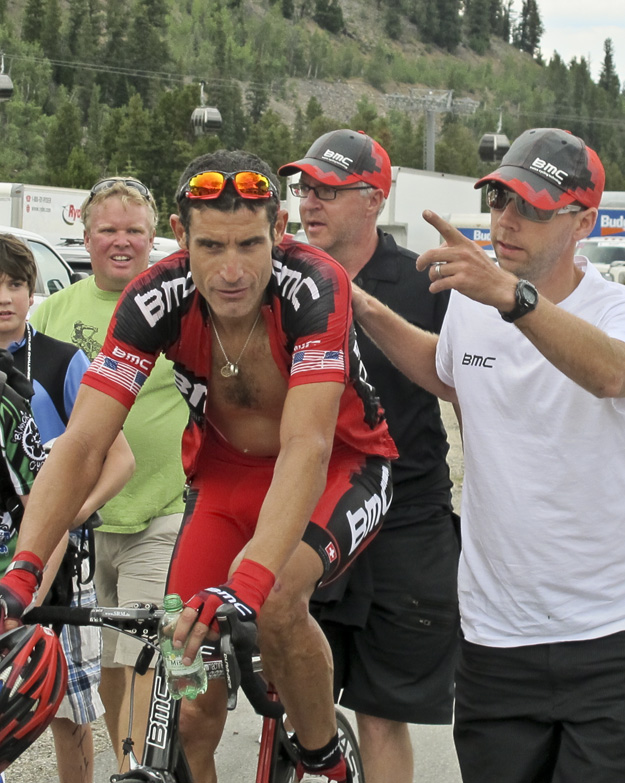
Hincapie will be retiring from UCI Pro Cycling at the end of this event.
I got this picture of George Hincapie at the end of a stage at the USA Pro Challenge, a major stage race in Colorado.
Hincapie will be retiring from UCI Pro Cycling at the end of this event.
 Although the first documented use of @ was in 1536, the symbol did not rise from modern obscurity until 1971.
Illustration by Erik Marinovich
Called the “snail” by Italians and the “monkey tail” by the Dutch, @ is the sine qua non of electronic communication, thanks to e-mail addresses and Twitter handles. @ has even been inducted into the permanent collection of the Museum of Modern Art, which cited its modern use as an example of “elegance, economy, intellectual transparency, and a sense of the possible future directions that are embedded in the arts of our time.”
The origin of the symbol itself, one of the most graceful characters on the keyboard, is something of a mystery. One theory is that medieval monks, looking for shortcuts while copying manuscripts, converted the Latin word for “toward”—ad—to “a” with the back part of the “d” as a tail. Or it came from the French word for “at”—à—and scribes, striving for efficiency, swept the nib of the pen around the top and side. Or the symbol evolved from an abbreviation of “each at”—the “a” being encased by an “e.” The first documented use was in 1536, in a letter by Francesco Lapi, a Florentine merchant, who used @ to denote units of wine called amphorae, which were shipped in large clay jars.
The symbol later took on a historic role in commerce. Merchants have long used it to signify “at the rate of”—as in “12 widgets @ $1.” (That the total is $12, not $1, speaks to the symbol’s pivotal importance.) Still, the machine age was not so kind to @. The first typewriters, built in the mid-1800s, didn’t include @. Likewise, @ was not among the symbolic array of the earliest punch-card tabulating systems (first used in collecting and processing the 1890 U.S. census), which were precursors to computer programming.
The symbol’s modern obscurity ended in 1971, when a computer scientist named Ray Tomlinson was facing a vexing problem: how to connect people who programmed computers with one another. At that time, each programmer was typically connected to a particular mainframe machine via a phone connection and a teletype machine—basically a keyboard with a built-in printer. But these computers weren’t connected to one another, a shortcoming the U.S. government sought to overcome when it hired BBN Technologies, the Cambridge, Massachusetts, company Tomlinson worked for, to help develop a network called Arpanet, forerunner of the Internet.
Tomlinson’s challenge was how to address a message created by one person and sent through Arpanet to someone at a different computer. The address needed an individual’s name, he reasoned, as well as the name of the computer, which might service many users. And the symbol separating those two address elements could not already be widely used in programs and operating systems, lest computers be confused.
Tomlinson’s eyes fell on @, poised above “P” on his Model 33 teletype. “I was mostly looking for a symbol that wasn’t used much,” he told Smithsonian. “And there weren’t a lot of options—an exclamation point or a comma. I could have used an equal sign, but that wouldn’t have made much sense.” Tomlinson chose @—“probably saving it from going the way of the ‘cent’ sign on computer keyboards,” he says. Using his naming system, he sent himself an e-mail, which traveled from one teletype in his room, through Arpanet, and back to a different teletype in his room.
Tomlinson, who still works at BBN, says he doesn’t remember what he wrote in that first e-mail. But that is fitting if, as Marshall McLuhan argued, “The medium is the message.” For with that message, the ancient @, once nearly obsolete, became the symbolic linchpin of a revolution in how humans connect.
Crude oil demand in the United States is down to its lowest level since the onset of the global economic recession. A lackluster economic recovery, coupled with cautious consumer sentiment, is keeping demand for petroleum products suppressed. Nevertheless, lingering concerns over geopolitical tensions with Iran has prompted some governments to raise the possibility of releasing strategic petroleum reserves. Fundamentally, it seems, markets are well supplied, though it may be emotional factors driving certain aspects of the energy market.
The American Petroleum Institute, in its report for July, finds that crude oil demand is down to its lowest levels in roughly four years. U.S. petroleum deliveries for July declined to around 18 million barrels per day, the lowest level for the month since 1995 and the lowest overall since the onset of the global economic recession in 2008. Oil production in the United States, however, reached 6.2 million bpd, the highest for any July figure since 1998 and total refinery inputs grew 2.3 percent in July to reach their highest level for the year.
John Felmy, the API’s chief economist, said lower consumer demand was in large part a reflection of the lackluster U.S. economic recovery and lingering pessimism in the eurozone.
“While retail sales for July are up and housing has improved, the weak petroleum demand numbers are a strong indication the economy is still faltering,” he said.
Oil for September delivery retreated 0.1 percent Monday to $95.88 on the New York Mercantile Exchange, ending four days of advances. Outside of the United States, the Joint Organization Data Initiative reports that crude oil production from Saudi Arabia in June reached its highest level in more than 30 years. Crude oil futures began declining last week on talk by some Western governments of a possible release of strategic petroleum reserves. White House spokesman Josh Earnest confirmed that a release from SPR “is an option that is on the table” in Washington.
The last time governments tapped into their strategic reserves in 2011, Libyan oil production was shuttered by civil war. When oil prices hovered about $100 per barrel early this year, however, most of the market was concerned by tensions with Iran more than a physical disruption, as was the case last year.
API said much of the decline in oil demand was because of lower gasoline usage in the United States. Refinery closures in California and the U.S. Midwest, coupled with a July oil spill in Wisconsin, pushed retail gasoline prices above the $4 per gallon mark. Consumers react strongly to that benchmark, but with fuel efficiency improving, it may be more of an emotional reaction despite lingering unemployment and personal financial concerns. Nevertheless, with the last U.S. holiday before the Christmas season approaching, political maneuvering may be more of a reflection of public sentiment than a legitimate concern about physical shortages in the energy market. Energy markets, said one analyst, are responding to “just about everything except oil news right now.”
By. Daniel J. Graeber of Oilprice.com
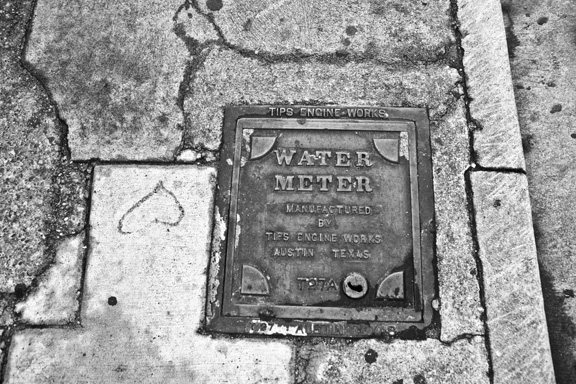
This meter is located on South First Street, south of the lake. Although I converted the image to black and white, this is essentially how it actually looks with the accumulated dirt. Some of these are quite old which I guess says a lot about the water pipes under the street. More deferred maintenance?
Don’t get me wrong. I have helped fund the production of a play by a former classmate who was pleased with the result – but some of this is ridiculous.
![[image]](https://i0.wp.com/si.wsj.net/public/resources/images/OD-AS937_KICKST_DV_20120816162449.jpg) James Yang for The Wall Street Journal
James Yang for The Wall Street JournalFOUR YEARS AGO, Kickstarter was adorable. The site—which allows designers, independent artists, philanthropists and any netizen with a dream to solicit funding for projects large and small—was a promising novelty act. Ideas and money poured in. Journalists championed it. Was crowdfunding just crazy enough to work?
In hindsight, the success of Kickstarter seems inevitable. The service, which takes a 5% cut of the funding that pours in, has exploded. Along with scores of modestly backed projects—from $100 for a puppet-show adaptation of “King Kong” to one woman’s $15,000 quest to develop a bionic eye for herself—piecemeal investment has yielded multi-million-dollar hits. This past July, Ouya, a proposed $99 videogame console, hit its $950,000 goal in eight hours. When funding closed a month later, it was at $8.5 million. Supply and demand, product development and marketing, basically everything we know about making and selling goods—Kickstarter has potentially upended all of it.

We’ve all had that billion dollar idea but not all of us have a billion dollars kicking around to fund it. Kickstarter.com fills the void by crowd-sourcing online strangers to invest in your dream. Here’s a peek at some of Kickstarter.com’s biggest successes and bigggest failures.
Blockbuster projects aside, much of Kickstarter can be shrill and desperate—modern-day panhandling by entitled go-getters. For every legitimately exciting pitch (such as the Synergy aircraft, whose box-shape wings could change the fundamentals of airplane design), there are dozens of musicians, filmmakers and designers pleading for funds to complete ill-conceived projects. And with tangible items faring consistently better than the calls for altruistic endowments that once defined the service, after more than 22,000 proposed projects and $200 million in raised funds, Kickstarter is becoming a driving force in product design. As the crowdfunding platform continues to gain traction, here’s a look at some of the best and worst techy Kickstarter products to date.
Timelapse+ Intervalometer
Goal: $20,000 / Funding: $165,730
By now, the quirky Kickstarter video plea (made to draw potential investors) has almost become a genre unto itself. These clips often star coyly self-deprecating post-college entrepreneurs, plus the occasional supportive industry celeb, all of them trying very hard to be cute. Which is why the video pitch for Timelapse+, a timer for triggering SLR cameras, is so refreshing. Unless you’re a serious photographer and already know what an intervalometer is (it controls the shutter of a camera to enable burst shooting, long exposures and other effects), the pitch amounts to five arcane minutes of eye-crossing complexity. But this is where Kickstarter shines: as a springboard for innovative, extremely niche products. Timelapse+ is one of the few intervalometers that should work with the next generation of smartphone cameras, but it never claims to be more than it is—a welcome, unassuming iteration of a classic photographer’s tool. $149, timelapseplus.com
Ogre Designer’s Edition
Goal: $20,000 / Funding: $923,680
What’s shocking isn’t that this collector’s-edition re-release of a cult classic board game from the ’80s would meet its $20,000 goal. Kickstarter, after all, is where nerd nostalgia is monetized and long-dead franchises are resurrected. What’s shocking is that the Ogre Designer’s Edition, which costs $100, secured more than $923,000 in backing. Weirder still is the way the game’s creator, Steve Jackson, gamed the Kickstarter process, transforming it into a long-term market-research tool. As funding grew and his posted goals were reached, the product was improved incrementally: Plastic pieces replaced cardboard ones. The dice were upgraded. When the total hit $300,000, Mr. Jackson promised to make a videogame adaptation. At $550,000, he vowed to hire a full-time staffer dedicated to making new Ogre games. Mr. Jackson even allowed retailers to buy in bulk at a discount through the Kickstarter page (and threw in extra game pieces, for in-store displays), an end-run around traditional distribution channels. Though the product itself is as niche as they come, the project demonstrates what a savvy, established company can do with crowdfunding. $100, kickstarter.com (project closed)
F. Martin Ramin for The Wall Street JournalLoomi
Goal: $9,000 / Funding: $34,123
This DIY lampshade, made from 30 pieces of cardstock that slot together to form an organic-looking sphere, is classic Kickstarter. The final product is customizable. You can paint certain pieces, hang the lamp from the ceiling or simply lay it on a desk. The Loomi is the kind of product you might see in the MoMA gift shop. This is crowdfunding success at its least manipulative, banking on raw visual appeal, as opposed to the noble causes and nostalgia-based projects that have come to define the service. While similar products can be found on designer-friendly sites like Etsy, Kickstarter provides a cushion for entry-level creators, letting them gauge customer interest before committing to mass production. $22 (without lamp cord), loomilight.com
Safecast Geiger Counter
Goal: $4,000 / Funding: $104,268
This affordable (as these things go) Geiger counter had its roots in another Kickstarter-funded project, Safecast, which sought to crowdsource radiation levels in Japan following the Fukushima disaster and then publish the data online. This product is a $400 “limited-edition” version of the highly sensitive Geiger counter (it detects alpha and beta radiation as well as the standard gamma) that was provided to volunteers for that endeavor. The campaign was essentially a pre-order discount deal, a way to get half off a Geiger counter that’s expected to retail for $800 after it goes into mass production. Kickstarter is often just used to create pre-order shopping pages, but this project combines old-school sales techniques—Limited-edition! Half-price! Get it here first!—with an activist twist. $400, kickstarter.com (project closed)
Twig
Goal: $50,000 / Funding: $168,020
Here’s another Kickstarter specialty: the iPhone-related impulse buy. The Twig is a stubby iOS cable with moldable legs. That’s it. There’s no cause to rally behind, no disruptive technology, just a cool thing that belongs next to the register in every Apple store. Because it’s shorter than the standard-issue cable (just 4 inches long), it won’t tangle, and its legs can be positioned to create a mini-tripod for shooting photos or making video calls. At $20, it’s a safe bet—the crowdfunding equivalent of a buzzed-about $1 smartphone app. $25, richardtracybrand.com
Pebble
Goal: $100,000 / Funding: $10.2 million
Kickstarter backers love ambitious gadgets, especially ones that are iPhone-compatible. So it’s not surprising that the Pebble “smart” watch is the most funded project in Kickstarter history. Unlike conventional digital watches, the Pebble has an e-ink display—the crisp, black-and-white screen found on many e-readers. But the Pebble’s real draw is that it connects to a smartphone via Bluetooth, turning the $150 watch (early backers got it for $99) into a display for incoming texts, emails and other data. Its features are open-ended and defined by the apps written for it—there will be a few ready at launch, and expect more to be developed by the community. Runners and bicyclists, for example, can use the Pebble to view their speed (derived from GPS info) and navigate through music playlists. Its makers plan to ship early next year. Whether supplies of Kickstarter’s biggest product can meet demand could be the service’s crucible. $150, getpebble.com
Access the balance of this article for the Worst Projects Funded
I am done ranting for the present, but I did get some ok pictures from the trip.
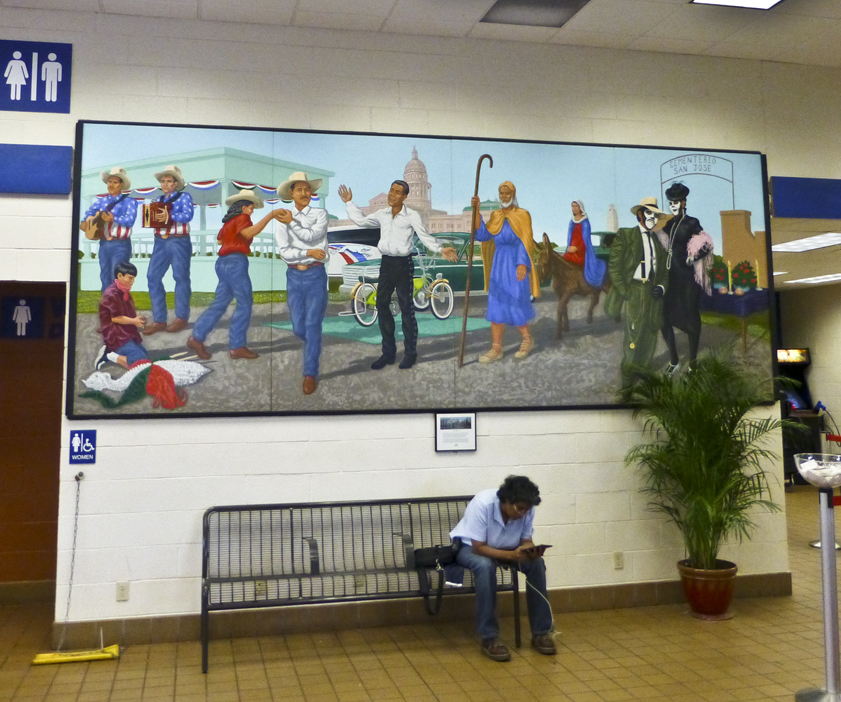
This mural is located in the departure lounge. The lounge was quite clean and well-organized.
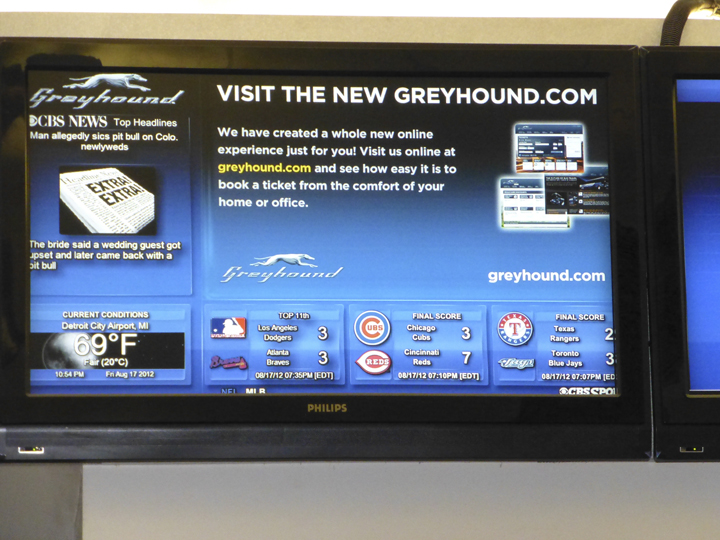
This is Greyhound’s advertising. I will be contacting greyhound.com shortly to request a partial refund.
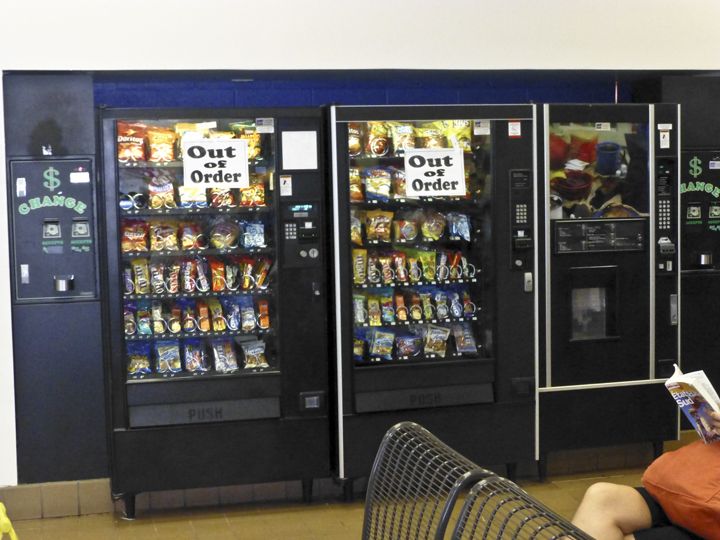
I should have recognized these signs as a harbinger of what was to come.
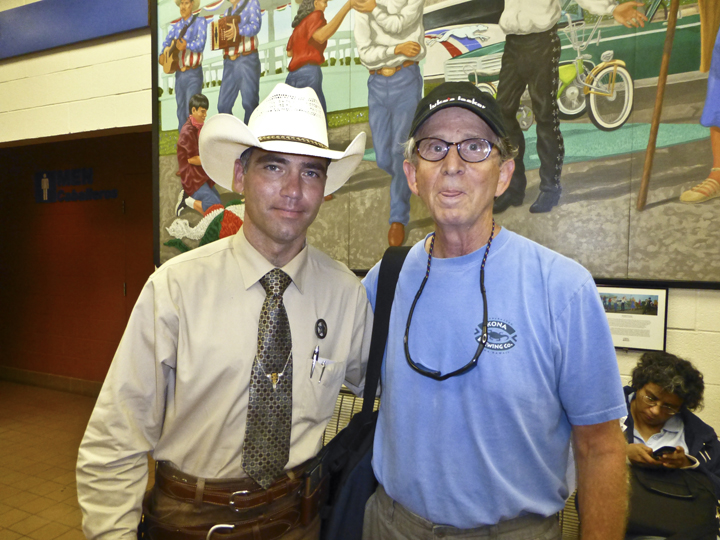
Me and a Texas Ranger. I had never seen a Texas Ranger except on TV. I look a bit startled.
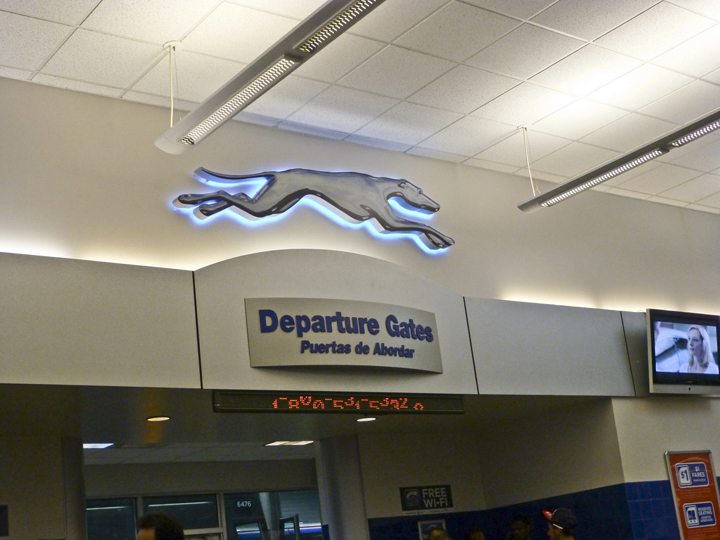
At the Dallas Departure Gate. This is where things began breaking bad.
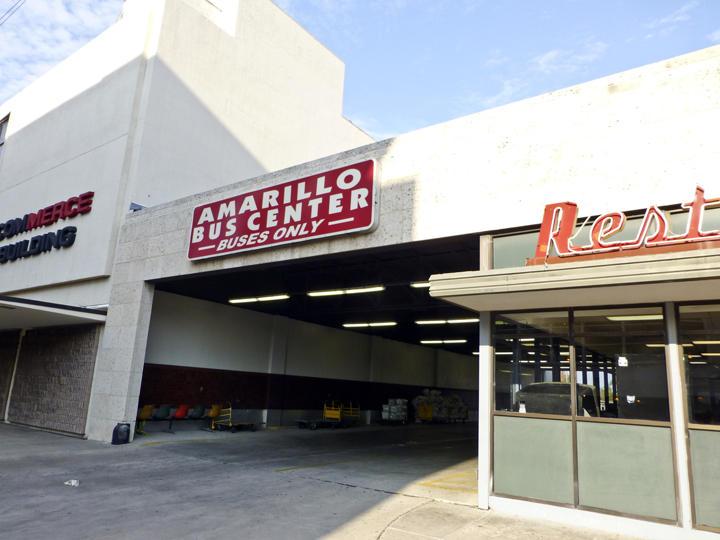
Amarillo. Nice depot, had a fairly decent breakfast here.
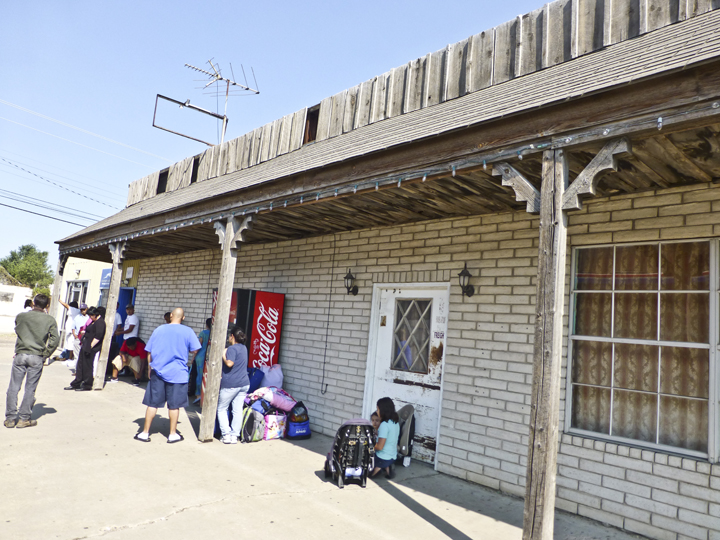
Subject of the immortal country swing song Ding Dong Daddy from Dumas, the Dumas Depot was a dad sight. The Coke machine was all they had for travelers.
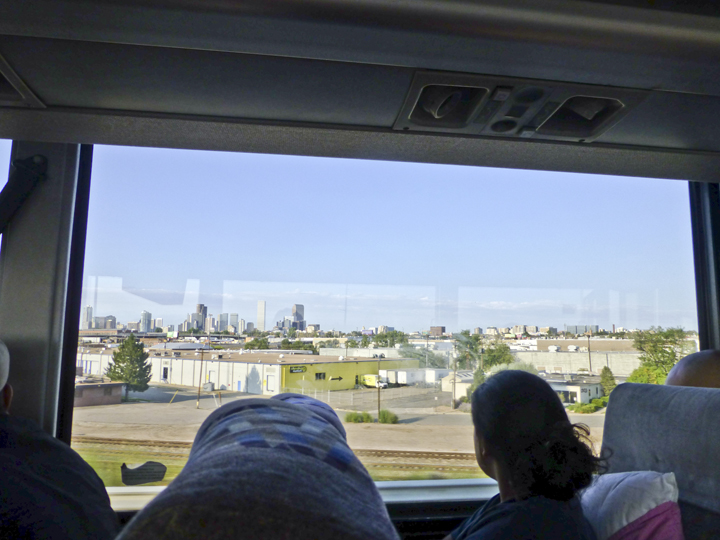
Almost there – The Denver skyline in the distance.
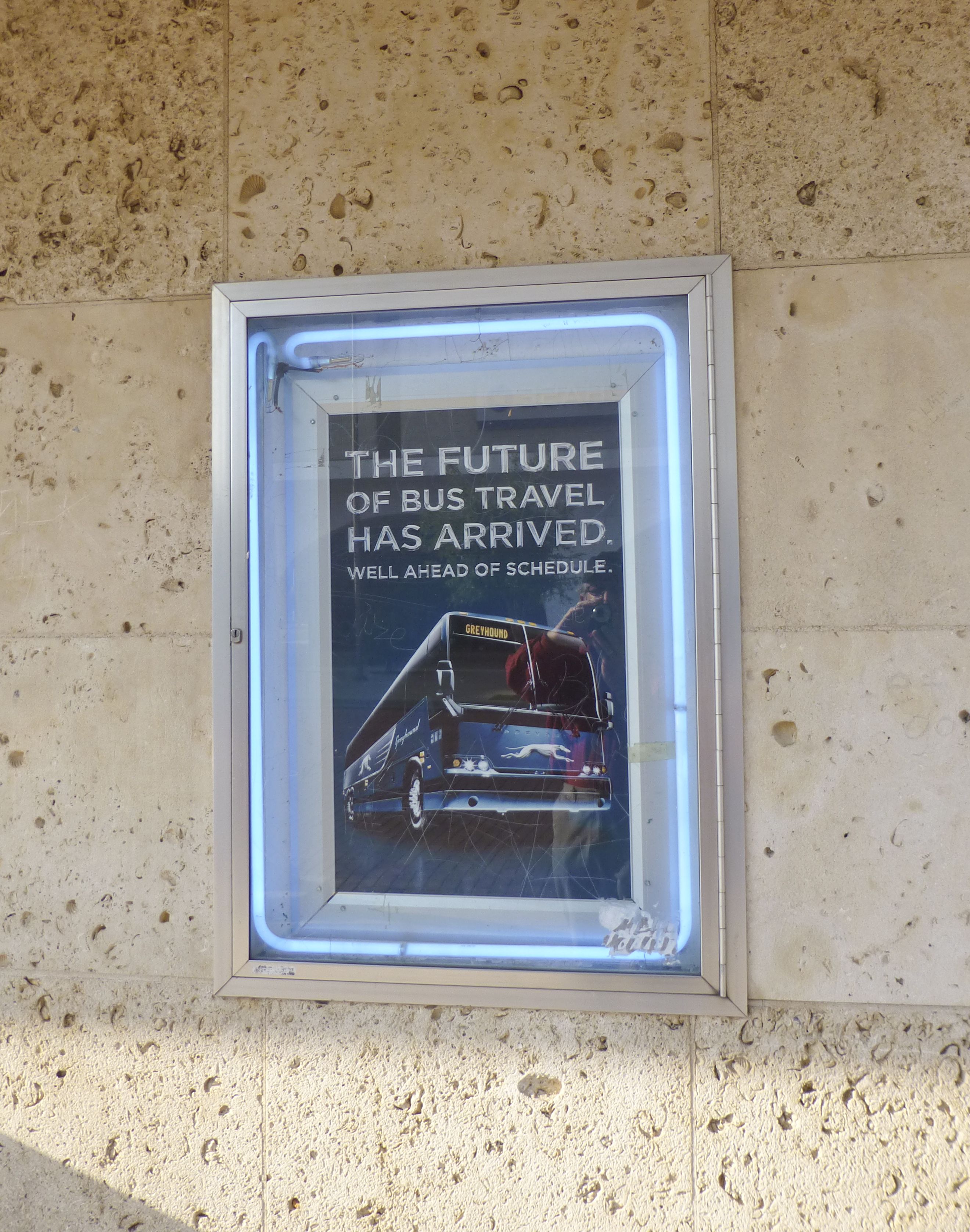
According to this poster the future of bus travel has arrived – ahead of schedule. For the first 3 hours of my 25 hour ride to Denver, I enjoyed the future of bus travel. The next 22 hours were very different. When I transferred in Dallas I was put on a bus that smelled like the commode that was at the back of the bus, had busted seats which would not recline or, if they did recline, they would not return to a straight up position. The seats, floor, etc were filthy. The station attendants were rude and entirely unhelpful. I thoroughly intend to try to get a partial refund next week.
In my opinion, Greyhound clearly engages in false advertising as not all of their fleet meets the new standard. I am boycotting the bus until I get restitution.
By Dan Gallagher, MarketWatch
SAN FRANCISCO (MarketWatch) — Apple Inc. has been racking up steady gains over the past few weeks as expectations have built up around the widely anticipated launch of its next iPhone, which could come as early as next month.

Apple CEO Tim Cook at the company’s Worldwide Developers Conference in June. Expectations are growing for an iPhone 5 launch event on Sept. 12.
The launch remains speculative, as Apple AAPL +1.85% hews to its ultra-secretive nature and tradition of saying nothing about new products until they are formally announced.
However, as in years past, growing speculation and leaks in the media are feeding into expectations by investors, who remain highly keyed on the next update of what has become Apple’s largest product, accounting for a majority of both revenues and profits in the first nine months of the current fiscal year.
Shares of Apple were up more than 1% to $643.13 by midday Friday, briefly hitting a new intraday high of $644.13 earlier in the session, according to FactSet. The stock has surged by 59% so far this year, making Apple one of the largest gainers among tech firms on the S&P 500.
The stock has picked up nearly 12% following a short-lived selloff that resulted from its July 24 earnings report, which showed a sequential decline in iPhone sales ahead of the new launch.
The device expected to be designated as the iPhone 5 is believed to feature a redesigned, thinner body, larger touch-screen and the ability to connect to the latest generation of LTE networks. It will also feature the iOS 6 version of the mobile operating system that Apple previewed in June and set for a launch date of “this fall.”
Until recently, most analysts covering Apple had been expecting the new device to be unveiled in early October, with a market launch later that month. That’s similar to the schedule Apple kept last year for the iPhone 4S. But some recent media reports say the company is planning a Sept. 12 event to announce the new iPhone ahead of a market launch later in the month, likely adding to the company’s results for its fourth fiscal quarter.
Peter Misek of Jefferies & Co. boosted his price target on Apple to $900 from $800 on Friday morning, predicting that the iPhone 5 “will be the biggest handset launch in history.”
In a note to clients, Misek estimated that 170 million global smartphone subscribers will age out of their two-year contracts in the second half of this year, with about 30 million of those already iPhone users who might be looking to upgrade to the new device.
A look at Apple’s plans for a cable set-top box and how it will work with entertainment companies.
“We therefore see significant and very fertile ground for the iPhone 5’s success,” Misek wrote.
Misek left his formal estimates unchanged, but projected that Apple will have about 15 million units of the new iPhone in finished-goods inventory by mid-September. He also said build plans out of Asian manufacturing facilities are pointing toward a launch of the much-speculated “iPad Mini” — a 7-inch version of the best-selling tablet device.
World’s largest oil company says its operations have not been affected as hackers claim responsibility for attack

Hackers have claimed responsibility for the spread of a computer virus that forced the world’s largest oil company, Saudi Aramco, to isolate its production systems from infected PC workstations inside the company.
It is still unclear whether the problem, which is thought to have affected thousands of the company’s PCs, was the result of a hacker attack, a state-sponsored attack such as the Gauss or Stuxnet worms, or one of the millions of viruses found online.
In a statement on its Facebook page, the company said it had “isolated all its electronic systems from outside access as an early precautionary measure that was taken following a sudden disruption that affected some of the sectors of its electronic network”.
It said the disruption “was suspected to be the result of a virus that had infected personal workstations without affecting the primary components of the network”. It added that the electronic network running its core business was not affected and that the interruption “had no impact whatsoever on any of the company’s production operations”.
Saudi Aramco, the Saudi government-owned oil company, is estimated to be worth about $781bn, more than twice as much as Apple or Exxon, the most valuable public companies. It has the world’s largest daily production of oil and an annual output of about 8bn barrels.
On Pastebin, a site often used by hackers to anonymously lay claim to attacks, the Arab Youth Group claimed they had “targeted administrable structures and substructures of Aramco, and also the Stock Exchange ofSaudi Arabia. This action has been done in order to warn the Saudi rulers.”
However, the group provided no way to verify the claim.
The Middle East has become the focus of increasingly subtle hacking attacks, apparently backed by state-sponsored groups. The discovery of the Stuxnet worm last year, which affected Iranian nuclear research facilities and was apparently devised by the US and Israel, was followed by the discovery of the Flame and Gauss worms, which have also targeted systems in the region.
Frank is an aptly-named Frankfurter restaurant in downtown Austin. You can find all kinds of gourmet hot dogs at Frank. They also sell beer, making for a really great meal with most of the food groups.
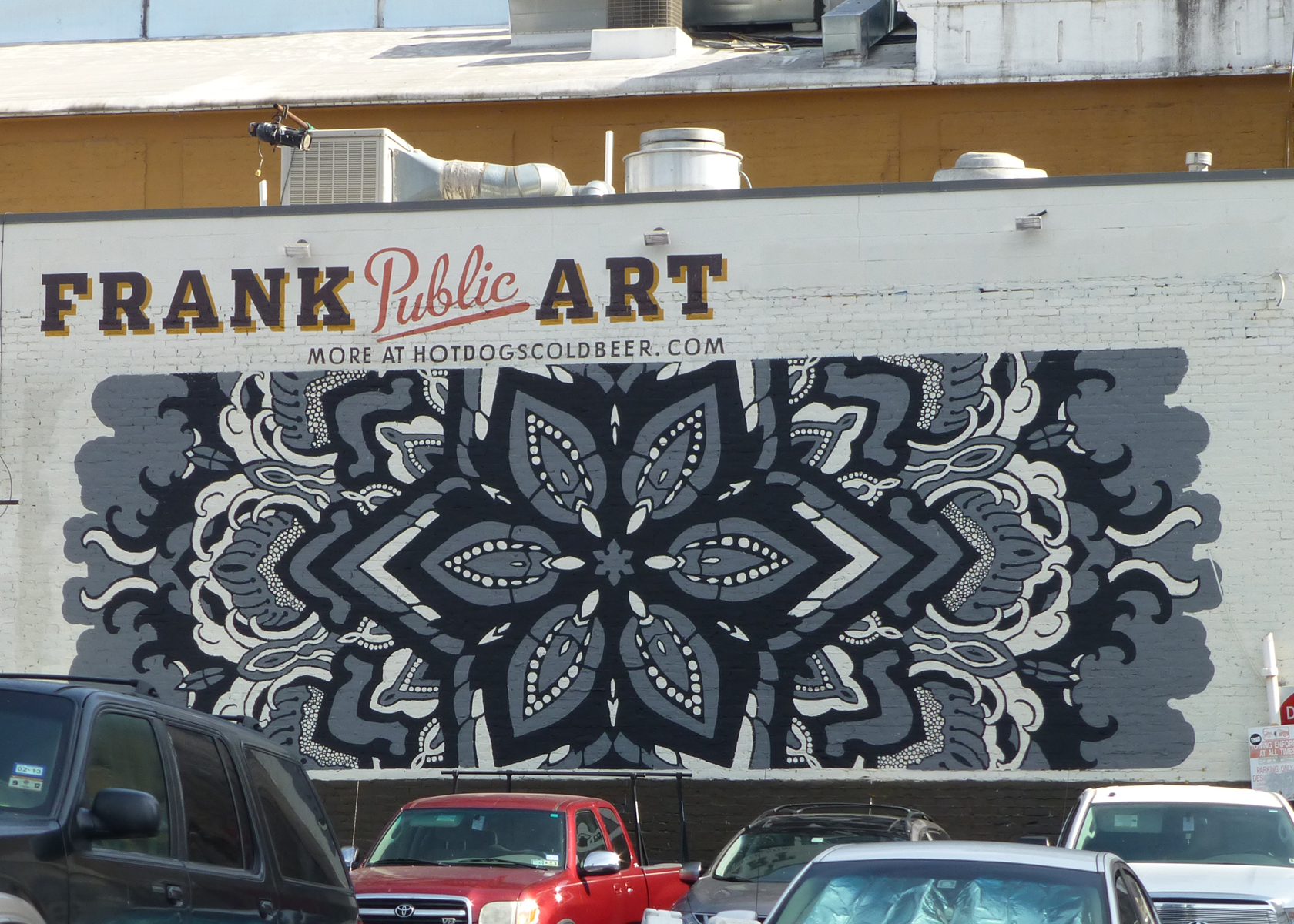


 Passing Through . . . .