Avoiding Having to Deal with Angry Voters – From the New York Times

This only happened because our lawmakers were worrying about being re-elected


Tentative Agreement Reached in Congress, Avoiding Government Shutdown

By JENNIFER STEINHAUER

2:33 p.m. | Updated House and Senate leaders reached a tentative agreement on Tuesday that would pay for federal government operations through next March, averting the prospect of a messy government shutdown just before the November elections.

The emerging deal is a sharp contrast to previous occasions when House Republicans used the approach of a spending deadline to insist on deep spending cuts in exchange for their votes, once avoiding a shutdown by a matter of hours. But with the Oct. 1 deadline for enacting spending bills for 2012 coming so close to the election, Republicans leaders were eager to avoid a government crisis that they could be blamed for by voters at the polls.

Under the agreement that takes the spending fight off the table before the presidential and Congressional elections, lawmakers have agreed to a slightly higher rate of spending: $1.047 trillion as opposed to $1.043 trillion. The level was agreed to in last year’s budget deal; some conservative Republicans had pushed to stick with the current rate or less.

While even some of the most Republicans wanted to avoid a big fight before the election, not all of them are expected to support the bill, which will come before the House and Senate after a five-week recess that begins Friday.

“That is a good idea not to have that kind of discussion,” said Senator Rand Paul, the Kentucky Republican, about the shutdown talk. But he added that he still would likely not support the measure.

“This agreement reached between the Senate, the House and the White House provides stability for the coming months, when we will have to resolve critical issues that directly affect middle class families,” said Senator Harry Reid, the Nevada Democrat and majority leader.


Interesting Thinking about Climate Change – From OilPrice.com

Our Current Infrastructure was Built for a Different World

By Kurt Cobb | Mon, 30 July 2012 22:21 | 0

It’s easy to forget that every piece of our current infrastructure–roads, rails, runways, bridges, industrial plants, housing–was built with a certain temperature range in mind. Our agricultural system and much of our electrical generating system (including dams, nuclear power stations and conventional thermal electric plants which burn coal and natural gas) were created not only with a certain temperature range in mind, but also a certain range of rainfall. Rainfall, whether it is excessive or absent, can become a problem if it creates 1) floods that damage and sweep away buildings and crops or 2) if there isn’t enough water to quench crops and supply industrial and utility operating needs.

This summer has shown just what can happen when those built-in tolerances for heat, moisture (or lack of it) and wind are exceeded. The New York Times did an excellent short piece providing examples of some of those effects:

1.    A jet stuck on the tarmac as its wheels sank into asphalt softened by 100-degree heat.
2.    A subway train derailed by a kink in the track due to excessive heat.
3.    A power plant that had to be shut down due to lack of cooling water when the water level dropped below the intake pipe.
4.    A “derecho“, a severe weather pattern of thunderstorms and very high straight-line winds, that deprived 4.3 million people of power in the eastern part of the United States, some for eight days.
5.    Drainage culverts destroyed by excessive rains.

Past attempts to forecast the possible costs of climate change have been largely inadequate. They failed because of unanticipated effects on and complex interconnections among various parts of critical infrastructure.

Back in 2007 Yale economist William Nordhaus wrote in a paper that “[e]conomic studies suggest that those parts of the economy that are insulated from climate, such as air-conditioned houses or most manufacturing operations, will be little affected directly by climatic change over the next century or so.” Having air-conditioning does not do you much good, however, if the electricity is out. And, manufacturing operations depend on reliable electric service. Many manufacturing operations are also water-intensive and so will be affected by water shortages. In addition, damage to transportation systems (as detailed above) could hamper the delivery of manufactured products.

Where Nordhaus does acknowledge considerable effects, he seems to underestimate the impact:

However, those human and natural systems that are “unmanaged,” such as rain-fed agriculture, seasonal snow packs and river runoffs, and most natural ecosystems, may be significantly affected. While economic studies in this area are subject to large uncertainties, the best guess in this study is that economic damages from climate change with no interventions will be in the order of 2½ percent of world output per year by the end of the 21st century.

I have commented on this assessment in a previous piece. Nordhaus imagines that because agriculture, forestry, and fisheries make up only about 1.0 percent of the U.S. economy, negative effects on these from climate change would do minimal damage. We cannot, however, look only within the border of the United States for effects, though those have been bad enough. Extreme drought in the grain-growing areas of the world’s major exporter of grain has already sent soybean and corn prices to record highs. This has the potential to affect political stability in countries where food costs are a much larger share of income. If high prices persist, then it’s possible we’ll see food riots similar to those in 2007-2008 that were a precursor to the Arab Spring which destabilized so many regimes in a short period of time. This kind of disruption to an economy and society is far beyond anything Nordhaus anticipates.

Naturally, the oil industry agrees that the problem of adaptation will be fairly minor. Rex Tillerson, current CEO of Exxon Mobil Corp., the world’s largest international oil company, recently told the Council on Foreign Relations the following:

We have spent our entire existence adapting, OK? So we will adapt to this. Changes to weather patterns that move crop production areas around–we’ll adapt to that. It’s an engineering problem, and it has engineering solutions.

Not surprisingly, Tillerson doesn’t understand that costly existing agricultural infrastructure won’t be easily moved or replaced. He also doesn’t seem to understand that soil quality is not uniform from place to place. Does he think that as temperatures warm and devastate the American grain belt with recurrent drought, we can simply transfer the growing of much of the world’s export grain crop north to the Canadian Shield which has soil so thin it has never supported agriculture?

Writer Bill McKibben, who sounded one of the first warnings about climate change in his 1989 book The End of Nature, has explained in his recent book Earth that we now live on a new planet, one created by irrevocable and increasingly rapid climate change. One of our biggest problems is that our current infrastructure was built for the old planet Earth. Neither Rex Tillerson, who leads an organization that has consistently put out disinformation about climate change, nor William Nordhaus, who has long acknowledged that climate change is a problem, seem to understand the scope and scale of our infrastructure predicament.

By. Kurt Cobb

Mitt Romney’s London Success – from Atlantic Wire

Jon Stewart on Romney’s London Fallings

The Daily Show
SERENA DAI445 Views8:39 AM ET

Jon Stewart looked at Americans abroad last night on The Daily Showparticularly, Mitt Romney’s critique of how ready London was for the Olympics. Last week, Romney told NBC News’ Brian Williams that he found a few things about the preparations disconcerting. Bad idea, man. “You’re a guest at a dinner party that already started! Slam dunk! Just nod your head and say the rumaki is delicious!” Stewart said. The English press did not take the critique lightly, according to headlines in local papers and tabloids that called Romney “Mitt the Twit” and “Nowhere Man.” Stewart added a few, including “American Idiot” and “Book of Moron.”

“How do you screw up a trip to England?” Stewart asks. “It’s not like you’re in Papua New Guinea where they gotta explain to you ‘Hey, look when you shake that guy’s hand, it means you want to screw his wife, don’t do that’.”


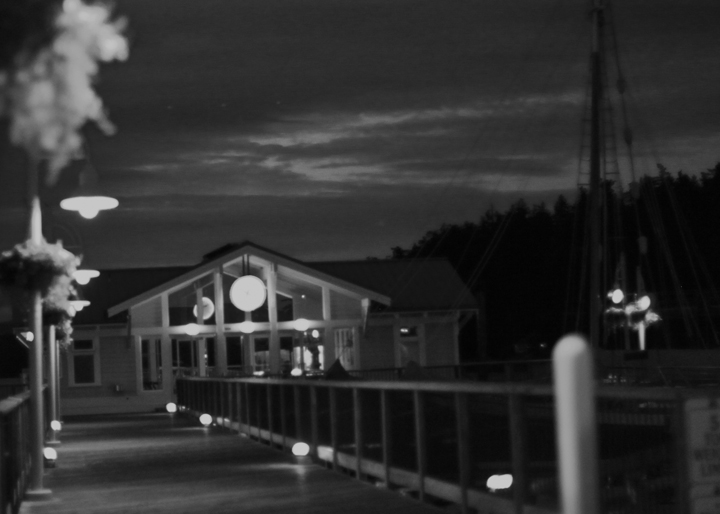
Friday Harbor Night Scene

Friday Harbor is lit up at night, creating great opportunities for strolling and picture-taking.


This image is of the visitors center.

In the evening a large number of cafes and bars are open and there is music everywhere.

Hungry Visitor

A hummingbird at our feeder in Evergreen, Colorado.

Good News from National Renewable Energy Lab

From Oil Price.com

Report Shows the US has Nearly 200,000 GW of Solar Potential

By Joao Peixe| Mon, 30 July 2012 22:15 | 0

The National Renewable Energy Laboratory (NREL) has released a report titled US Renewable Energy Technical Potentials: A GIS-Based Analysis. As the title suggests, the report provides an in-depth analysis of the renewable energy potential in the US.

It shows that rural utility-scale photovoltaic solar farms could dominate the US energy mix in the future, with 153,000 GW of potential.

Texas boasts 14% of the entire countries rural solar potential and about 20% of the concentrated solar power potential. The Lone Star State could change from a fossil fuel powerhouse to a renewable energy icon, and with that change could also see massive increase in economic growth.

There is the potential for 38,000 GW of concentrated solar power, 4,200 GW of potential for offshore wind, and 4,000 GW of geothermal potential.

Photovoltaic panels in urban locations were reported to have 1,200 GW potential, and 664 GW for rooftop solar panels.

By. Joao Peixe of Oilprice.com

A Day in the Life of a Drone Driver – from the Atlantic Wire

 Day in the Life of a U.S. Drone Operator

Reuters
JOHN HUDSON533 Views8:48 AM ET

You wouldn’t think of suburban New York as a battlefront for the war in Afghanistan, but for the growing number of U.S. drone operators at the Hancock Field Air National Guard Base, that’s exactly what it is. In today’s New York Times, Elisabeth Bumiller interviews the pilots who sit in office chairs all day firing missiles at militants 7,000 miles away in Afghanistan. It’s a surreal-sounding job where life and death decisions precede routine trips to pick up the kids or shop for groceries. Take the experience of Col. D. Scott Brenton who targets Afghan insurgents from the comfort of suburban Syracuse, a vastly different environment than his days in Iraq. Per Bumiller:

When he was deployed in Iraq, “you land and there’s no more weapons on your F-16, people have an idea of what you were just involved with.” Now he steps out of a dark room of video screens, his adrenaline still surging after squeezing the trigger, and commutes home past fast-food restaurants and convenience stores to help with homework — but always alone with what he has done.

“It’s a strange feeling,” he said. “No one in my immediate environment is aware of anything that occurred.”

But some things don’t change at all. “Afterward, just like the old days, he compartmentalizes,” Bumiller writes. “I feel no emotional attachment to the enemy… I have a duty, and I execute the duty,” Brenton says. Interestingly, the biggest misconception the drone pilots cite about their job is similar to what soldiers serving in the field also have noted: This is not like some video game. “I don’t have any video games that ask me to sit in one seat for six hours and look at the same target,” one pilot tells the newspaper. The tendency of video games to glamorize and sensationalize the actual experience of fighting in wars was maybe best scrutinized in a satirical Onion segment on the latest version of Modern Warfare which features such action-movie sequences as “awaiting orders” and “repairing trucks”:


Read the whole Times story here.

Topics: 

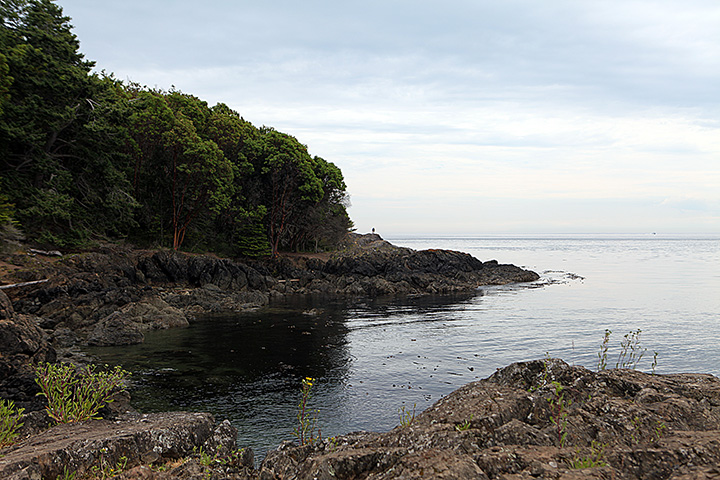
Snug Harbor – Sean Juan Island, Washington Stat

This is a picture of Snug Harbor, a small inlet of water on San Juan Island.  There are few boats here and a small general store.  Otherwise, you find much solitude here.

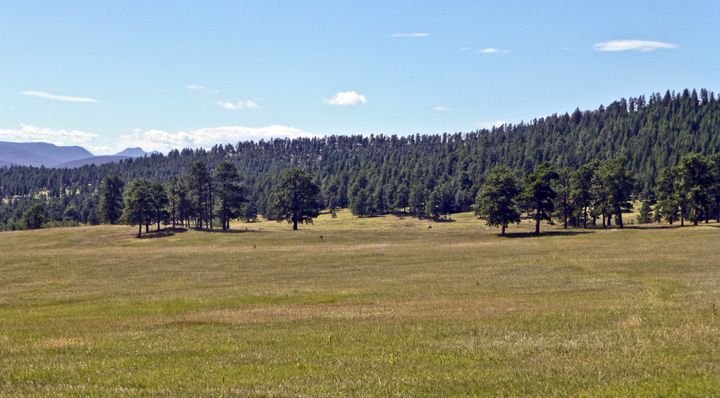
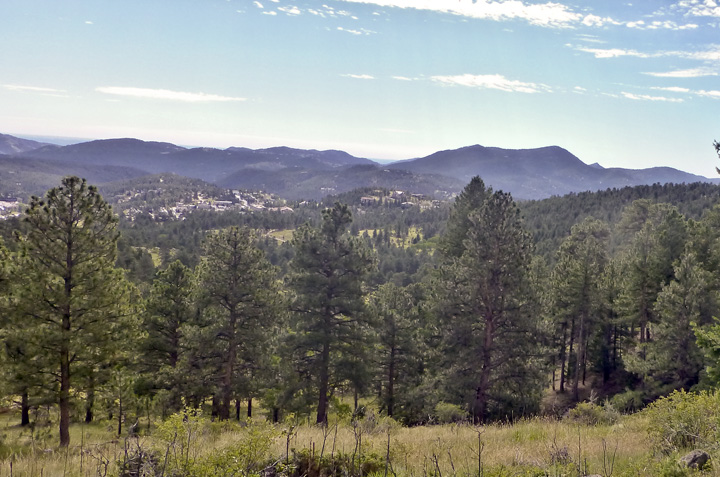
Big Elk Meadow Park – Evergreen, CO

Went on a hike at Big Elk Meadow a couple of days ago with my wife and our dog Marcel.

We were hiking from about 11 until 1 when the sun was high in the sky, making the lighting difficult.  We did get a few ok pictures with my point and shoot camera.

This is a few across the meadow.  We had traversed the path through the trees and were crossing the meadow.


This is a view from the meadow looking to the South and Shadow Mountain.


This is Marcel napping from the long hike.


No Kidding! From the Wall St. Journal

Cheney: Picking Palin Was a Mistake

  • By Sarah Portlock

Sen. John McCain’s selection of Sarah Palin as a vice-presidential candidate in 2008 was a mistake, Dick Cheney, vice president to President George W. Bush, told ABC News Sunday.

“Based on her background–she had only been governor for, what, two years–I don’t think she passed that test of being ready to take over,” Mr. Cheney said. “And I think that was a mistake.” Mr. McCain chose Ms. Palin, the governor of Alaska, as his running mate in the race against now President Barack Obama.

In his experience choosing vice-presidential candidates, Mr. Cheney told ABC News there are two lists–a big list, which is easy to get on, and a “very, very short list.” The test for the small list is whether the person is capable of being president of the United States, Mr. Cheney said.

Mr. Cheney ran the 2000 search for Mr. Bush’s running mate that ultimately selected him as the vice-presidential candidate.

ABC asked if Ms. Palin was qualified because of other factors, such as reaching out to specific demographics or helping to win Alaska.

“Those are important issues, but they should not have been allowed to override that first proposition, and I think that was one of the problems,” Mr. Cheney said.

The comments came as Mr. Cheney discussed how presumptive Republican presidential nominee Mitt Romney pursues his own vice-presidential vetting process. It is “pretty important” Mr. Romney handles it differently, Mr. Cheney said.

The remarks were part of an interview that will air in full Monday on ABC’s “Good Morning America.” Mr. Cheney spoke with ABC News about the 2012 election, tax cuts, gay marriage and other advice he gave Mr. Romney, according to the network.