This is an abandoned lighthouse on San Juan Island in Washington State. Erosion is gradually destroying this lighthouse which is boarded up so that one cannot enter the structure.
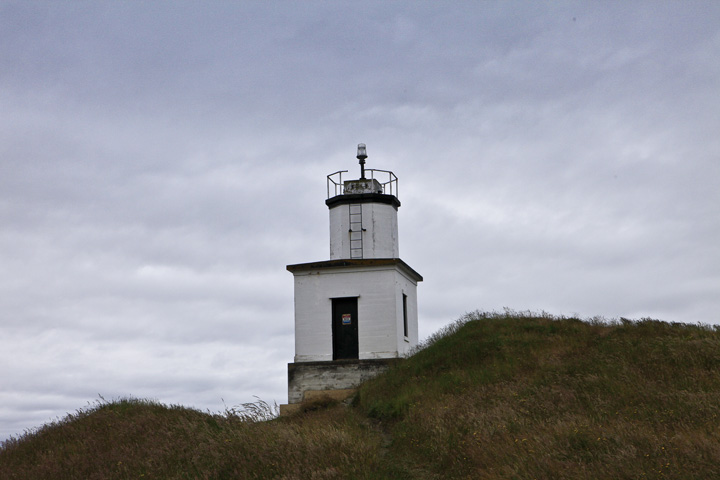
This is an abandoned lighthouse on San Juan Island in Washington State. Erosion is gradually destroying this lighthouse which is boarded up so that one cannot enter the structure.
Based on published reports it seems that Romney and the Koch Bros are also mega tax avoiders with their carried interest deals and offshore bank accounts
Jul 14th 2012 | SOUTHAMPTON, LONG ISLAND | from the print edition

“I JUST saw a kid driving a Lamborghini,” said Rashad Mitchell, of the Long Island Progressive Coalition, in a tone of disgust mixed with a possible hint of envy as he drove through the quiet hamlet of Southampton. Lamborghinis, Jaguars, Mercedes and Rolls-Royces were parked along the quaint Main Street. Corcoran’s, a pricey estate agent, advertises multimillion dollar homes in the area; one on Ox Pasture Road, which does not even have a sea view, is for sale for $49m.
The village, about 90 miles (145km) from midtown Manhattan, is a summer resort for America’s richest. They include David Koch, a conservative billionaire who, along with his brother Charles, is rumoured to have pledged millions to remove Barack Obama from the White House.
On July 8th Mr Koch hosted a fund-raiser for Mitt Romney. Guests, who forked out $50,000 (or a discount $75,000 for a couple) to attend the dinner, were greeted by about 200 protesters, mostly bused in from New York City. The protesters proclaimed their disgust at the Kochs’ attempt to buy the election, and yelled at the donors who drove up Meadow Lane in their Range Rovers and Porsches. Some held posters comparing the $50,000 ticket price with their yearly salary or their student debt.
Some of the protesters marched about a mile along the beach to the Koch house. As they marched, a plane, organised by MoveOn.org, a left-leaning group, flew overhead with a trailing banner that said “Mitt Romney has a Koch Problem” (Koch is pronounced like “coke”, by the way). Locals seemed relatively relaxed about the march. One well-preserved 83-year-old who lives in Southampton declared that she was “on their side”.
Mr Koch was the main focus of wrath, not Mr Romney. Indeed, a few protesters said they also hated Mr Obama. Koch Industries released a statement about the protest, calling the outrage “selective and hollow”, and said there was a “double standard at work”. It is true that Mr Obama is no stranger to fancy fund-raisers. George Clooney and Sarah Jessica Parker have both hosted events for him. He also gets his share of donations from Wall Street. But he trails his Republican challenger in money raised last month. Mr Obama raised $71m to Mr Romney’s $106m.
Analysts seeking reasons for the soaring economies of the BRIC nations ought to take note of their interest in renewable energy.
According to a new report by the International Energy Agency Brazil will add 32 gigawatts of renewable energy to its power grid within the next five years. The move will put Brazil tied for fourth place with Germany in renewable energy investment, exceeded only by China (270 gigawatts), the U.S. (56 gigawatts) and India (39 gigawatts).
Accordingly, BRIC nations India and Brazil occupy two of the top four places.
The Brazilian Association of Wind Energy ABEEolica reports that Brazil is already Latin America’s leading wind energy market, with a current wind power capacity sector of roughly 1,400 megawatts, which is projected to grow nearly eight-fold by 2014. Supporting ABEEolica statistics, a 2011 study by IHS Emerging Energy Research states that Brazil is expected to have 31.6 gigawatts of installed capacity by 2025, which would make it Latin America’s leading producer of wind power electrical energy. During the June Rio+20 summit, Sao Paulo-based sustainability institute Ethos said it was possible for Brazil to achieve a 100 percent carbon-free power grid by 2050.
According to KuicK Research’s “Brazil Wind Power Market Analysis” report, even though the power generation is dominated by hydropower in Brazil, wind power is growing by leaps and bounds, as Brazil’s wind power generation has increased by 500 percent from 2006 to 2011. Brazil’s power policies are increasingly shifting from hydropower, which currently produces the majority of the nation’s renewable energy to wind power being the priority. Fuelling the boom, Brazil is using the same auction procedures for its wind power options as it did with its hydroelectric projects. In August 2011 at a government-organized power auction, developers of 44 wind farms won 39 percent of the total capacity on offer, contracting for an average price of $62.91 per megawatt-hour, offering for the first time a price below the average for natural gas and hydroelectric bids for power generation, which produced a further surge of interest in the Brazilian government for wind power.
International investors are already lining up to exploit the market, as lower production prices, government incentives and the country’s relentlessly increasing electricity demands produce expanded opportunities for foreign investors. During the 1990s German group Enercon subsidiary Wobben Windpower, established the first wind turbine factory in Brazil and under 2011 contracts projects are to install 22 wind farms with a total output of 554 megawatts by the end of 2012.
Other companies joining the Brazilian wind power gold rush include Spain’s Gamesa, Argentina’s Impsa, Germany’s Siemens, Denmark’s Vestas, the U.S. firm GE Wind, India’s Suzlon and France’s Alstom.
And the government is bending regulations to underwrite the surge. The Brazilian development bank, BNDES, despite having regulations in place to ensure that indigenous wind equipment manufacturers comply with its 60 percent minimum national-content levels to loans in order to nurture Brazilian manufacturers of wind power equipment, reported that in 2011 it approved nearly three times more wind power sector loans than it had in 2010. According to BNDES renewables department chief Antonio Tovar, the bank’s “renewable sector is ¬doing very well.”
Brazil is thinking big. Ceara state in northeastern Brazil, the nation’s most impoverished region, is currently the state with the largest wind energy sector, over 40 percent of Brazil’s total. According to the Bralizian government, Ceara has the country’s greatest potential to be exploited in the future, roughly 60 gigawatts, or four times the capacity of Brazil’s massive Itaipu hydroelectric complex.
Brazilian interest in renewable energy is some of the oldest in the world, dating back to the 1973 oil embargo, which forced their nation in light of a tripling of oil prices to become creative. Since then it has developed the world’s second largest ethanol industry.
So – a government committed to renewable energy, a banking structure willing to be flexible to underwrite its development and a determination to site a number of the wind farms in impoverished regions of the country – it would seem that Brazil has become a wind power investor’s dream.
By. John C.K. Daly of Oilprice.com
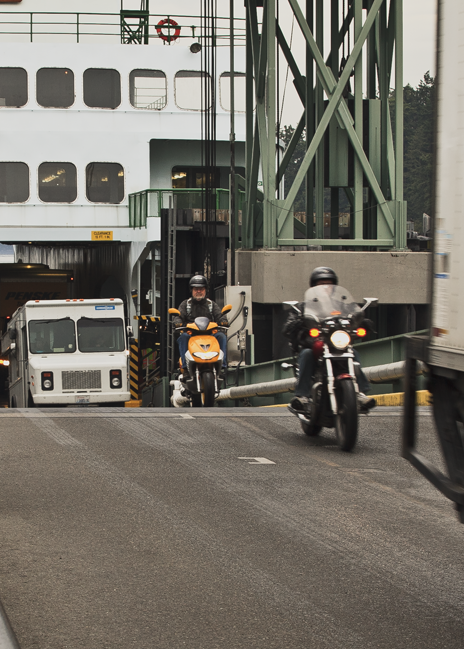
Ferries are absolutely vital to commerce and tourism in the San Juan Islands in Washington State. Today’s photo show motorcycle riders disembarking from one of the many ferries.
The Syrian government denied on Sunday that it had used heavy weapons to massacre civilians, after United Nations observers gave more details of the deadly violence in the village of Tremseh, which left scores dead and drew immediate international condemnation.
As continued fighting was reported in locations across Syria, the International Committee of the Red Cross said in Geneva on Sunday that it now considered the conflict a civil war.
Jihad Makdissi, a spokesman for the Syrian Foreign Ministry, said the violence in Tremseh on Thursday was a military operation against armed opponents of the government, and not a massacre, The Associated Press reported.
“What happened wasn’t an attack on civilians,” The A.P. quoted Mr. Makdissi telling reporters in Damascus, the capital. “What has been said about the use of heavy weapons is baseless.” He gave a death toll of 39, of whom he said only 2 were civilians, The A.P. said; activists have given a much higher estimates ranging to more than 100 people killed.
The leader of the United Nations observer mission in Syria said on Friday that monitors stationed near Tremseh saw the army using heavy weaponry and attack helicopters. Details that emerged on Saturday suggested that the violence in Tremseh might have been a lopsided fight between the army, pursuing its opponents, and local fighters who were trying to defend the village. Nearly all of the dead were young men, according to a list of 103 victims compiled by the Syrian Observatory for Human Rights, an opposition group based in London that has a network of contacts in Syria.
Independent verification of events in Syria is often all but impossible, because the government bars most news media from working independently in the country.
Reuters reported on Sunday that opposition fighters were clashing with government forces in the Damascus neighborhood of Al Tadamon during the day after a night of sustained battles in the nearby Hajar al-Aswad district.
“There is the sound of heavy gunfire,” The A.P. quoted Samir al-Shami, an activist, as saying over an Internet video link. “And there is smoke rising from the area. There are already some wounded and residents are trying to flee.” Reuters said that Mr. Shami could see armoured vehicles headed for the neighbourhood.
Bloomberg News reported, citing the Syrian Observatory for Human Rights, that government forces stormed a neighborhood in Dara’a and used helicopters and artillery in Deir al-Zour. Another opposition group, the Local Coordination Committees, said artillery was used in Hama as well.
The Red Cross’s declaration that the Syrian conflict is a civil war, confirming what many observers have already said, may affect what uses of force are legally justifiable under international law, The A.P. said. The Red Cross’s assessment may also form the basis for war crimes prosecutions and increase the legal consequences of abuses. But it was not clear that it would have any practical effect on the conflict.
The United Nations observers are in the country as part of a faltering peace plan by the special envoy Kofi Annan, who has been trying for months to negotiate a solution to Syria’s crisis. Mr. Annan is scheduled to visit Moscow on Monday, seeking help from President Vladimir V. Putin of Russia, the most significant of Syria’s dwindling list of international friends.
Another friend, Iran, offered on Sunday to invite Syrian government and opposition representatives for peace talks, Reuters said, citing a semiofficial Iranian news agency. But the opposition immediately dismissed the idea, saying it would not negotiate with the government until the violence stops in Syria.
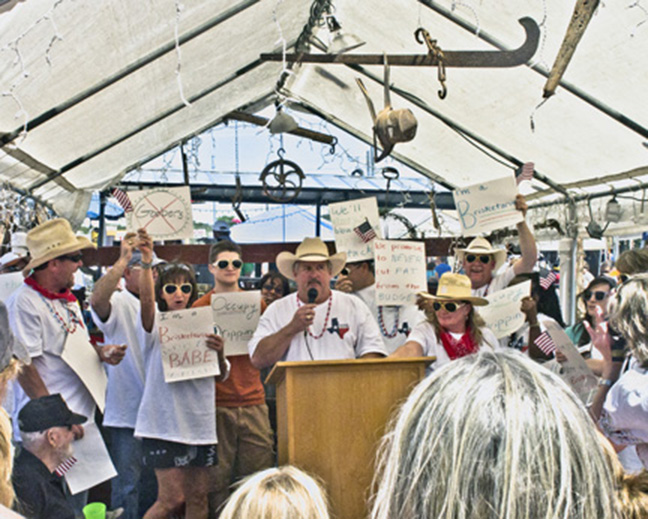
This is quite an avid group of brisket aficionados. I took this at their annual street fair in Dripping Springs, Texas

THERE’S a term biologists and economists use these days — ecosystem services — which refers to the many ways nature supports the human endeavor. Forests filter the water we drink, for example, and birds and bees pollinate crops, both of which have substantial economic as well as biological value.
If we fail to understand and take care of the natural world, it can cause a breakdown of these systems and come back to haunt us in ways we know little about. A critical example is a developing model of infectious disease that shows that most epidemics — AIDS, Ebola, West Nile, SARS, Lyme disease and hundreds more that have occurred over the last several decades — don’t just happen. They are a result of things people do to nature.
Disease, it turns out, is largely an environmental issue. Sixty percent of emerging infectious diseases that affect humans are zoonotic — they originate in animals. And more than two-thirds of those originate in wildlife.
Teams of veterinarians and conservation biologists are in the midst of a global effort with medical doctors and epidemiologists to understand the “ecology of disease.” It is part of a project called Predict, which is financed by the United States Agency for International Development. Experts are trying to figure out, based on how people alter the landscape — with a new farm or road, for example — where the next diseases are likely to spill over into humans and how to spot them when they do emerge, before they can spread. They are gathering blood, saliva and other samples from high-risk wildlife species to create a library of viruses so that if one does infect humans, it can be more quickly identified. And they are studying ways of managing forests, wildlife and livestock to prevent diseases from leaving the woods and becoming the next pandemic.
It isn’t only a public health issue, but an economic one. The World Bank has estimated that a severe influenza pandemic, for example, could cost the world economy $3 trillion.
The problem is exacerbated by how livestock are kept in poor countries, which can magnify diseases borne by wild animals. A study released earlier this month by the International Livestock Research Institute found that more than two million people a year are killed by diseases that spread to humans from wild and domestic animals.
The Nipah virus in South Asia, and the closely related Hendra virus in Australia, both in the genus of henipah viruses, are the most urgent examples of how disrupting an ecosystem can cause disease. The viruses originated with flying foxes, Pteropus vampyrus, also known as fruit bats. They are messy eaters, no small matter in this scenario. They often hang upside down, looking like Dracula wrapped tightly in their membranous wings, and eat fruit by masticating the pulp and then spitting out the juices and seeds.
The bats have evolved with henipah over millions of years, and because of this co-evolution, they experience little more from it than the fruit bat equivalent of a cold. But once the virus breaks out of the bats and into species that haven’t evolved with it, a horror show can occur, as one did in 1999 in rural Malaysia. It is likely that a bat dropped a piece of chewed fruit into a piggery in a forest. The pigs became infected with the virus, and amplified it, and it jumped to humans. It was startling in its lethality. Out of 276 people infected in Malaysia, 106 died, and many others suffered permanent and crippling neurological disorders. There is no cure or vaccine. Since then there have been 12 smaller outbreaks in South Asia.
In Australia, where four people and dozens of horses have died of Hendra, the scenario was different: suburbanization lured infected bats that were once forest-dwellers into backyards and pastures. If a henipah virus evolves to be transmitted readily through casual contact, the concern is that it could leave the jungle and spread throughout Asia or the world. “Nipah is spilling over, and we are observing these small clusters of cases — and it’s a matter of time that the right strain will come along and efficiently spread among people,” says Jonathan Epstein, a veterinarian with EcoHealth Alliance, a New York-based organization that studies the ecological causes of disease.
That’s why experts say it’s critical to understand underlying causes. “Any emerging disease in the last 30 or 40 years has come about as a result of encroachment into wild lands and changes in demography,” says Peter Daszak, a disease ecologist and the president of EcoHealth.
Emerging infectious diseases are either new types of pathogens or old ones that have mutated to become novel, as the flu does every year. AIDS, for example, crossed into humans from chimpanzees in the 1920s when bush-meat hunters in Africa killed and butchered them.
Diseases have always come out of the woods and wildlife and found their way into human populations — the plague and malaria are two examples. But emerging diseases have quadrupled in the last half-century, experts say, largely because of increasing human encroachment into habitat, especially in disease “hot spots” around the globe, mostly in tropical regions. And with modern air travel and a robust market in wildlife trafficking, the potential for a serious outbreak in large population centers is enormous.
Dictators spend to much time lecturing syncophants.
Hugo Chavez: Insists output, income wiill achieve robust growth at PDVSA
Carlos Garcia Rawlins
13 July 2012 22:08 GMT
Chavez, who has begun campaigning for an October re-election bid despite a lengthy battle with an undisclosed type of cancer, is relying on high oil prices to finance large spending increases on social programs, Dow Jones reported.
Crude oil makes up 95% of the South American country’s exports.
In an interview broadcast on state television, Chavez said that government-run oil monopoly PDVSA is on track to boost its output to 4 million barrels a day by 2014 and will begin to produce 6 million barrels a day in 2019.
Venezuela’s oil ministry stopped publishing monthly production and export figures a year ago but has maintained that it is pumping around 3 million barrels day.
Others, however, like the Organization of Petroleum Exporting Countries and the International Energy Agency, have challenged Venezuela’s statistics saying that production is closer to 2.5 million barrels a day.
Chavez added that he expected his country’s oil income to double by 2019 and said “prices must consolidate at $100 to $120 a barrel.”
PDVSA, which publishes financial statistics only once a year, said in April it recorded $124.8 billion in revenue in 2011, up 31% from previous year. Profits, meanwhile, rose 43% to $4.5 billion as the state company benefited from last year’s record-high oil prices.
That allowed the company to boost social contributions to the central government by 41% to $27 billion.
The stakes are high in Venezuela’s 7 October election as Chavez is seen facing his toughest race yet after nearly 14 years at the helm. Many electoral polls have given the leftist leader a firm, double-digit lead over his rival, Henrique Capriles, but two recent polls have shown the two neck and neck.
Despite plans to substantially raise domestic oil production, output has mostly stagnated during Chavez’s presidency, which critics of the government have attributed to mismanagement and insufficient investment into the industry.
The leader’s often combative stance toward private, foreign oil partners and high taxes also have discouraged further investment into the sector, some analysts say.
Capriles, for his part, has said that PDVSA should stay in government hands but has pledged to strengthen ties with private oil companies doing business in Venezuela in a bid to boost production.


STAGE WINNER, GERMANY’S ANDRE GREIPEL, CELEBRATES ON THE FINISH LINE AT THE END OF THE 217KM 13TH STAGE OF THE 2012 TOUR DE FRANCE. AFP

CADEL Evans’s daunting Tour de France assignment remains unchanged after German Andre Greipel won the 13th stage from Saint-Paul-Trois-Chateaux.
Evans remains fourth overall, 3mins,19secs, behind Bradley Wiggins after the 217km stage in heat and wind.
The Victorian was also unable to claw back any time on England’s Chris Froome and Italian Vincenzo Nibali, but remains only 56secs out of third place.
But Tasmanian Matt Goss lost more ground in the green jersey battle to Slovakian Peter Sagan.
Sagan finished second on the stage to Greipel and topped Goss in the intermediate sprint.
Goss has now slipped to third in the sprinters’ category with 203 points behind Sagan (296) and Greipel (232).
Norway’s Edvald Boasson Hagen was third in the stage, with Orica-GreenEDGE’s South African all-rounder Daryl Impey an impressive fourth.
Appropriately, there was a strong French influence in the breakaway as the host nation celebrated the anniversary of the 1789 Bastille uprising in the French revolution
Of the eight, five were French – Maxime Bouet, Jerome Pineau, Matthieu Ladagnous, Samuel Dumoulin and Jimmy Engoulvent.
The quintet was joined by Dane Michael Morkov, Dutchman Roy Curvers and Spaniard Pablo Urtasun.
World madison champion Morkov had the most to ride for as he attempted to mark the fifth anniversary of his father’s death.
Together, the escapees reached a maximum lead of 9mins,20secs.
But as far out as 70km to travel, it was obvious the move was doomed as Orica-GreenEDGE’s Brett Lancaster, Pieter Weening and Sebastian Langeveld drove the peloton.
Morkov realised the bunch had responded, so counter-attacked 64km from the line.
Orica-GreenEDGE was then joined by BMC and Sky at the head of the chase group as the peloton split in two as the pace rose.
But just as the main bunch careened along the narrow canal into Sete, the race changed again with a string of crashes.
Morkov was claimed on the gnarly rise up to Mont St Clair in the Mediterranean resort before Evans took over with Jurgen van den Broeck.
Almost immediately, Sky covered the move and Wiggins jumped onto Evans’s wheel.
Soon after Alexandre Vinokourov and Michael Albasini counter-attacked and, with 10km to go, led by 22secs.
Greipel’s Lotto-Belisol squad took over at the front and the pair was reeled in before the Greipel held off Sagan by half a wheel.

There were several other crashes, the most serious involving Peter Vellits, who cannoned into a spectator barrier at the intermediate sprint in Mas-de-Londres.
American Dave Zabriskie also was caught up in the fall.
Japan’s Yuyika Ashahiro also came to grief as former top-10 contender Tony Gallopin abandoned the Tour.
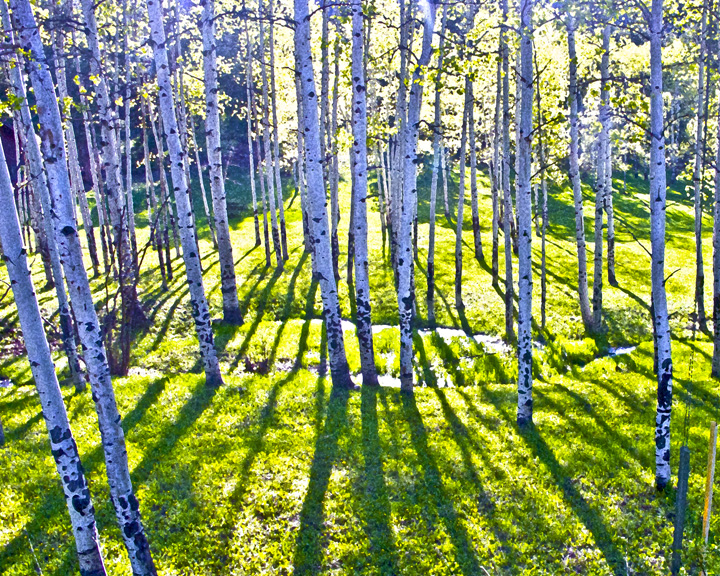
I took this picture in early May when we went to our place in Evergreen for Mother’s Day. The trees were back-lit. I used HDR toning for this shot.


 Graphic
 Passing Through . . . .