Can The Guardian Survive? Big Troubles in Print Media


Newspapers are in crisisyet they have greater reach than ever before. And nowhere is this truer than at the Guardian, the paper that revealed the phone-hacking scandal. Tim de Lisle follows its triumphs and tribulations and talks to its editor…

From INTELLIGENT LIFE Magazine, July/August 2012

IT WAS A bright warm day in March, and one of the world’s leading newspapers was doing something radical: meeting its readers. The Guardian was holding the first festival in its 191-year history, billed as the Guardian Open Weekend. It opened the doors of its offices, at the King’s Place arts centre behind King’s Cross station in London, and offered passes for £30 or £40 a day or £60 for the weekend (one child free with every adult). Around 5,000 readers poured in. Among them was a Baptist minister in his mid-80s who had taken the paper, religiously, for 66 years.

The speakers included painters, politicians, physicists, rock stars, novelists, explorers, actors, footballers and philosophers. There were 188 events, and still the queues were long. You could take a boat trip on the canal, commission a T-shirt from a graffiti artist, eat mackerel and chips “curated” by a local chef, or browse second-hand books on a barge. You could observe the Guardian reader, and see how this semi-mythical figure now comes in two broad types—the over-60s, in linen jackets or sensible cardies, looking like retired teachers or psychotherapists, and the under-35s, in denim or leather, harder to pin a profession on. You could see the Guardian’s editor-in-chief, Alan Rusbridger, chatting to readers, tall and mop-haired with a satchel over his shoulder, simultaneously boyish and avuncular. You could listen to folk bands playing and poets reading from their work, and watch a blank white wall slowly turn into a giant mural, a Bayeux tapestry of vivid vignettes from the weekend captured by a team of illustrators. Among them was a cuddly, felt-tipped version of the artist Grayson Perry, in his transvestite mode, with a speech bubble. “Bite the hand that feeds,” it said, “but not too hard.”

The atmosphere was stimulating and fiercely polite. The Guardian is easy to mock for its sandal-wearing earnestness, its champagne socialism and congenital weakness for typos, but its readers en masse seemed like the kind any editor would be glad to have: curious, questioning, quick to laugh. Seeing the rapport between them and their paper, feeling its pull for the powerful and the talented, enjoying this brand-new festival that felt as if it had been going for years, you could easily have assumed that everything in the Guardian was rosy.

IN MANY WAYS, it is. With its journalism, the Guardian has been having an astonishing run. For 20 years or more, ever since a bold reinvention led by Rusbridger’s predecessor Peter Preston in 1988, it has been the most stylish paper in the hyper-competitive British quality pack, the wittiest and best-designed, the strongest for features, the one most likely to reflect modern life. But it ruled only at what journalists call the soft end. In the 1970s, the age of Woodward and Bernstein, the Guardian’s best-remembered story was an April fool from 1977, which dreamt up the Pacific nation of San Serriffe – beautifully done but disclosing nothing more than its own sardonic wit. In the 1990s, the Guardian began to land some scoops, notably the scandals that brought down two Tory MPs, Jonathan Aitken and Neil Hamilton. But it still wasn’t known for big investigations, the kind of stories that demand courage, persistence and resources. This is where its culture has changed. It ran a sustained investigation into illicit payments by the arms giant BAE—first alleged in 2003, finally admitted in 2010, and now the subject of nine-figure compensation settlements. It did well with the Wikileaks diplomatic cables, and the English riots of 2011 and their causes.

Above all, it has led the way in the News International phone-hacking scandal, a farrago of power, corruption and lies, exposed by Nick Davies and other Guardian reporters. For two years, their investigation was lonely and scoffed at. A police chief urged Rusbridger to drop it; the mayor of London, Boris Johnson, who presides over the Metropolitan Police, called it “codswallop”. Then, last July, came the Guardian’s disclosure that the targets included the murdered teenager Milly Dowler. The story erupted across all the media. It has now led to the closure of the News of the World, the humbling of Rupert Murdoch, the fall of his son James, the arrest of his favourite Rebekah Brooks, multiple resignations by senior policemen and media executives, at least 50 more arrests, and six official investigations—three criminal ones, employing 150 police officers; one by a House of Commons select committee, one by the communications regulator Ofcom, and, most theatrically, the Leveson inquiry into the regulation of the media, which has spent months shining a fitful light on the mucky machinations of power. By the end of May, when it emerged that the Conservative-led coalition had allowed a former Murdoch editor to work at 10 Downing Street without the normal security vetting, the trail of dirt led all the way to David Cameron’s desk.

The hacking saga has shown journalism at its worst, invading the privacy of a murdered schoolgirl and her family, but also at its best, exposing a web of illegal activity that the police had missed, and speaking truth to power at a time when Rebekah Brooks, for one, was busy kissing it on both cheeks.

The Guardian’s reporting has not been faultless—it had to retract the claim that News of the World reporters had deleted voicemails on Milly Dowler’s phone, which caused an extra layer of public revulsion. But this will still go down as one of the great investigations. As Watergate is to the Washington Post, and thalidomide to the Sunday Times, so phone-hacking will surely be to the Guardian: a defining moment in its history. In March, Rusbridger went to Harvard to receive the Goldsmith Career Award from the Joan Shorenstein Centre, one of the highest honours in American journalism. He was the first non-American to win it. “V happy to be in Harvard for a career award,” he told his 70,000 Twitter followers. “Like reading nice obit without going to trouble of dying.”

This triumph of old-school reporting has been accompanied by spectacular success in new media. The Guardian has never been a big-selling newspaper: among the 11 national dailies in Britain, it lies 10th, with only the Independent behind it. But on the internet, the Guardian lies second among British newspaper sites (behind the Mail, which cheerfully chases hits by aiming lower than its print sister) and in the top five in the world, rubbing shoulders with the New York Times. Where many newspapers treated the web with suspicion, the Guardian dived in, starting early (1995), experimenting widely, pioneering live-blogging, embracing citizen journalism, mastering slide shows and timelines and interactive graphics. By March 2012 it was putting up 400 pieces of content every 24 hours. Its network of sites had a daily average of 4m browsers, as many as the sites for Britain’s bestselling newspaper (the Sun) and its bestselling broadsheet (the Telegraph) put together. The Guardian’s total traffic, around 67m unique browsers a month, was still rising by 60-70% a year.

A third of those readers are in America, which is an extraordinary achievement for a left-leaning British newspaper with its roots in Manchester. The urge to crack America is a common yearning in British public life, affecting not just rock bands and TV personalities but supermarkets (Tesco, which hasn’t succeeded) and prime ministers (Tony Blair, who has). In the news media, only three British institutions apart from the Mail have made a big impact in America: the BBC, which was already world-famous before it launched BBC America in 1998; The Economist (mothership of this magazine), whose abiding belief in the free market chimes with American values; and now the Guardian, which had no such head start. If, 15 years ago, anyone in British newspapers had predicted that the Guardian would soon find an audience of 20m in America, they would have been laughed out of the pub.

In terms of reach and impact, the Guardian is doing better than ever before. But its success may contain the seeds of its demise. Its print circulation is tumbling. In October 2005, boosted by a change to the medium-sized Berliner format, the average daily circulation was 403,297. By March 2012 it was down to 217,190. Those figures are not quite like-for-like, as the Guardian has sworn off the Viagra of giveaway copies and overseas sales (which tend to be counted less rigorously); but they are still bleak. Saturday sales remain sturdy, at 377,000, but, on a typical weekday, only 178,000 people buy the Guardian, while millions graze on it for nothing on their screens. In the financial year 2009-10, the national newspapers division of Guardian Media Group—which also includes the Observer, Britain’s oldest Sunday paper—lost £37m. The following year, it managed to cut costs by £26m, and still ended up losing £38m. In May, Rusbridger told me he was expecting a similar loss for 2011-12. So, for three years running, the Guardian has been losing £100,000 a day. This is not boom or bust, but both at once: the best of times, and the worst of times.

At the Open Weekend, one event looked at whether journalism was a second-rate form of writing. In the audience of 50 or so was the white-haired figure of Nick Davies, taking a breather from his investigative duties. When the conversation turned to long-form journalism, he spoke up, sounding exasperated. “In 20 years’ time,” he said, “there won’t be any newspapers left to do this. All these millions of hits won’t pay our salaries. The internet is killing journalism.”


Great Grilling! A Product Review

I received a really great waffle iron/ sandwich grill my son and his family for Father’s Day.  The grill is distributed through Major League Baseball and mine has the P logo for my favorite team which is the Philadelphia Phillies.  While the Phillies are struggling this year, the grill isn’t.  In fact it is great.  The image shows the finished product, complete with the letter P.  The image on the right has been filled in with Patricia’s great choke cherry syrup.  Life is Good.  The waffles were crisp and not at all gummy, which is why I prefer waffles to pancakes.

Rafting on Clear Creek

Took this picture last August.  August is late in the year for rafting as the snow melt has largely ended for the year.  We are headed to Colorado in about 8 days and plan a rafting trip early in July.  We should get a great ride as the snow melt will be providing great water flow.

Sweeping Dark Money out of Politics – From Mother Jones Magazine

How To Sweep Dark Money Out of Politics

Undoing Citizens United, the DIY guide.

Illustration: Steve Brodner

JUSTICE JOHN PAUL STEVENS had seen a lot of precedent overturned by the time the Supreme Court ruled on Citizens United v. Federal Election Commission in January 2010. Appointed to the court by Gerald Ford after a career as a distinguished Republican jurist,he’d been there for contentious cases on abortion, the death penalty, Gitmo, you name it. But none had prepared him for the way the court’s new conservative majority, led by John Roberts, seized on an obscure campaign finance case expected to produce a narrow ruling and used it to shred nearly four decades of federal law.

The majority opinion in Citizens United takes up 57 pages, but it’s pretty efficiently boiled down as follows: (1) Money is speech; (2) corporations are people; (3) therefore, under the First Amendment, the government can’t stop corporations from spending money on politics pretty much however they choose.

Stevens penned an impassioned 90-page dissent lambasting the “glittering generality” of this construction. “Although they make enormous contributions to our society, corporations are not actually members of it,” he wrote. “Our lawmakers have a compelling constitutional basis, if not also a democratic duty, to take measures designed to guard against the potentially deleterious effects of corporate spending in local and national races.”

Stevens wasn’t the only one appalled. Citizens United set off a torrent of outrage, culminating in the high drama of the president (a constitutional law professor, lest we forget)condemning the court in the State of the Union for opening “the floodgates for special interests—including foreign corporations—to spend without limit in our elections.” Anger spanned the political spectrum (80 percent were opposed shortly after the ruling, 65 percent “strongly”) and helped spark the Occupy movement.

The right “recognizes something that few on the left recognize: that campaign finance law underlies all other substantive law.”

But Americans’ disgust didn’t stop the bagmen, on both sides of the aisle, from seizing the opportunity. Just ask Dan Maffei, a Democrat in upstate New York’s 25th District who led Ann Marie Buerkle, a pro-life activist with scant political experience, by 12 points two weeks before the election. Then Karl Rove’s American Crossroads buried him with $400,000 worth of attack ads—and Buerkle won by a mere 648 votes.

So how to put elections back in the hands of voters? Here are the four options:

Constitutional amendment: Okay, it takes two-thirds majorities in both houses of Congress and ratification by three-fourths of the state legislatures. Nevertheless, we did just that to bring about Prohibition in 1919 and then to overturn it in 1933, and to lower the voting age to 18 in 1971. That last one wrapped in a mere five months; then again, the 27th Amendment, which regulated congressional raises, was in the works for 203 years. And recall the Equal Rights Amendment: “Men and women shall have equal rights throughout the United States.” No-brainer, right? The ERA passed Congress in a landslide in ’72 (354 to 24 in the House, 84 to 8 in the Senate). It was endorsed by Richard Nixon, included in the Republican Party platform, and ratified by 30 state legislatures within another year. And then Phyllis “Stop Unisex Bathrooms!” Schlafly whipped up a major froth, got enough culture war firebrands elected to state legislatures, and stopped it cold.

So yes, it’s technically possible to pass an amendment clarifying that corporations are not quite the same as people and money is not quite the same as speech. (Several organizations, including People for the American Way and a new outfit called Move to Amend, are pushing for this.) But there’s also a lot of dark-money groups waiting to underwrite a Schlafly-like play.

SCOTUS deathwatch: How about waiting for a conservative justice or two to die while Democrats hold the White House and the Senate? Yeeaah. Absent the plot devices of a John Grisham thriller, don’t hold your breath. Then again, know who’s been the master of this kind of waiting game? The folks who brought you Citizens United. When he started flooding the docket with anti-campaign-finance-regulation cases in the 1980s, conservative lawyer James Bopp Jr. was facing a hostile court. But he kept at it until the majority shifted—and slammed the ball he’d teed up.

Let the sun shine in: In the nearer term, there’s the option the Roberts court expressly invited in Citizens United—full-monty disclosure. Not long after the ruling, Rep. Chris Van Hollen (D-Md.) introduced the DISCLOSE Act with 114 cosponsors, just two of them Republicans. It would have banned most secret donations, forced companies to report their giving to shareholders, and shut foreign corporations out of electioneering. The bill’s life was brief and full of ironies (among the clauses tacked on in the House was one exempting the NRA); it passed the House in an anemic 219-206 vote—36 Dems voted nay—and died, as all good legislation must, when the Senate fell one vote short (RIP Ted Kennedy) of a filibuster-proof 60 votes. Van Hollen has reintroduced the legislation, and with Sen. John McCain back in the reform business, it might just stand a chance.

But Congress is not the only game in town. Court after court has come down squarely on the side of disclosure, and in May, the DC court of appeals ruled that nonprofits like Rove’s Crossroads GPS and the US Chamber of Commerce must reveal their donors’ names. In another promising step, the IRS has made noises about revoking the tax exemption of dark-money groups.

Taxpayer-financed campaigns: No one likes big money in politics—least of all, perhaps, members of Congress who toil in the Hill’s drab call centers, dialing donors to beg for cash. That’s why public financing was key to the post-Watergate reforms, and until billionaire Steve Forbes opted out in 1996, every major presidential candidate took it. But the system failed to keep up with the cost of elections; this year, candidates could hope to get about $90 millionin public financing, whereas Obama expects to raise up to $1 billion. Nevertheless, public financing can still make a big difference in down-ballot races, from the statehouse all the way to obscure but critical judicial elections. And keep in mind, today’s state legislator is tomorrow’s US senator.

As the rich get richer, throwing six-figure sums at presidential campaigns is just like tipping for good service.

In the end, all these avenues need to be pursued, and here’s why: As Paul S. Ryan of the Campaign Legal Center toldMoJo‘s Andy Kroll, the right “recognizes something that few on the left recognize: that campaign finance law underlies all other substantive law.” In other words, no matter what you care about—climate change, abortion, taxes, net neutrality—it all comes back to who pays for our elections. Need a more selfish reason? Because the 1 percent have bent the system to their advantage, America’s median household income—your income—is $40,000 lower than it would have been had incomes continued to keep pace with economic growth. Conversely, as the rich get richer, throwing six-figure sums at presidential campaigns is just like tipping for good service. Snake, meet tail.

So yes, we might agree with Sen. Chuck Schumer (D-N.Y.), no stranger to campaign rainmaking, that Citizens United is the court’s worst decision since it upheld segregation in Plessy v. Ferguson. But bad law is not without redress—if voters shame reluctant representatives into getting off the dark-money teat. “At bottom,” wrote Justice Stevens, the court’s opinion is “a rejection of the common sense of the American people, who have recognized a need to prevent corporations from undermining self-government since the founding…While American democracy is imperfect, few outside the majority of this Court would have thought its flaws included a dearth of corporate money in politics.”

Ready to explore for yourself? Here’s choose-your-own adventure guide to the options, with plenty of links to more resources.


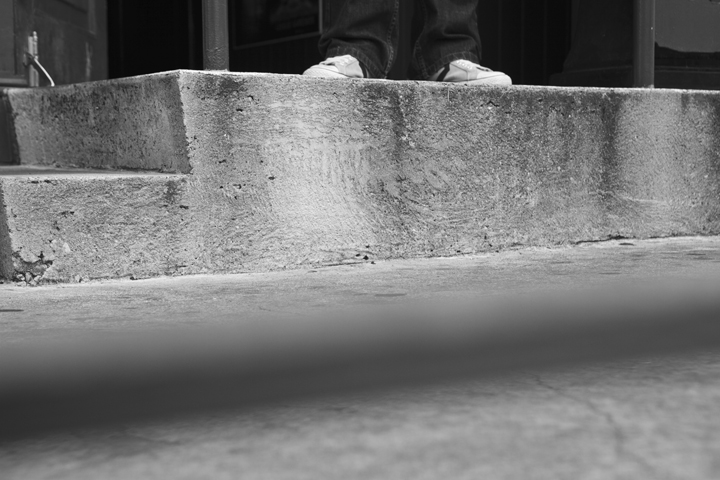
White Tennis Shoes

Shot this image in downtown Austin during the annual South by Southwest Music Festival.  Used black and white to emphasize textures.

Nobel Prize Opened Her Heart

In Long-Overdue Speech, Dissident Says Nobel Opened Her Heart

Daniel Sannum Lauten/Agence France-Presse — Getty Images

Daw Aung San Suu Kyi with Thorbjorn Jagland, chairman of the Norwegian Nobel Committee, in Oslo on Saturday.

By 

OSLO — When she was awarded the Nobel Peace Prize in 1991, while under house arrest in MyanmarDaw Aung San Suu Kyi said Saturday, she realized that the Burmese “were not going to be forgotten.”

Related

When the Norwegian Nobel Committee awarded her the prize, she said in her Nobel lecture here on Saturday, 21 years later, it was recognition that “the oppressed and the isolated in Burma were also a part of the world, they were recognizing the oneness of humanity.” But “it did not seem quite real, because in a sense I did not feel myself to be quite real at that time,” she said. “The Nobel Peace Prize opened up a door in my heart.”

She said the prize “had made me real once again; it had drawn me back into the wider human community,” and it had given the oppressed people of Burma, now Myanmar, and its dispersed refugees, new hope. “To be forgotten,” Ms. Aung San Suu Kyi added, “is to die a little.” In a quiet, throaty voice on Saturday she asked the world not to forget other prisoners of conscience, both in Myanmar and around the world, other refugees, others in need, who may be suffering twice over, she said, from oppression and from the larger world’s “compassion fatigue.”

It was a remarkable moment for the slight Ms. Aung San Suu Kyi, who turns 67 next week and is now a member of Parliament and the leader of Myanmar’s opposition. She dressed in shades of purple and lavender, her hair adorned with flowers. It is a gesture she makes in honor of her father, Gen. Aung San, an independence hero of Burma, who was assassinated in 1947, when she was 2, but whom she remembers threading flowers through her hair.

The audience in Oslo’s City Hall, which included the Norwegian royal family, listened raptly, applauding often, standing to clap when Ms. Aung San Suu Kyi entered the hall and when she finished her speech, which was at the same time modest, personal and touching, an appeal to find practical ways to reduce the inextinguishable suffering of the world. “Suffering degrades, embitters and enrages,” she said. “War is not the only arena where peace is done to death.”

Absolute peace is an unattainable goal, she said. “But it is one towards which we must continue to journey, our eyes fixed on it as a traveler in a desert fixes his eyes on the one guiding star that will lead him to salvation.”

She had thought much on the Buddhist idea of “dukkha,” or suffering, in her long years of isolation and house arrest, Ms. Aung San Suu Kyi said. “If suffering were an unavoidable part of our existence, we should try to alleviate it as far as possible in practical, earthly ways.”

One crucial avenue, she said, was simple kindness. “Of the sweets of adversity, and let me say that those are not numerous, I have found the sweetest, the most precious of all, is the lesson I learned on the value of kindness,” she said, with a rare shred of humor. “Every kindness I received, small or big, convinced me that there could never be enough of it in the world.” Kindness, she said, “can change the lives of people.”

Her comments on Myanmar were careful but considered. She called for national reconciliation and cease-fire agreements between the government and “ethnic nationality forces,” which she said she hoped would “lead to political settlements founded on the aspirations of the peoples, and the spirit of the nation.”

“In my own country,” she said, “hostilities have not ceased in the far north,” and “to the west, communal violence” has flared in the days before she left Myanmar. She spoke of the Burmese concept of peace, which she defined as “the happiness arising from the cessation of factors that militate against the harmonious and the wholesome.” The term, nyein-chan, translates literally, she said, as “the beneficial coolness that comes when a fire is extinguished.”

She had never thought of winning prizes, she said. “The prize we were working for was a free, secure and just society,” she said. “The honor lay in our endeavor.”

Her endurance against dictatorship and steadfastness to her principles has brought comparisons to Nelson Mandela. Her life has also been one of personal sacrifice.

For her country, and for the legacy of her father, Ms. Aung San Suu Kyi could be said to have given up her family: her beloved husband, Michael Aris, a professor of Tibetan and Himalayan Studies at Oxford, and her two children, Alexander and Kim, who grew up largely without her. Myanmar’s former military government persistently refused to grant them visas to visit her, even when Mr. Aris grew ill with prostate cancer, apparently in the hope that she would leave Myanmar herself to visit them.

She refused to do so, fearing with reason that the government would not allow her back into the country. After Ms. Aung San Suu Kyi’s initial house arrest in 1989, Mr. Aris was allowed to visit only five times, the last time during Christmas in 1995. He died in March 1999, on his 53rd birthday; to the end, he supported her decision to remain in Myanmar.

She had returned to Myanmar from Britain in March 1988 to nurse her ill mother, Daw Khin Kyi, and became caught up in the swirling protests against years of eccentric autocracy and military rule. In January 1989, just after her mother’s funeral, she and her husband sat for a rare interview at her mother’s house in Rangoon, now Yangon, as their children ran about the rooms, with their faded colonial elegance.

“You know, when I married Michael,” she said, “I made him promise that if there was ever a time that I had to go back to my country, he would not stand in my way. And he promised.” Mr. Aris said: “That’s true. She made me promise.”

She said then that she understood how much her stature depended on her father’s aura. “I don’t pretend that I don’t owe my position in Burmese politics to my father, at least at the beginning,” she said. “It’s time to look at what people do.”

At another moment, she said: “Really, I’m doing this for my father. I’m quite happy they see me as my father’s daughter. My only concern is that I prove worthy of him.”

Once fate intervened, she chose the life she has lived, and there is little doubt that she has proved herself fierce, loyal and worthy, both to her father and to her people.

Thorbjorn Jagland, the chairman of the Norwegian Nobel Committee, praised her and thanked her “for your fearlessness, your tenacity and your strength.” He said: “Your life is a message to all of us.”

Hillary Clinton Confirmed for Summit in Rio

Hillary Clinton Confirmed for Rio+20: Daily

June 15, 2012 | Filed underDaily Update | Posted by 

By Jay Forte, Contributing Reporter

RIO DE JANEIRO, BRAZIL – Secretary of State Hillary Clinton will lead a delegation of eleven government members from the United States at the UN Rio+20 Conference, including the head of the Environmental Protection Agency, Lisa Jackson, and the Special Envoy for Climate Change, Todd Stern.

Secretary of State Hillary Clinton will lead the delegation from the United States at the UN Rio+20 Conference, Rio de Janeiro, Brazil News

Secretary of State Hillary Clinton will lead the delegation from the United States at the UN Rio+20 Conference, photo by Wilson Dias/ABr.

Also part of the delegation the U.S. Ambassador to Brazil, Thomas Shannon, the representative of the White House Council on Environmental Development, Nancy Sutley, and Assistant Secretary of State for Oceans and International Environmental and Scientific Affairs, Kerri-Ann Jones.

The announcement of the visit of Secretary, confirmed just on Tuesday, comes after the request of the UN Secretary-General Ban Ki-moon to U.S. President Barack Obama to attend the conference. In a statement made in April, Ban Ki-moon stressed that U.S. support would enhance the credibility of the summit and demonstrate the country’s concern with the environment.

Major Brazilian media outlet O Globo reported on Thursday a wave of rumors that U.S. President Obama had decided to come to the conference, by amending the meeting of Heads of State who will be in Mexico next week for the G-20.

The rumors apparently started after a few diplomats noted that the security procedures were being strengthened. However American diplomats were quick to deny the change, reaffirming that the leadership of the U.S. delegation to the Rio+20 was the responsibility of the Secretary of State Hillary Clinton.

The Secretary-General of the United Nations (UN) for Rio+20, Sha Zukang, said the absence of some world leaders – such as U.S. President Obama, German Chancellor Angela Merkel and Prime Minister of the UK David Cameron – will not weaken the conference. Zukang said he understood the reasons for any absences, including the U.S. elections and the economic crisis in Europe.

Read the balance of this article in RioTimes online

Oil and the Greek Elections

Oil edges up awaiting Greece election result

Oil price: Waiting on Greek election results

AP/Scanpix

By News wires

15 June 2012 20:54 GMT

Oil prices edged up on Friday, in thin and choppy trade, supported by hopes Greece’s upcoming election will not result in an exit from the euro zone, while weak US economic data limited gains.

Both Brent and US crude posted weekly losses, though the US slip was only $0.07, Reuters reported.

Friday’s gains were hemmed in by separate reports showing US manufacturing output contracted in May, while factory activity slowed in New York state in June and US consumer sentiment fell.

The weak data raised the possibility that the US Federal Reserve might use more monetary easing to help a sputtering economic recovery. The Fed’s policy-making committee has a two-day meeting starting Tuesday.

A weaker dollar, after the euro recovered from early losses against the US currency, also lent some support to oil, along with gains on Wall Street.

US stock indexes and oil also received support from news on Thursday that officials from the G20 nations, whose leaders meet in Mexico next week, said central banks were ready to take steps to stabilize financial markets by providing liquidity if needed in the wake of Greece’s election.

“We are waiting for the Greek elections. If there is a conclusive result for a government that wants reform, then there will be a return of risk appetite and oil will resume the upstream trend,” Harry Tchilinguirian, head of commodity market strategy at BNP Paribas, told the news wire.

Brent August crude rose $0.44 to settle at $97.61 per barrel, having swung from $96.97 to 98.10.

Front-month Brent ended six straight lower settlements, but posted a weekly loss of 1.87%. Brent’s July contract expired on Thursday.

US July crude edged up $0.12 to settle at $84.03 per barrel, ending with a weekly loss of $0.07.

“At this point, it looks like the markets are frozen and waiting for the results of the Greek elections, which are totally unpredictable,” said Dominick Chirichella, senior partner at Energy Management Institute in New York.

Total crude trading volumes were thin. Brent turnover lagged its 30-day average by 39% and US crude volume trailed that market by 25%.

US gasoline and heating oil posted more robust gains than either crude oil contract.

Money managers cut their net long US crude futures and options positions in the week to 12 June, the US Commodity Futures Trading Commission reported on Friday.

Along with Greece’s political turmoil, Iran’s talks with major powers about Tehran’s nuclear program set to start Monday in Moscow kept traders and brokers cautious, with recently revived talks so far unable to resolve the dispute.

Members of the Organization of the Petroleum Exporting Countries will reduce the group’s output to adhere to its 30 million barrels per day output ceiling and the effects should be seen in July, OPEC Secretary-General Abdullah al-Badri told a news briefing.

Analysts remain skeptical after OPEC’s Thursday meeting that such a reduction, which would be mostly on Saudi Arabia’s side, will actually occur.

Actual OPEC production is higher at 31.6 million bpd owing to Saudi Arabia’s extra production.

Raising output was a deliberate move by Riyadh to counter the possibility that Iranian oil shipments will fall heavily when a European Union embargo on Tehran starts next month.

When Your Citizens Protest Your Being Elected, Rattle the Sabre – More From Mother Russia

Russia Sending Missile Systems to Shield Syria

By 

MOSCOW — Russia’s chief arms exporter said Friday that his company was shipping advanced defensive missile systems to Syriathat could be used to shoot down airplanes or sink ships if the United States or other nations try to intervene to halt the country’s spiral of violence.

“I would like to say these mechanisms are really a good means of defense, a reliable defense against attacks from the air or sea,” Anatoly P. Isaykin, the general director of the company, Rosoboronexport, said Friday in an interview. “This is not a threat, but whoever is planning an attack should think about this.”

As the weapons systems are not considered cutting edge, Mr. Isaykin’s disclosures carried greater symbolic import than military significance. They contributed to a cold war chill that has been settling over relations between Washington and Moscow ahead a meeting between President Obama and President Vladimir V. Putin, their first, on the sidelines of the Group of 20 summit meeting in the Mexican resort of Los Cabos next week.

Mr. Isaykin’s remarks come just days after Secretary of State Hillary Rodham Clinton raised diplomatic pressure on Russia, Syria’s patron, by criticizing the Kremlin for sending attack helicopters to Damascus, and amid reports that Moscow was preparing to send an amphibious landing vessel and a small company of marines to the Syrian port of Tartus, to provide security for military installations and infrastructure, if it becomes necessary.

George Little, a Defense Department spokesman, declined to comment on Mr. Isaykin’s remarks.

Aleksander Golts, an independent military analyst in Moscow, said the Russians’ discussion of defensive weapons shipments “undoubtedly” serves as a warning to Western countries contemplating an intervention.

“Russia uses these statements as a form of deterrence in Syria,” he said. “They show other countries that they are more likely to suffer losses.”

Throughout the Syrian crisis, Russia has insisted that all its arms sales to the isolated government of President Bashar al-Assad have been defensive in nature, and that the weapons were not being used in the Syrian leader’s violent campaign to suppress the opposition.

Mr. Isaykin underlined the point, but in a way that could also be interpreted as a warning to the West against undertaking military action of the sort that ousted Col. Muammar el-Qaddafi from power in Libya. Mr. Putin viewed that action as a breach of sovereignty that he does not want repeated.

Yet, as news reports of government massacres emerge almost daily from Syria, the prospect of the United States or NATO acting unilaterally has become a more frequently discussed option, particularly given Russia’s adamant refusal to authorize more aggressive United Nations action.

Mr. Isaykin, a powerful figure in Russia’s military industry, openly discussed the weapons being shipped to Syria: the Pantsyr-S1, a radar-guided missile and artillery system capable of hitting warplanes at altitudes well above those typically flown during bombing sorties, and up to 12 miles away; Buk-M2 antiaircraft missiles, capable of striking airplanes at even higher altitudes, up to 82,000 feet, and at longer ranges; and land-based Bastion anti-ship missiles that can fire at targets 180 miles from the coast.

Military analysts immediately questioned the effectiveness of the air defenses Russia has made available to nations in the Middle East, including Syria, none of which have offered even token resistance to Western forces.

Ruslan Aliyev, an authority on military affairs at the Center for the Analysis of Strategies and Technologies in Moscow, said that statements by Mr. Isaykin and others were issued principally for political effect. Moscow has declined to supply Syria with its most lethal air defense, the S-300 long-range missile system.

“As far as I understand, Syria is not able to defend itself from NATO, just like it failed to defend its nuclear facility from Israel’s September 2007 airstrike,” Mr. Aliyev wrote in an e-mailed response to questions. “Russian armaments are unlikely to be significantly helpful, I’m afraid.”

Since Mrs. Clinton’s statement, both sides have sought to play down the helicopters’ significance, saying they were of marginal use militarily. A State Department spokeswoman, Victoria Nuland, said Thursday that the secretary of state was referring to three helicopters that were returned recently to Syria after being refurbished in Russia.

In the interview, Mr. Isaykin said that the contract to overhaul the helicopters was signed in 2008, was never secret and had been reported to international organizations. “It was an absolutely routine contract,” he said.

Syria has spent about $500 million annually in recent years on Russian weaponry, Mr. Isaykin said in the interview, an order book that amounts to about 5 percent of Rosoboronexport’s business.

For nearly a decade, Mr. Isaykin said, Rosoboronexport has had no Syrian orders for rifles, ammunition, ground-to-ground rockets, helicopters and their onboard weapons or armored vehicles — the basic tools of a conflict that is escalating into civil war.

The Middle East, he said, is “flooded” with Soviet-style small arms, often made in knockoff versions by the Chinese or Eastern Europeans, elbowing Russia out of this market.

The Russian arms trade business with Syria has depended in recent years on large and complex antiaircraft systems. They violate no United Nations sanctions, he said, and cannot be used against civilians in a domestic conflict.

“We just send them to Syria,” he said. “Ask the Syrians where they put them.”

Ellen Barry contributed reporting.

India’s Shot at a Gold Medal

Mary-Kom-(web).jpg 

As women’s boxing joins the Olympics, Rahul Bhattacharya profiles the phenomenal Mary Kom—five-times world champion and mother of twowho has had to battle against far more than just her opponents in the ring


From INTELLIGENT LIFE magazine, July/August 2012

“One plays football. One does not play boxing.”
– Joyce Carol Oates, “On Boxing”

Play, or its Hindi equivalent, khel, is the verb Mary Kom uses. She could be referring to a tournament, “when I played national”, her stance, “I play southpaw”, or her weight category, “I must play in 51kg in the Olympics.” But there is something deeper when Kom says it. Childbirth and child-rearing, that is life. Lifting yourself out of poverty, fulfilling the duties of a wife, a daughter, an eldest sister, that is life. Boxing is so much; but still it is play.

She is in the ring right now, and to be ringside when Mary Kom is in action is to feel the kinetic heat of boxing. It is molecular. She is padding against a man whom, a little while ago, in his spectacles, sweater and moustache, I took for a government officer. Now, shorn of the first two, he has transformed himself into a provocateur, a matador. He is baiting Mary, taunting her with words and jabs in the face. When their heads come together, their spit and sweat fall on each other, the blazing whites of their eyes are falling into each other’s. Kom is 5ft 2in officially, an inch more in her own estimate, but looks smaller—even more so in her headgear. Small, but taut: a packet of tensile strength.

Her muscles must be on fire. Counting her rounds against the bag, the mirror and the other women at the camp, national and international-level boxers, she has completed the equivalent of two full-length competition bouts. Those girls were heavier and taller. This is just as well because when women’s boxing debuts at the 2012 Olympics, Mary must play taller opponents, who will have a longer reach. Most of her championship victories have come as a pinweight boxer, 46kg, whereas in London the lightest class, flyweight, is 51kg.

But next to Mary, these other girls were ponderous. Their feet were sluggish, their positioning not so clever. She could fight with her guard down, testing her reflexes by offering them her bare chin as a target, and counter-attacking in angles unfamiliar to boxers who take the orthodox stance.

All around the gym the girls furtively watched her. They covet her low-gravity wound-up springiness, her pure petite explosiveness. They would love to lunge so wide and fast, and never need to wrestle or go to the ropes. Aggression is her hallmark, and it makes her exhilarating to watch.

Yeh leh Mary,” Mr Bhaskar Bhatt goads her, “take this. And this.” This too is the play of boxing.

“He tries to make me angry,” she says later, “but I have to be cool.” Her grimace is hidden by her white gumshield. You can feel her burn; it’s been 80 minutes now.

Aaja Mary, sha-baash, come Mary, come.” This is a “specific training” session, devoted to feints and combination punches. He’s making her chase him, holding up his pad for her to pull out another series of rifling combination punches, which she does with sharp yelp-like breaths.

“Phoom.” That is the sound she wants from a punch. “When it’s tak, tak, like that, it is OK, not powerful,” she will say, throwing me a mock punch. “Phoom! That is powerful.”

At last the session is finished. “60%,” says Mr Bhatt, bespectacled again, assessing a fortnight’s progress. “She has not come into her original yet. Once she does that, when she gets back her automatisation, no one can stop her. See, Mary never gets puzzled in the ring. She has killer instinct.”

To cool off, this 29-year-old mother of two does cartwheels and somersaults in the ring, and looks suddenly adolescent—copper highlights in her hair, fluorescent laces on her shoes. When she lands awkwardly on an ankle that was recently injured, she just giggles. She lies on her stomach to be rubbed down by a physio provided by Olympic Gold Quest, a private non-profit organisation which began funding India’s elite athletes in 2007.

The gym is on the premises of an erstwhile palace in Patiala, Punjab, now India’s national sports institute. In its grounds the hedges are trim, the trees are labelled with numbers, and the kerb is painted in zebra stripes, but beneath the order it is still India, no country for athletes. Kom will return to shared accommodation in a hostel, where she will boil vegetables with fermented fish on her portable stove, because the mess food can leave her with indigestion. She will hand-wash her clothes, scrubbing the blood off her socks, as there is a single washing machine for an entire hostel of athletes. Two years ago, two female boxers, one a world-championship medallist, were asked to serve tea to visitors and wash up afterwards.

Only one Indian, the rifle shooter Abhinav Bindra, has ever won an individual Olympic gold medal. A chapter in his memoirs is entitled “Mr Indian Official: Thanks for Nothing”.