Stopping by for a morning drink near Evergreen, Colorado.
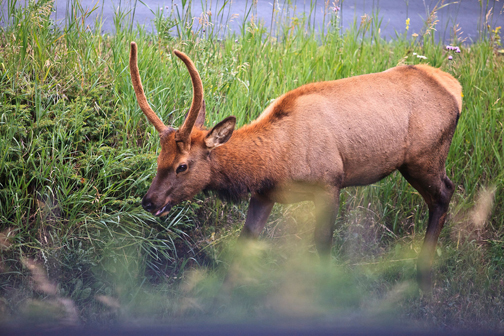
Stopping by for a morning drink near Evergreen, Colorado.
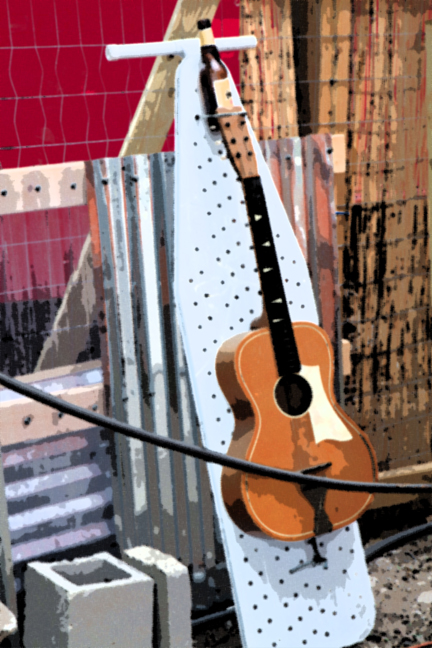
I stumbled upon this collage of things and found the guitar, ironing board, and bottle of beer amusing. Wish the musician had been around so I could ask him or her about it all.
Jun 9th 2012 | MOSCOW | from the print edition
 A message for Mr Putin
NO FOREIGN leader can talk to Vladimir Putin these days without discussing Syria. And the Russian president has met many this month, as he hopped from Paris to Berlin to a Russia-European Union summit in St Petersburg and on to China. European leaders in particular pressed him to take a firmer line against Syria’s president, Bashar Assad. But Mr Putin stuck firmly to his position: both sides are to blame, and any push from the West to unseat Mr Assad risks igniting civil war.
That Russia has been able to place itself at the centre of Syria’s grim drama shows, in one sense, the success of its strategy. The Russians have some special interests in the country—more than 75% of Syria’s weapons are bought from Russia, for example, and it has a naval facility at Tartus. But its policy ever since the uprising began over a year ago has never really been about Syria, but about showing that Russia is an influential and pivotal world power whose voice must be heeded.
The Russians believe that their stubbornness has changed how the world responds to Syria—and that alone is a victory. The peace initiative of Kofi Annan, a former UN secretary-general, is really a product of Russia’s making. In recent months “the world was beating a path to Moscow’s door,” says Carroll Bogert of Human Rights Watch, who met Russian officials this spring. “Their chests were all pumped up.”
The West has looked at Syria through the lens of democracy and human rights, towards which the Russian government is instinctively sceptical, if not actively hostile. The Russians prefer to see it as a proxy struggle between Saudi Arabia and Iran as much as a home-grown uprising. And they think both that the Assad regime has shown more restraint than it is given credit for and that the opposition has been less peaceable than is often reported.
This is not purely cynical. The foreign-policy establishment in Moscow genuinely believes that Syria is messier and more prone to unpredictable escalation than Western leaders understand, and that any outside intervention would court disaster. But as the horrors in Syria accumulate (seearticle), that line is getting hard to defend. It is harder still after massacres by loyalist forces—although the Russian foreign minister, Sergei Lavrov, claimed that the Houla killings bore the marks of “both sides.”
Memories of Libya are also fresh. In March 2011 Russia abstained, rather than veto a UN Security Council resolution allowing the NATO air campaign that ultimately pushed Muammar Qaddafi from power. The Russians claim they were misled (or betrayed) into signing up to regime change—an idea that is anathema to them. Dmitry Medvedev, now prime minister but then president, has been vilified by Putin supporters for tolerating it. To Mr Putin the conclusion from Libya is clear: this was a big political error, not to be repeated over Syria or anywhere else.
Yet the longer the Russians stand behind Mr Assad, the more their gloomy predictions come true. Syria is moving towards a civil war. And that is not good for Russia. Either chaos in Syria or Western intervention without Mr Putin’s approval would see the Russians pushed to the sidelines. With the Annan plan in tatters, the Russians will “run out of arguments” for the status quo, suggests Fyodor Lukyanov, editor of Russia in Global Affairs.
For precisely this reason, Russia now seems more open, however tentatively, to a Yemeni solution, in which Mr Assad would leave power under a managed transition that kept some aspects of the Syrian state intact. Yet Dmitri Trenin of the Carnegie Moscow Centre argues that giving Mr Assad an ultimatum and then helping to oversee a political transition would still require Russia to “change its modus operandi” and take some “proactive steps for which it may not be ready.” With Syria disintegrating by the day, it may soon find that it has no other choice.
from the print edition | Europe
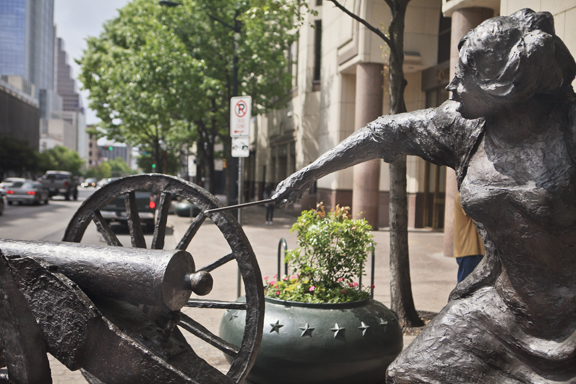
This statue is on Congress Street in Downtown Austin, Texas. Ms. Eberly was out and about one Saturday morning, in the early days of the Republic of Texas, and noticed that a band of soldiers led by Sam Houston, the hero of the Texas secession from Mexico, were looting the unguarded state archives. Angelina primed the old cannon and fired a shot which woke local officials who were able to round up Houston’s troops, preserving the day for the new City of Austin. Were it not for her heroism, the State Capital would have moved to Houston. We all know how bad that would have been. Houston the State Capital? No way!!
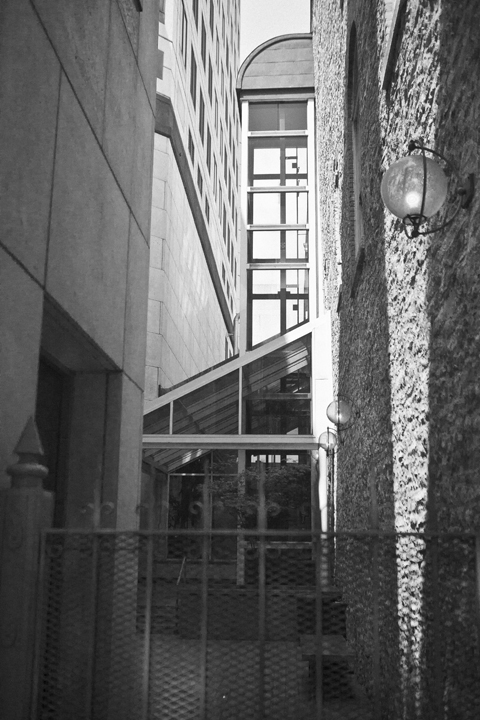
I really like the textures here. The space is very narrow and only a bit of light reaches the bottom. The Adjustment Brush in Adobe Camera Raw helps a lot.
The 51 mile Panama Canal was built back in 1914 to offer ships a faster route between the Atlantic and Pacific Oceans. Five percent of the annual world trade passes through the canal, more than one million ships since 1914, which last year helped generate $1 billion for Panama in 2011.
Nicaragua was considering the construction of its own canal, until Panama beat them to it, however once again the rumours of a Nicaraguan Canal are surfacing, with countries such as China, Russia, Brazil, and Japan, willing to invest $30 billion in order to develop another route between the Atlantic and Pacific. The Nicaraguan government hopes that the waterway will promote foreign investment and development in the country, which is the second poorest in the Americas, after Haiti.
Eden Pastor, the leader of the project, has said that his team has “had talks with Japan, China, Russia, Venezuela, Brazil and South Korea and everyone is interested” in contributing to the $30 billion plan.
On Tuesday the Nicaraguan President, Daniel Ortega, submitted a draft bill for consideration which detailed six potential routes for the new canal, one of which would pass through the San Juan river on the border of Costa Rica.
At the moment the Panama Canal is in the middle of a $5.25 billion project designed to expand its size and allow for larger ships, but the Nicaraguan Canal will be built even wider and deeper in order to accommodate the largest ships that wish to pass through.
By. James Burgess of Oilprice.com
Listen to comments from Terry Gross who has daily broadcasts on far-ranging topics of interest
—By Tom Philpott
 Fresh Air’s Terry Gross Image courtesy of Wikimedia Commons
On Wednesday morning, I was lucky enough to be invited onto the NPR interview show Fresh Air, to be grilled by the legendary host herself, Terry Gross. Terry wanted to hear more about my work on the meat industry, and asked me a series of smart, impeccably researched questions. I hope I overcame my nervousness enough to deliver worthy answers. You can listen to our conversationhere.

 I
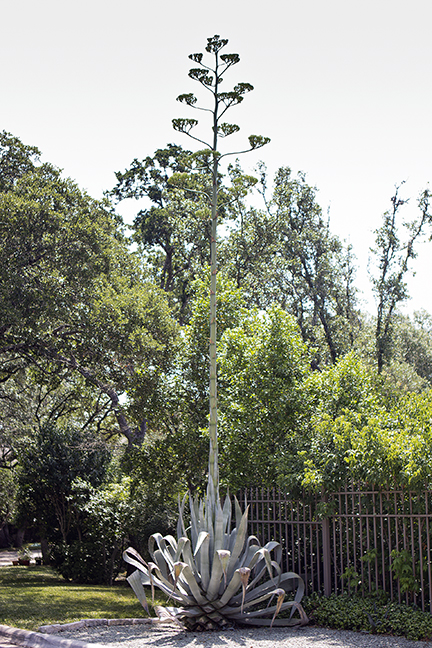
I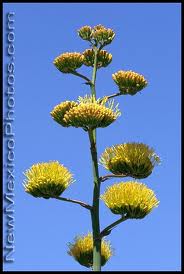 Agave americana, commonly known as the century plant, maguey, or American aloe, is an agave originally from Mexico but cultivated worldwide as an ornamental plant. I took this picture on the top left yesterday afternoon. The image to the right was downloaded from the web. I used it so you can get a better look at the blooms at the top. According to local lore, these “Century Plants” only bloom every hundred years, hence the name. I doubt this is true, but it makes for a good legend. What do you think?

Tourist haven: Greece
08 June 2012 14:55 GMT
The Mediterranean hotspot’s major gas supplier Gazprom is monitoring the situation as Greek energy companies are reported to be seeking emergency bank loans to pay for fuel imports to avert power cuts that could disrupt the vital tourism season.
A source at the Russian gas monopoly told Reuters on Friday that Greece has so far managed to pay for gas deliveries and expects to be paid for May supplies by the end of this month.
However, Greece’s state-owned gas distributor DEPA is now seeking loans from domestic banks to pay for about €120 million ($150 million) of gas and electricity imports as it faces a 22 June deadline to settle obligations to Gazprom, which supplies about 80% of the country’s gas needs via pipeline.
The cash crunch in the country’s energy system reportedly stems from a €350 million hole in the finances of state-owned power grid operator LAGHE, from which privately-run utilities are reimbursed, as shrinking revenues from lower demand have failed to match subsidies paid to renewable energy producers.
The looming energy crisis has further compounded the country’s severe debt difficulties with a general election approaching on 17 June, as its continued membership of the eurozone hangs in the balance.
Amid the economic gloom, Greeks may be seeking some solace in the progression – or otherwise – of their national football team in the Euro 2012 championship, with Greece set to kick off the tournament in the opening match against Poland on Friday.
However, the possibility of power outages may prove doubly frustrating, possibly cutting off televised coverage of the games if Greece advances beyond the group stage.
Gazprom has after all previously not hesitated to hit the ‘power off’ switch in the event of non-payment by customers, as with Ukraine a few years ago.
And for both visitors and disillusioned inhabitants departing Greece this summer, perhaps the best advice is: last one out, remember to turn off the lights. Or not, as the case may be.
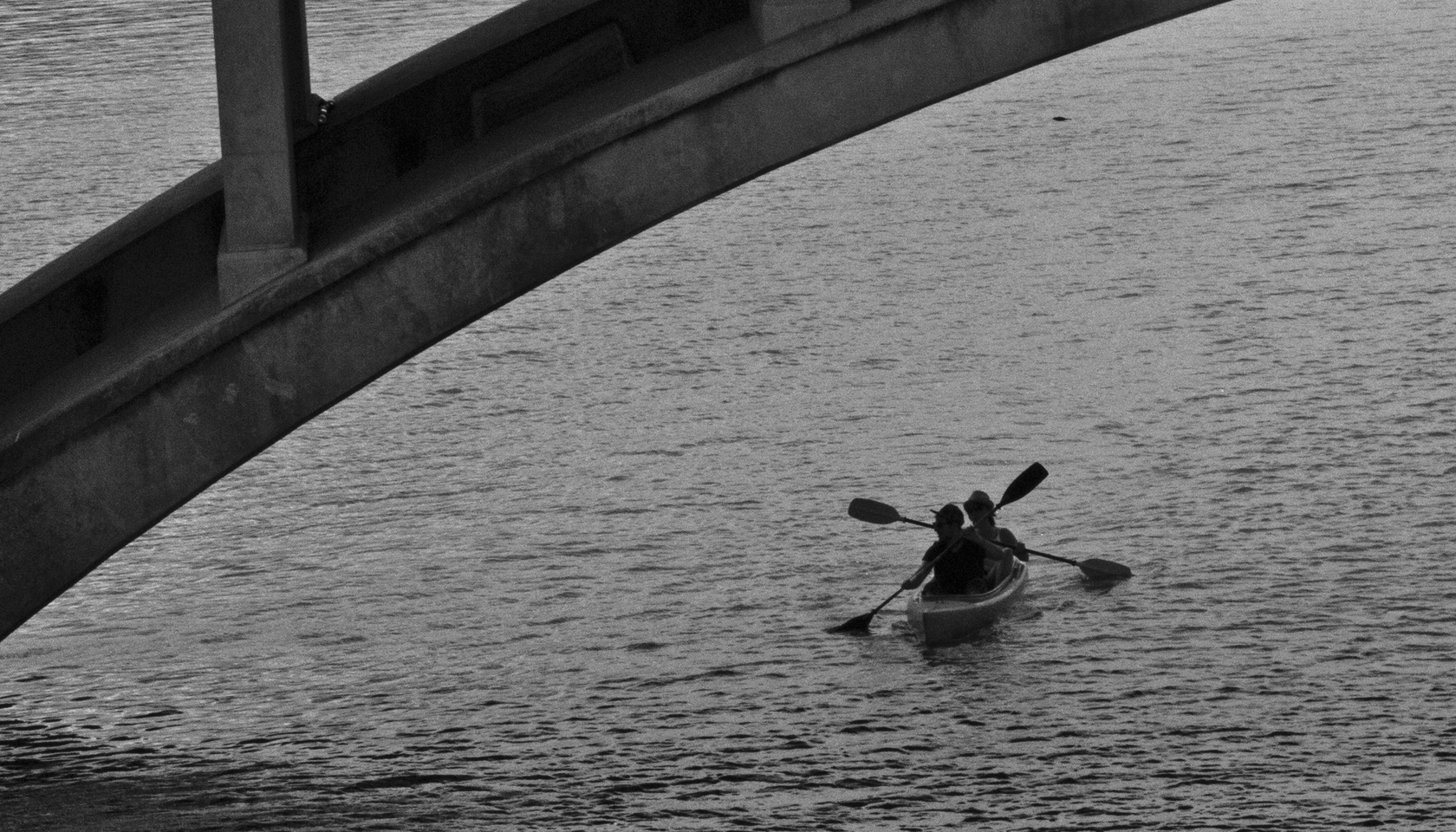 I have had a lot of views of this previous post. For anyone interested, you may purchase a print of this using my online photo gallery. My gallery address is http://www.uncommonperspectives.smugmug.com. Paddlers in Profile is located in my Black and White Architecture and Landscape gallery. You can select sizing and paper, shipping method and pay using a credit card.

 Passing Through . . . .